
5th Wheel Trailers – Spacious, Stable, and Feature-Packed
This 5th wheel trailer guide gives you a clear look at what makes fifth wheel trailers so popular — huge living space, excellent road stability, and the residential features you’d expect in a high-end RV. From family-friendly bunkhouses to luxury rear-living layouts, fifth wheels are designed for travelers who want comfort while keeping the flexibility of a detachable tow vehicle.
5th Wheel Trailer Guide: What You’ll Learn
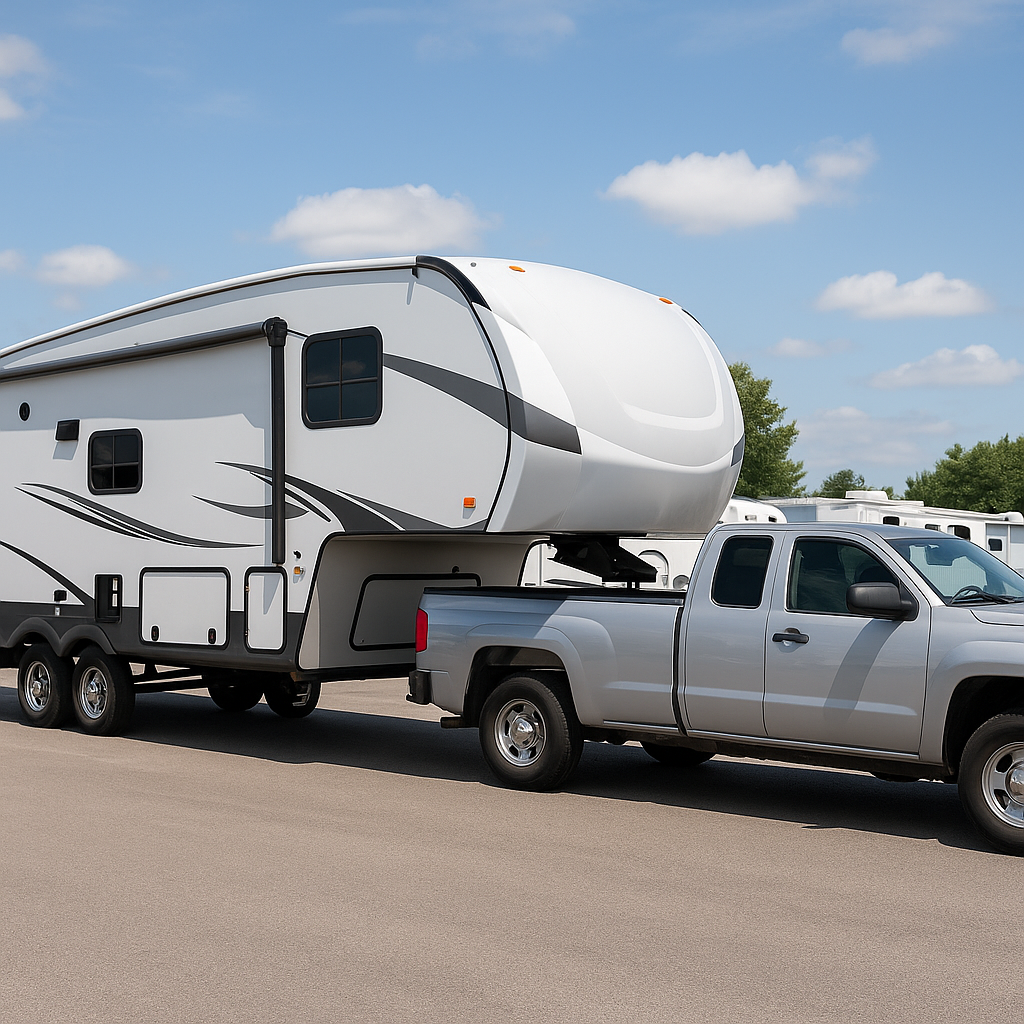
Fifth wheel trailers are towable RVs that use a raised forward section and a special fifth-wheel hitch that mounts inside the bed of a pickup truck. By connecting over the truck’s rear axle instead of the bumper, fifth wheels gain exceptional stability, improved maneuverability, and a smoother towing experience compared to standard travel trailers.
Inside, a fifth wheel feels closer to a small apartment or condo than a traditional RV. The tall ceilings, wide slide-outs, and multi-level layout create roomy living areas, full-size kitchens, large bathrooms, and spacious bedrooms in the raised front section. Many models offer residential features like solid-surface countertops, theater seating, electric fireplaces, washer/dryer prep, and extensive basement storage.
This design makes fifth wheel trailers especially popular with full-time RVers, long-term travelers, and snowbirds who want maximum comfort without giving up the flexibility of a standalone tow vehicle. Whether you’re cooking, relaxing, working remotely, or hosting friends, fifth wheels provide the space and comfort to live more like home.
According to the RV Industry Association (RVIA), 5th wheel trailers continue to be one of the most popular towable RV types.
Link “RV Industry Association (RVIA)” → https://www.rvia.org
Who Is a 5th Wheel Trailer Best For?
5th wheels are ideal for RVers who want maximum interior space, residential comforts, and a stable towing experience. They work especially well for travelers who take longer trips, stay in campgrounds for extended periods, or want a true home-like layout on the road.
They’re often the top choice for full-time RVers, snowbirds, and couples who enjoy having separate living, kitchen, and bedroom areas. Families also gravitate toward bunkhouse and loft-style fifth wheels, which provide extra sleeping space and privacy.
If you already own a capable pickup truck—or plan to buy one—a fifth wheel offers the best blend of comfort and flexibility. You can unhitch at camp, explore the area freely with your truck, and come home to a spacious RV that feels more like a condo than a camper.
Pros
5th wheel trailers offer some of the most spacious and comfortable interiors of any towable RV. Their tall ceilings, wide slide-outs, and multi-level layouts create open living rooms, large kitchens, and generous bedroom suites that feel closer to a small apartment than a typical camper.
Because the hitch mounts over the truck’s rear axle, fifth wheels also tow with excellent stability and predictable handling, giving many RVers more confidence on the road than with standard travel trailers.
The residential features available in fifth wheels are another major advantage. Many models include solid-surface countertops, large entertainment centers, fireplaces, walk-in pantries, king-bed options, and washer/dryer prep.
Storage is also a strong point—fifth wheels often feature large pass-through “basement” storage areas capable of holding bulky camping gear, tools, or seasonal items. With so many floorplans available, from rear-living and rear-kitchen layouts to bunkhouses and toy haulers, there’s a fifth wheel design for nearly every lifestyle. Combined with the ability to unhitch and explore the area with your truck, these features make fifth wheel trailers an excellent choice for long-term travelers, snowbirds, and full-time RVers who value space, comfort, and flexibility.
Cons
5th wheel trailers come with a few trade-offs that are important to understand before buying. Their size and weight mean you’ll need a capable heavy-duty pickup truck, and in many cases a one-ton truck or dually is the safest match. This higher truck requirement adds cost and rules out smaller tow vehicles that work for lighter travel trailers.
Their overall height can also be a challenge in certain campgrounds, especially older parks with low tree branches or tight interior roads. Maneuvering a large fifth wheel takes more planning and more room to turn, and backing into smaller sites can be difficult for new RVers.
Fifth wheels also take up a lot of space when stored and can be more expensive to maintain. They typically have more tires, more slide-outs, and more systems than smaller trailers, which means more upkeep over time. And because the hitch sits in the truck bed, you lose bed space unless you use an under-bed rail system or a removable hitch.
Key Features and Common 5th Wheel Layouts
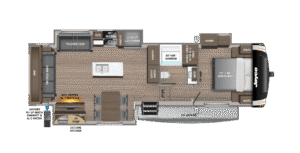
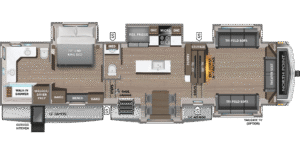
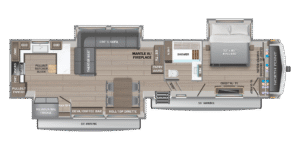
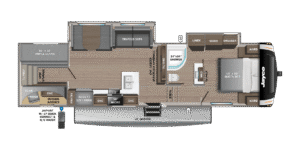
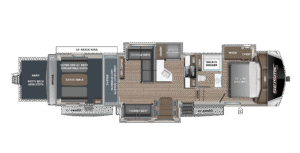
One of the biggest strengths of 5th wheel trailers is the huge variety of floorplans available. Whether you need space for a family, want a dedicated office, or prefer a home-like living area, there’s a layout built for your style of camping. With tall ceilings, wide slide-outs, and smart interior designs, 5th wheels often feel more residential than any other towable RV.
Rear living room layouts are extremely popular with couples and full-time RVers. These designs place large picture windows and comfortable seating at the back of the trailer, often paired with opposing slide-outs, big entertainment centers, and fireplaces. The result is an open, cozy space that feels perfect for relaxing inside the RV.
Front living room layouts flip the traditional layout by placing the main seating area in the raised front section over the truck bed. This creates a “sunken kitchen” feel in the middle of the RV and often includes two sofas, theater seating, and a large TV and fireplace. It’s great for entertaining or creating a true living-room atmosphere.
Rear kitchen layouts maximize counter space and storage. With the kitchen stretching across the back wall, these 5th wheels typically offer larger pantries, residential-style refrigerators, and plenty of prep space. They’re ideal for people who cook often or travel long-term.
Bunkhouse and loft-style designs are perfect for families or grandparents traveling with children. These layouts include a second sleeping area with bunks, storage, and sometimes a private half-bath, giving everyone space without sacrificing the main living room.
Toy hauler 5th wheels add a rear garage that doubles as a multi-purpose room. It can carry ATVs, motorcycles, or golf carts while traveling, then convert into a bedroom, office, or enclosed patio once parked. This makes toy haulers incredibly versatile for people who bring extra gear or want flexible space.
5th wheel trailer layouts evolve every year, giving RVers more ways to cook, relax, sleep, and entertain. The best layout comes down to how you actually live in your RV—not just the features listed on paper.
What Do 5th Wheel Trailers Cost?
The cost of a 5th wheel trailer can vary widely depending on size, build quality, brand reputation, and the number of slide-outs or residential features included. Entry-level 5th wheels typically start around $45,000–$70,000, offering simpler interiors and lighter construction suitable for casual or seasonal camping.
Mid-range models fall into the $70,000–$110,000 range and tend to include upgraded materials, better insulation, larger appliances, and more comfortable living spaces.
Higher-end and luxury 5th wheel trailers can easily reach $110,000–$200,000+, featuring residential refrigerators, solid-surface counters, upgraded suspension systems, enhanced climate control, walk-in closets, washer/dryer prep, and high-end electronics.
While the upfront cost can be significant, many buyers value the comfort, space, and long-term durability these units provide. For RVers shopping the used market, condition matters far more than age—a well-maintained five-year-old 5th wheel is often a better investment than a newer model that has been poorly cared for.
Matching a Truck to a 5th Wheel Trailer
Choosing the right truck for a 5th wheel trailer is mostly about understanding weight ratings and leaving enough safety margin for real-world travel. Every 5th wheel has a GVWR (maximum weight when fully loaded) and a pin weight—the amount of the trailer’s weight that presses down on the truck’s bed when connected.
Because 5th wheel hitches sit over the truck’s rear axle, they place more stable weight on the truck, but they still require adequate payload capacity to tow safely.
In general, smaller and lighter 5th wheel trailers can be towed by certain three-quarter-ton trucks (250/2500 series) when properly equipped, although many RVers find that one-ton trucks handle the weight more comfortably.
Most mid-size and larger 5th wheels—especially those with multiple slide-outs or higher GVWRs—are best paired with a one-ton single rear wheel (SRW) truck or a dually (DRW) for additional stability and payload capacity. The truck’s door sticker provides the exact payload rating, and comparing that number to the trailer’s loaded pin weight is the most important match to check.
This guide is meant to give a clear, big-picture understanding rather than a detailed towing class. If you’re unsure about the right match, many RV dealers and truck specialists can help calculate safe combinations and point you toward a setup that fits your travel style, budget, and long-term goals.
Helpful Gear and Options for 5th Wheel Owners


Outfitting a 5th wheel trailer with the right gear can make towing, parking, and everyday camping far more comfortable. While every RVer has different needs, there are a few pieces of equipment that nearly all 5th wheel owners rely on. These items improve safety, protect your RV’s electrical systems, make setup easier, and keep travel days running smoothly.
A quality 5th wheel hitch is one of the most important upgrades you can make. Models with cushioning systems, pivot points, or sliders can reduce chucking and improve ride comfort. Many owners also prefer under-bed mounting systems, which allow the hitch to be removed quickly so the truck bed can be used normally when not towing.
A tire pressure monitoring system (TPMS) is another highly recommended tool. Monitoring pressure and temperature in real time helps catch issues before they lead to blowouts or expensive repairs. Pairing a TPMS with a portable air compressor makes it easy to top off tires at home or on travel days.
Protecting your RV’s electrical system is also essential. A surge protector or EMS (Electrical Management System) guards against low voltage, surges, and wiring problems sometimes found at campgrounds. For leveling and stability, quality wheel chocks and heavy-duty leveling blocks make setup safer and more predictable.
Finally, many 5th wheel owners add rear-view or observation cameras, improved entry steps, or upgraded mattresses to make everyday life in the RV more comfortable. These add-ons aren’t required, but they can significantly improve the overall experience of owning and traveling with a 5th wheel trailer.



Is a 5th Wheel Trailer Right for You?
A 5th wheel trailer is one of the best options for RVers who want a home-like space on the road, stable towing, and a wide choice of floorplans to match different camping styles.
These trailers offer more living area, better storage, and more residential features than most towable RVs, making them ideal for long trips, seasonal stays, or full-time travel. The trade-off is the need for a capable truck and the size of the RV itself, but for many travelers, the comfort and flexibility far outweigh those considerations.
If you’re still deciding whether a 5th wheel is the right match, explore our RV Buying Guide for a full overview of all RV types and what they offer. You can also read through our Common Buying Mistakes guide to learn what to avoid before visiting a dealership. The better you understand your needs and priorities, the easier it becomes to choose the trailer that fits your lifestyle.
Length
25–48 ft
GVWR
10,000–20,000+ lbs
Tow Vehicle
Preferably 1-ton+ pickup trucks