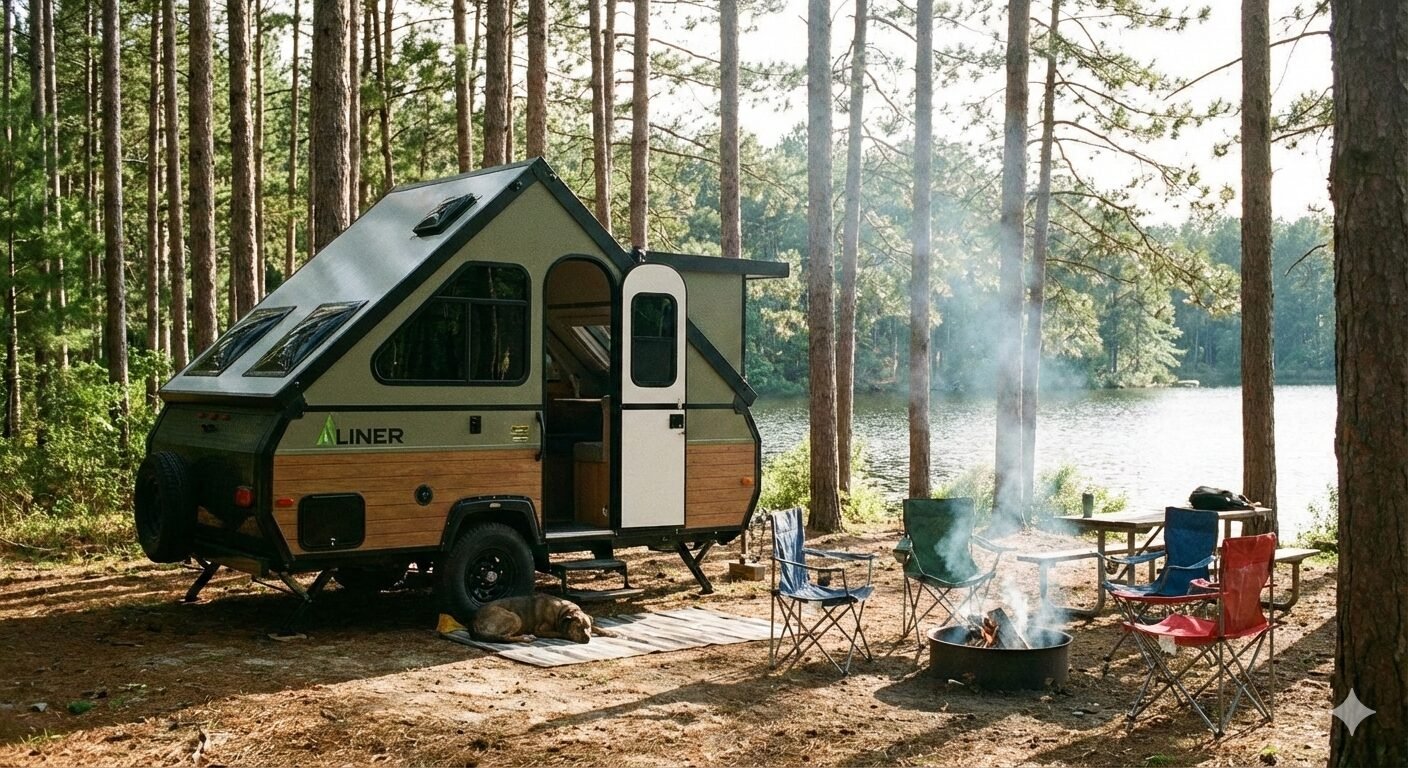
What Is an A-Frame Camper?
A-frame campers are lightweight towable RVs that use a unique folding hard-wall design instead of traditional slide-outs or canvas pop-ups. When traveling, the roof panels fold down into a compact, aerodynamic shape for easy towing and storage. Once parked, the panels lift into place in minutes, creating solid walls and a peaked ceiling for comfortable interior space.
Inside, an A-frame feels simple, efficient, and practical. While smaller than most travel trailers, many models include a real bed, compact kitchen, dinette, storage cabinets, and sometimes even a wet bath or cassette toilet. The hard-sided construction provides better insulation, security, and weather protection than traditional tent campers, making them a great middle ground between pop-ups and full-size trailers.
This smart design makes A-frames especially popular with weekend campers, couples, and first-time RV owners who want convenience without towing a large trailer. If you value quick setup, easy storage, and lightweight towing with real RV comfort, an A-frame delivers exactly that.
Who Is an A-Frame Camper Best For?
A-frame trailers are ideal for RVers who want a lightweight, low-maintenance camper that’s easy to tow and simple to set up. They work especially well for travelers who take shorter trips, prefer state parks or smaller campgrounds, or don’t want to upgrade to a heavy-duty truck.
They’re a great choice for couples, solo travelers, and retirees who want comfort without complexity. Because of their compact size and lower weight, many SUVs and midsize trucks can tow them — making RV ownership more accessible for beginners.
If you’re looking for something more comfortable than a tent but more manageable than a full-size travel trailer, an A-frame might be the perfect fit.
Pros
A-frame campers offer one of the easiest and most lightweight towing experiences in the RV world. Their compact size, low profile, and aerodynamic design make them ideal for smaller SUVs and half-ton trucks, while also improving fuel efficiency compared to larger travel trailers.
Setup is quick and simple. Most hard-sided A-frames (like Aliner-style models) raise into place in just a few minutes without canvas to deal with. The solid walls provide better insulation, more security, and less maintenance than traditional pop-up campers.
Inside, A-frames are surprisingly efficient. While compact, many models include a dinette that converts to a bed, a small kitchenette with sink and stove, optional refrigerator, and even a cassette toilet or wet bath in larger versions. Large front and side windows create an open, airy feel despite the smaller footprint.
Storage and convenience are strong points for weekend travelers. Because they fold down low for travel, they’re easier to store at home, fit in more garages, and access tighter campsites where larger trailers can’t go. For couples, solo travelers, and minimalist campers, A-frames offer a comfortable step up from tent camping without the size and complexity of larger RVs.
Cons
A-frame campers do come with trade-offs. Interior space is limited compared to traditional travel trailers, and ceiling height is restricted to the center peak. If you’re looking for separate bedrooms, large bathrooms, or residential features, this isn’t the right category.
Storage capacity is also smaller, both inside and in exterior compartments. Extended trips require careful packing and organization.
While insulation is better than soft-sided pop-ups, A-frames are not typically designed for full-time living or extreme four-season use unless heavily upgraded. Families may quickly outgrow the sleeping space, making them better suited for couples or short getaways.
Key Features
One of the biggest strengths of A-frame campers is their smart, space-efficient design. While they’re smaller than traditional travel trailers, manufacturers have developed clever floorplans that maximize every inch. With hard-sided folding walls, large windows, and convertible seating areas, A-frames feel open and functional without unnecessary complexity.
Most A-frame layouts center around a front or rear dinette that converts into a bed, creating a dual-purpose living and sleeping space. During the day, it serves as a comfortable seating area with large windows that bring in natural light. At night, it quickly transforms into the primary sleeping area.
Many models include a side kitchenette layout, featuring a sink, two-burner stove, compact refrigerator, and overhead storage cabinets. Some upgraded versions add microwave ovens, larger fridges, or additional counter extensions for meal prep.
Larger A-frame models may offer a wet bath or cassette toilet configuration, typically positioned along the side wall. While compact, this setup adds convenience for longer trips without increasing the trailer’s footprint.
Because A-frames fold down low for travel, they typically don’t include slide-outs or multi-room layouts. Instead, their strength is simplicity — quick setup, lightweight towing, and efficient use of space. The result is a practical, easy-to-manage camper that delivers real RV comfort in a compact package.
What Do A-Frame Campers Cost?
The cost of an A-frame camper varies based on size, build quality, included amenities, and whether it’s designed for basic weekend camping or extended travel. Entry-level hard-sided A-frame models typically start around $15,000–$20,000, offering simple interiors, a convertible dinette bed, and a compact kitchenette.
Mid-range A-frame campers generally fall between $20,000–$30,000, adding features like larger refrigerators, upgraded cabinetry, improved insulation, and optional air conditioning. These models are popular with couples who want lightweight towing without sacrificing comfort.
Higher-end A-frame campers can reach $30,000–$40,000+, especially when equipped with solar packages, lithium batteries, wet baths, cassette toilets, upgraded appliances, and premium finishes. While they remain compact compared to travel trailers, these units can be surprisingly well-equipped.
One of the biggest financial advantages of A-frames is their lighter weight. Because many can be towed by SUVs or smaller trucks, buyers often avoid the added cost of upgrading to a heavy-duty tow vehicle. For shoppers considering the used market, condition and roof integrity matter more than age—well-maintained A-frames tend to hold value well due to their simple construction.
Matching a Tow Vehicle to an A-Frame Camper
Choosing the right tow vehicle for an A-frame camper is usually simpler than matching a large travel trailer or fifth wheel. Most A-frames weigh between 1,500 and 3,000 pounds dry, making them compatible with many SUVs, crossovers, and properly equipped midsize trucks.
Still, it’s important to understand your vehicle’s tow rating, payload capacity, and tongue weight limits. The tongue weight (typically 10–15% of the trailer’s weight) must stay within your vehicle’s specifications. Even lightweight campers require proper weight distribution and braking capacity for safe towing.
Because A-frames fold down low for travel, they create less wind resistance than traditional box-style trailers. This improves towing stability and fuel efficiency, especially on highways. Many owners find them less intimidating to tow and easier to maneuver into tight campsites.
While heavy-duty trucks aren’t required for most models, always leave a safety margin between your trailer’s fully loaded weight and your vehicle’s maximum rating. Proper setup—including brake controllers and quality hitch components—ensures a confident, stress-free towing experience.
Helpful Gear and Options for A-FrameOwners
Outfitting an A-frame camper with the right basic gear makes setup faster, safer, and far less stressful. Because these campers are compact and lightweight, they don’t require complicated equipment—but a few essentials make a big difference.
A quality drinking water hose designed specifically for potable water is a must for campground hookups. Pair it with a simple water pressure regulator to protect your plumbing system from high-pressure spigots. For sewer-equipped models, a compact sewer hose kit with proper fittings keeps dumping clean and easy.
Monitoring tire condition is just as important on a lightweight trailer as it is on a larger RV. A reliable tire pressure gauge helps you maintain proper PSI before every trip. Proper inflation improves towing stability, extends tire life, and reduces the risk of roadside issues.
For stable campsite setup, leveling blocks and sturdy wheel chocks are essential. A-frames sit lower than many travel trailers, so getting them level protects appliances like your refrigerator and keeps the camper comfortable inside. Wheel chocks prevent unwanted movement while parked.
Finally, a heavy-duty RV power cord that matches your camper’s amp rating—along with a basic surge protector—is critical for safe electrical hookup. Clean, protected power keeps your appliances and battery charging system running smoothly at campgrounds.
These simple pieces of gear aren’t flashy upgrades, but they form the foundation of safe, reliable A-frame camping.
Is an A-Frame Camper Right for You?
An A-frame camper is one of the best options for RVers who want lightweight towing, quick setup, and simple camping without the bulk of a traditional trailer. Its folding hard-sided design combines the convenience of a small travel trailer with the compact storage footprint of a pop-up.
These campers are ideal for weekend trips, state park camping, and travelers who don’t want to upgrade to a heavy-duty truck. While interior space and storage are more limited than larger towables, many campers find the simplicity, fuel efficiency, and ease of maneuvering far outweigh those trade-offs.
If you’re still deciding whether an A-frame is the right fit, explore our RV Buying Guide for a full overview of all RV types and what they offer. You can also review our Common Buying Mistakes guide to avoid costly surprises before making your decision. The better you understand your travel style and comfort expectations, the easier it becomes to choose the camper that fits your lifestyle.