
Thinking about buying your first RV? You’re not alone—and you’re definitely not the first to feel overwhelmed.
At The RV Info Guide, we’ve heard every story in the book: first-time buyers spending far more than planned, choosing the wrong floor plan, or discovering hidden ownership costs after signing the papers.
Buying an RV is exciting—it’s the ticket to adventure, flexibility, and independence—but it’s also one of the biggest recreational purchases you’ll ever make. The difference between a dream purchase and a regret often comes down to a few avoidable mistakes.
In this guide, we’ll cover the Most common mistakes first-time RV buyers make and how to avoid them.
Each section includes actionable tips, links to useful tools, and insights from real RVers so you can shop with confidence and hit the road stress-free.
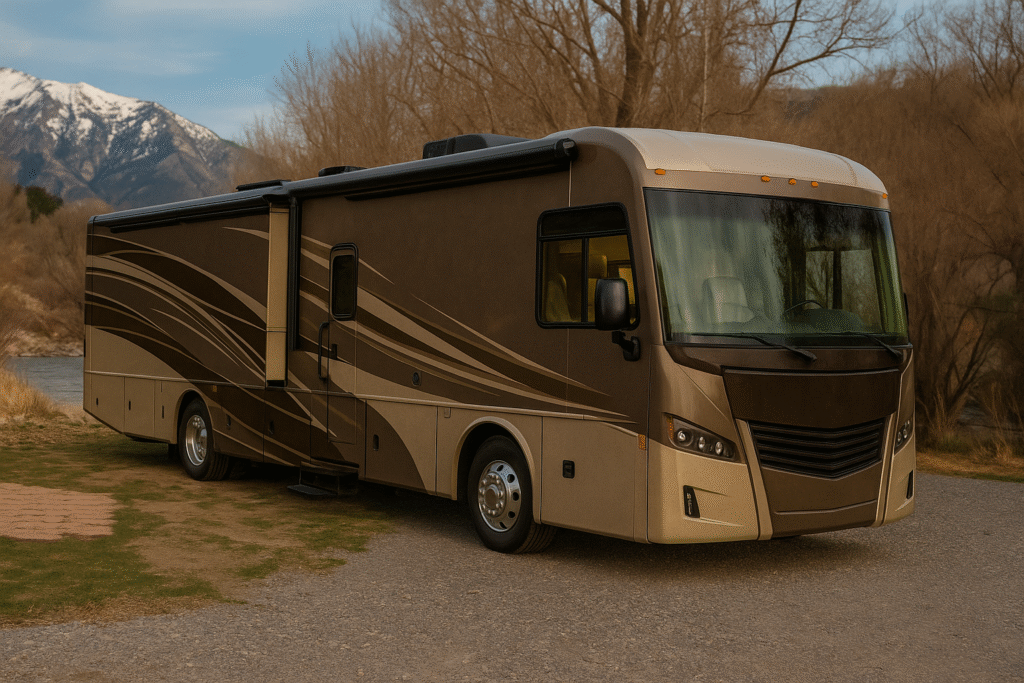
Buying an RV That’s Bigger Than You Actually Need
It’s easy to get pulled toward the biggest, flashiest RV on the lot. But choosing a rig that’s larger than you actually need is one of the most common RV buying mistakes, and it usually shows up only after you’re on the road—when turning, parking, and campground access become daily challenges.
Why Going Too Big Creates Real-World Problems
Once you get past the excitement of shopping, the drawbacks of an oversized RV become clear. Longer rigs demand more attention on the road—wider turns, more braking distance, and extra caution when merging or handling crosswinds. Tight campground loops, narrow state park roads, and older facilities quickly reveal how much space a big RV truly needs.
Fuel consumption, tires, maintenance, and storage also scale with size. What feels comfortable on the lot can become expensive and restrictive when you’re traveling. Many first-time buyers are surprised to learn that a rig just a few feet shorter opens the door to more campsites and far less stress behind the wheel.
How to Choose a Size That Fits Your Travel Style
The right RV size isn’t about luxury or square footage—it’s about how you’ll use it. Weekend campers, national park travelers, and first-time towers all benefit from starting with a manageable length. A smaller travel trailer or midsize motorhome handles better in tight spaces, keeps fuel costs down, and makes the learning curve far easier.
If national parks or older campgrounds are on your list, staying under 30–35 feet gives you access to far more sites. And if you’re unsure what feels right, rent a few different setups. Experiencing tow length, weight, and maneuverability firsthand is one of the best ways to avoid the common RV buying mistakes that happen when emotion outweighs practicality.
Practical Ways to Make the Right Size Choice
Before settling on any RV, take a moment to think through how you’ll actually use it. Your travel pattern matters—weekend camping, snowbirding, and full-timing all place different demands on size and maneuverability. Match the RV to your experience level as well; a smaller trailer or Class C is easier to control and far less stressful to learn with.
If national parks or older campgrounds are part of your plans, sticking with a shorter rig gives you far more access. And if you’re still unsure what size feels right, rent before you buy. A weekend with a couple of different RV lengths through Cruise America, Outdoorsy, or RVshare will quickly show you what fits your comfort level before you commit to a six-figure purchase.
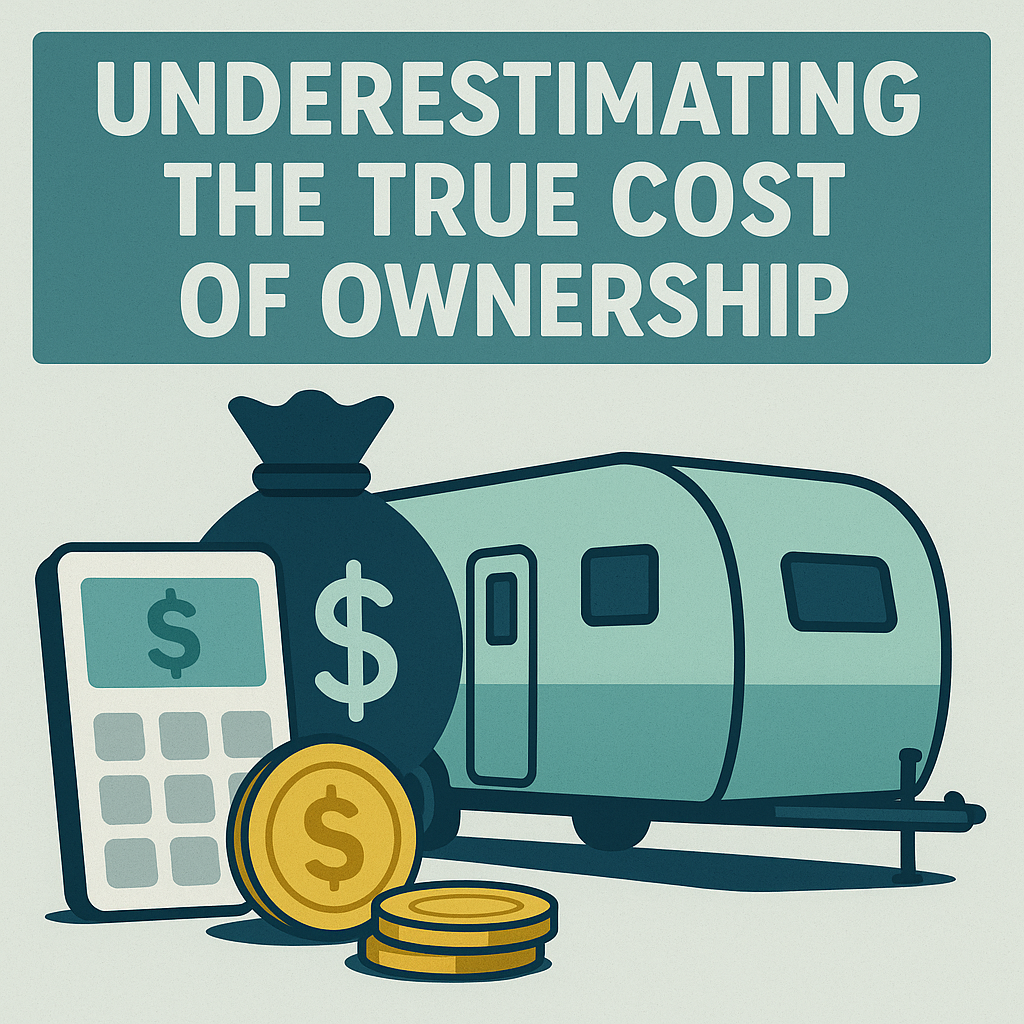
Underestimating the True Cost of Ownership
When you’re buying your first RV, understanding the true cost of ownership puts you in control from day one. It’s a common RV buying mistake to look only at the sticker price, but knowing how insurance, storage, fuel, and maintenance fit into your budget helps you choose an RV you can enjoy confidently for years to come.
The Expenses That Catch New RV Owners Off Guard
Even with a good deal on the purchase price, ownership costs continue long after you drive off the lot. Insurance is the first one many buyers overlook—depending on your RV type, usage, and location, monthly premiums can range from $75 to $300.
Storage can be another surprise, especially in areas with HOAs or tight properties where you can’t keep your RV at home. Urban storage lots can run as high as $500 per month.
Maintenance and repairs add up as well. A good rule of thumb is budgeting 1–2% of your RV’s value each year for upkeep. On a $75,000 motorhome, that means setting aside $750–$1,500 annually. Fuel is another big factor: Class A motorhomes often average 6–10 MPG, while towing a travel trailer can reduce your tow vehicle’s fuel efficiency by 30–40%.
Campground costs vary widely. Basic sites may start around $25 per night, but full-hookup resorts—especially in popular regions—can easily exceed $100+ per night during peak season.
Understanding these numbers early helps you find an RV that supports your travel style rather than stretching your budget.
Even small things—like propane refills, cleaning products, or registration fees—add to the yearly total.
Hidden Costs That Often Don’t Show Up Until Later
Certain ownership expenses are easy to miss when you’re excited about buying your first RV. Tires are a big example—RV tires often age out before they wear out, and replacing all six on a Class A coach can cost $2,000 or more. Depreciation is another factor; most RVs lose 20–30% of their value within the first three years.
Upgrades like solar, backup cameras, and satellite internet improve comfort and capability, but they come at a premium. Even essential accessories—sewer hoses, surge protectors, leveling equipment, and winterizing supplies—add to the total cost of ownership.
None of these costs are dealbreakers, but being aware of them ensures you’re choosing an RV you can truly afford to enjoy.
How to Build a Budget That Supports Your Travel Goals
A realistic RV budget gives you freedom—not limits. Start by planning for the predictable expenses: insurance, storage, routine maintenance, and fuel. Tools like our Free RV Budget Calculator make it easier to track everything in one place.
Compare insurance quotes through companies like Roamly or Good Sam; the differences can be significant. Create a monthly maintenance fund of $100–$150 so you’re ready for unexpected repairs. Budgeting for seasonal items—such as winterizing kits, dehumidifiers, and antifreeze—helps avoid surprise expenses.
Above all, buy an RV you can comfortably afford to use year-round. A smaller, reliable rig that fits your budget will give you far more freedom than a high-end model that spends most of its time in storage.
Typical Monthly RV Ownership Costs
| Expense Category | Typical Cost Range | Notes |
| Insurance | $75–$300/month | Varies by RV class, value, and usage |
| Storage | $50–$500/month | HOAs and cities may limit home parking |
| Maintenance Fund | $100–$150/month | Based on 1–2% annual RV value |
| Fuel | Varies | Class A = 6–10 MPG; towing reduces MPG by 30–40% |
| Campground Fees | $25–$100+ per night | Seasonal + location-dependent |
| Accessories & Upgrades | $20–$50/month (avg) | Leveling blocks, hoses, winterizing supplies |
Owning an RV can absolutely fit your budget—it just takes honest planning and awareness before you sign the dotted line. When you understand the true costs upfront, you’re in a much stronger position to choose a rig that supports your lifestyle instead of stretching it. A clear budget helps you enjoy the freedom of RV travel without worrying about surprise expenses, and it gives you the confidence to hit the road knowing you made a smart, sustainable decision. With the right expectations and a little preparation, RV ownership becomes something you look forward to—not something you stress over.
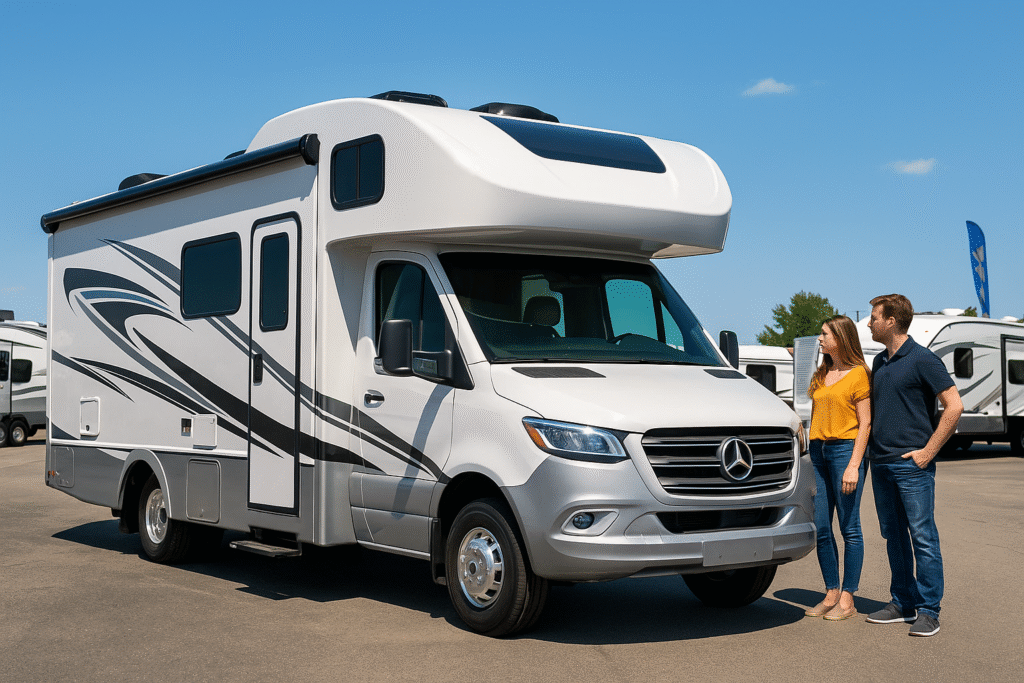
Skipping the Test Drive or Tow Test
You’d never buy a car without driving it first, and the same rule applies to RVs. How a rig drives, handles, and feels on the road tells you far more than any brochure or walk-around ever will. It’s a common RV buying mistake to assume all RVs tow or drive the same, but differences in visibility, braking, stability, and seat ergonomics become clear the moment you’re out in real traffic. The only way to know if a rig truly fits you is to spend time behind the wheel—or hitched up to your own truck.
Understanding How an RV Really Behaves on the Road
Large motorhomes and towable rigs behave differently than anything most new owners are used to. A Class A motorhome has a much longer stopping distance and a very different turning radius than a passenger vehicle. Even a comfortable driver’s seat in the lot can feel completely different after two hours of highway wind or uneven pavement.
Visibility changes as well. Every RV has its own blind spots, mirror angles, and sightlines, and a setup that looks fine parked may feel narrow or restricted once you’re lane-changing at 60 mph.
If you’re towing a travel trailer or fifth-wheel, tow stability is the real test. Weight distribution, hitch setup, and your truck’s suspension all work together. You can’t tell how safe it feels until it’s actually connected to your tow vehicle—not the dealer’s.
How to Make Sure the RV Fits You Before You Buy
The best way to avoid these problems is simple: insist on a real test. Not a parking-lot loop or a quick street drive—an honest test in real conditions.
Bring your tow vehicle if you’re buying a trailer or fifth-wheel and hitch it to your truck. Drive through turns, merge on the highway, feel the braking, and pay attention to how the rig responds at speed. Sit in the driver’s seat long enough to judge comfort and adjust the mirrors to see if visibility works for you.
Before your first big trip, spend time practicing in an empty parking lot or quiet rural road. Learning how your RV responds to tight turns, backing, acceleration, and braking builds confidence that makes every future trip smoother and safer.
Rushing the Inspection Process
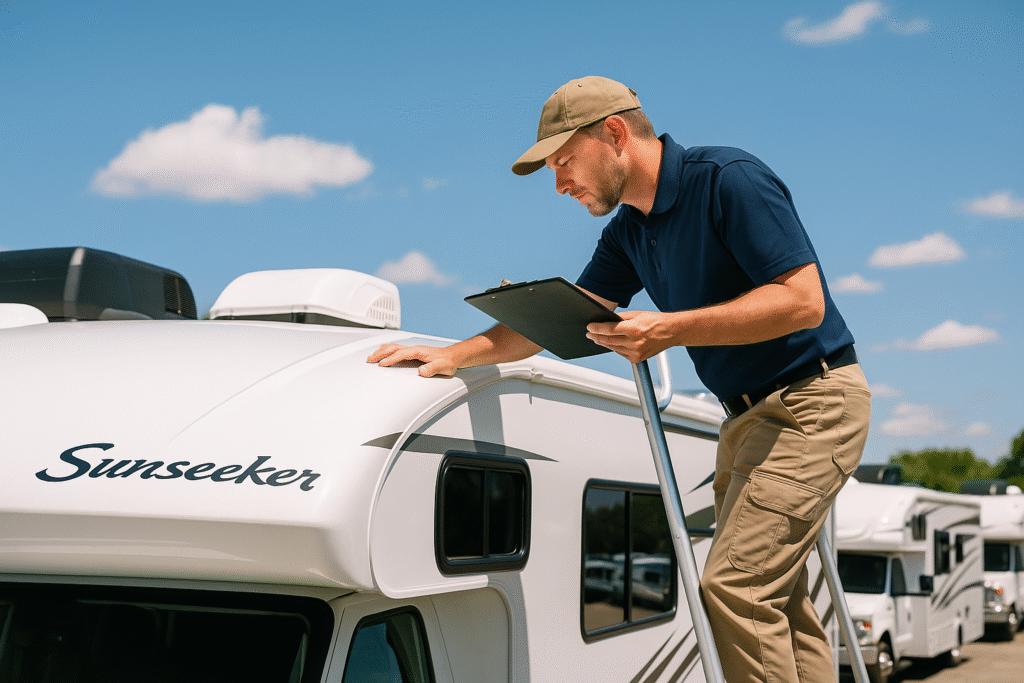
Whether you’re buying new or used, every RV deserves a thorough inspection before you sign anything. It’s easy to assume that a brand-new unit rolls off the factory floor in perfect shape, but even fresh rigs can leave the plant with small leaks, electrical issues, or misaligned slide-outs. Dealers move inventory quickly, and the pressure to “grab it before someone else does” often pushes buyers into skipping a careful inspection. Slowing down and giving the RV a real look is one of the smartest ways to avoid avoidable problems down the road.
What Causes Buyers to Rush
Excitement can take over fast. When you find a floorplan you love, it’s natural to worry about “losing the deal,” especially if a salesperson adds urgency. Phrases like “It’ll be gone by tomorrow” or “We have someone else looking at it” can make you feel like you need to move quickly. Add in the fact that RVs are built fast—especially during peak seasons—and it’s easy to assume the dealer’s pre-delivery inspection is enough. For new buyers who don’t yet know what to look for, that assumption becomes expensive later.
Issues That Often Hide During a Quick Walkthrough
Many of the biggest RV problems aren’t visible unless you take the time to look closely. Water damage is the most common: unsealed roof seams, cracked caulking, or small leaks under sinks can go unnoticed indoors but turn into costly repairs after your first rainstorm. Plumbing fittings, electrical grounding, or weak connections inside outlets often fail only under real load. Slide-outs need to be checked for smooth travel and proper sealing. Even frames and flooring can show early signs of stress that a quick once-over won’t reveal.
A dealership walk-around won’t uncover these issues. A careful, unhurried inspection will.
How to Slow Down and Do It Right
Plan on taking two to three hours to inspect any RV you’re serious about. Don’t let anyone rush you. Bring a checklist—your Free RV Inspection Checklist (PDF) makes it easy to stay organized through every step. If you’re buying used, consider hiring a certified inspector, ideally someone NRVIA-trained. They use moisture meters, voltage testers, and thermal cameras to find issues no one else can see.
Inspect during daylight, when it’s easier to spot flaws around corners, seals, and undercarriage areas. Test every major system on both power sources: generator, shore power, furnace, A/C, refrigerator, water heater, all plumbing, and every light and outlet. If anything seems rushed, unclear, or conveniently avoided—pause and look again.
Not Researching Campground Accessibility
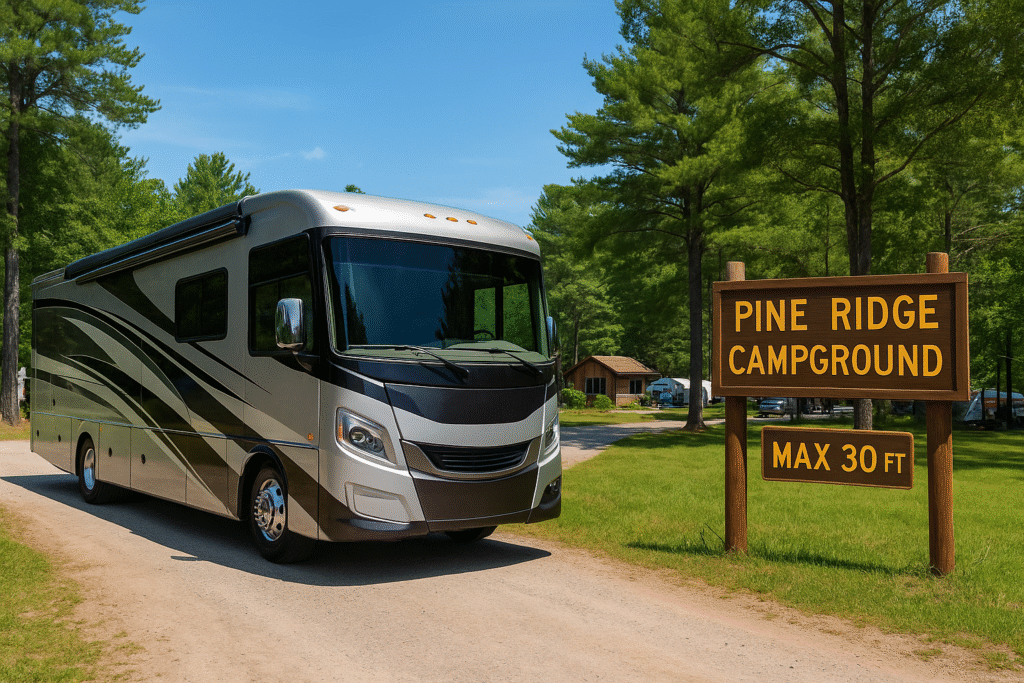
One of the biggest surprises for new RV owners is discovering that not every campground can handle every size rig. Older state and national parks were built decades ago, long before today’s longer trailers and tall motorhomes. Narrow loops, low clearances, limited hookups, and tight site layouts can turn a planned dream stop into a last-minute scramble for somewhere else to stay. Understanding accessibility ahead of time helps you avoid frustration and keeps your travel days smooth and predictable.
What Makes Some Campgrounds Challenging for Modern RVs
Many parks—especially national and state sites—were designed when 20–28 foot RVs were the norm. Today’s 35–45 foot rigs simply don’t fit into every space. Length limits are common, with many parks capping RVs between 27 and 35 feet. Height restrictions also matter: backroads, bridges, and older tunnels may only allow vehicles under 12–13 feet.
Hookups vary widely. Some campgrounds offer full water, sewer, and 50-amp service, while others offer only dry camping. Even site shapes can be a challenge—tight angles, limited turnaround room, or trees positioned near the approach can make maneuvering a larger Class A or a long 5th wheel trailer extremely difficult.
Sometimes the trouble isn’t the campground itself—it’s the road getting there. Steep grades, sharp turns, or low bridges can make access more difficult than the stay.
The Common Issues New Campers Don’t Expect
The biggest problems usually come from assumptions. Many first-time buyers assume that all paid campgrounds offer hookups, but many don’t. Others book based on photos alone, only to arrive and find tree cover, slope, or obstacles they couldn’t see online. A site listed as “big rig friendly” may only fit certain shapes or turning angles, not necessarily every long RV.
Understanding these limitations helps you plan realistically and prevents the stress of arriving somewhere you simply can’t stay.
How to Make Sure the Campground Fits Your RV
Doing a little homework upfront goes a long way. Always check the campground’s official website for length and height limits—they’re usually listed clearly on park pages. Tools like Campendium, The Dyrt, and AllStays are excellent for real-world photos, slope notes, and reviews from other RVers who’ve stayed there.
If you’re cutting it close on length or height, call the campground directly. Ask about site angles, obstacles, slope, and the condition of the approach roads. RV-friendly GPS appsDoing a little homework upfront goes a long way. Always check the campground’s official website for length and height limits—they’re usually listed clearly on park pages.
If you’re cutting it close on length or height, call the campground directly. Ask about site angles, obstacles, slope, and the condition of the approach roads. RV-friendly GPS apps like RV LIFE Trip Wizard or Roadtrippers help you avoid low bridges and tight roads along your route.
And always have a backup plan—another campground nearby or a boondocking spot—just in case the site you booked ends up being a poor fit for your rig.
And always have a backup plan—another campground nearby or a boondocking spot—just in case the site you booked ends up being a poor fit for your rig.
Whether you’re a seasoned RV traveler or new to the lifestyle, the RV LIFE GPS is an essential tool for navigating with ease and peace of mind. With its customized turn-by-turn directions (specific to your RV’s height, weight, and length), you can journey with confidence.
Overlooking Storage Solutions
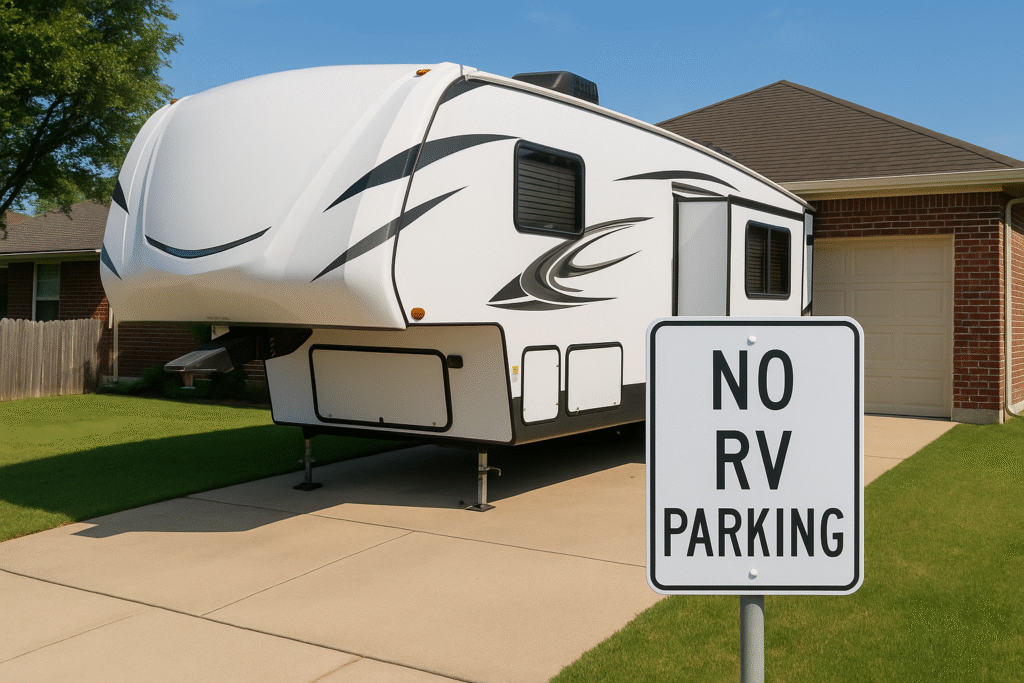
Your RV may take you anywhere, but it still needs a place to live when you’re not on the road. A common RV buying mistake is focusing so much on floorplans and features that storage never comes up until after the purchase. Then reality hits—an HOA that forbids driveway parking, a rig that won’t clear the carport roof, or a backyard that simply isn’t big enough. Long-term storage can become a significant monthly expense, and choosing the wrong option can shorten the lifespan of your RV.
Why Storage Gets Overlooked
Excitement tends to push logistics to the side. When you’re walking through a bright, shiny fifth wheel or motorhome, it’s easy to forget that a 35-foot rig needs a wide turn-in, a long parking spot, and clearance on multiple sides. Many buyers assume they can just park at home, only to discover city ordinances or HOA rules that restrict RV parking for aesthetic or safety reasons.
Even when home parking is allowed, weather exposure is a silent threat. Sun, rain, snow, and even humidity degrade sealants, paint, roofs, and tires far quicker than most new owners expect.
Why It Matters
An RV that sits exposed in your driveway or yard faces UV damage, water leaks, oxidation, and even pest infestations.
Leaving it uncovered can reduce resale value by thousands of dollars over time.
Why Proper Storage Makes a Long-Term Difference
An RV stored in the open faces UV damage, fading, cracking, water intrusion, oxidation, and even pest issues. Over a few seasons, this can mean thousands of dollars in preventable repairs. A covered or indoor storage solution dramatically slows wear and tear, preserving both your RV’s condition and its resale value.
Storage isn’t just about where your RV sits—it’s about how well it ages.
How to Find the Right Storage Plan for Your Situation
Before you buy, check your local regulations to make sure at-home parking is even permitted. If not, start researching storage options early. Websites like Neighbor.com and SpareFoot are great for finding indoor, covered, or secure storage near you.
Budget realistically—storage costs can range from $100 to $500 per month, depending on the size of your RV and where you live. If outdoor storage is your only option, invest in a high-quality RV cover designed specifically for your rig type to reduce UV and moisture damage.
If you live in an area with harsh weather, winterizing before storage is essential. Drain water lines, disconnect batteries, treat seals, and cover vents to keep your RV protected during long idle periods.
Planning ahead for storage may not be the most exciting part of RV ownership, but it’s one of the smartest steps you can take to protect your investment and enjoy your RV for years to come.
Buying Without Considering Your Tow Vehicle
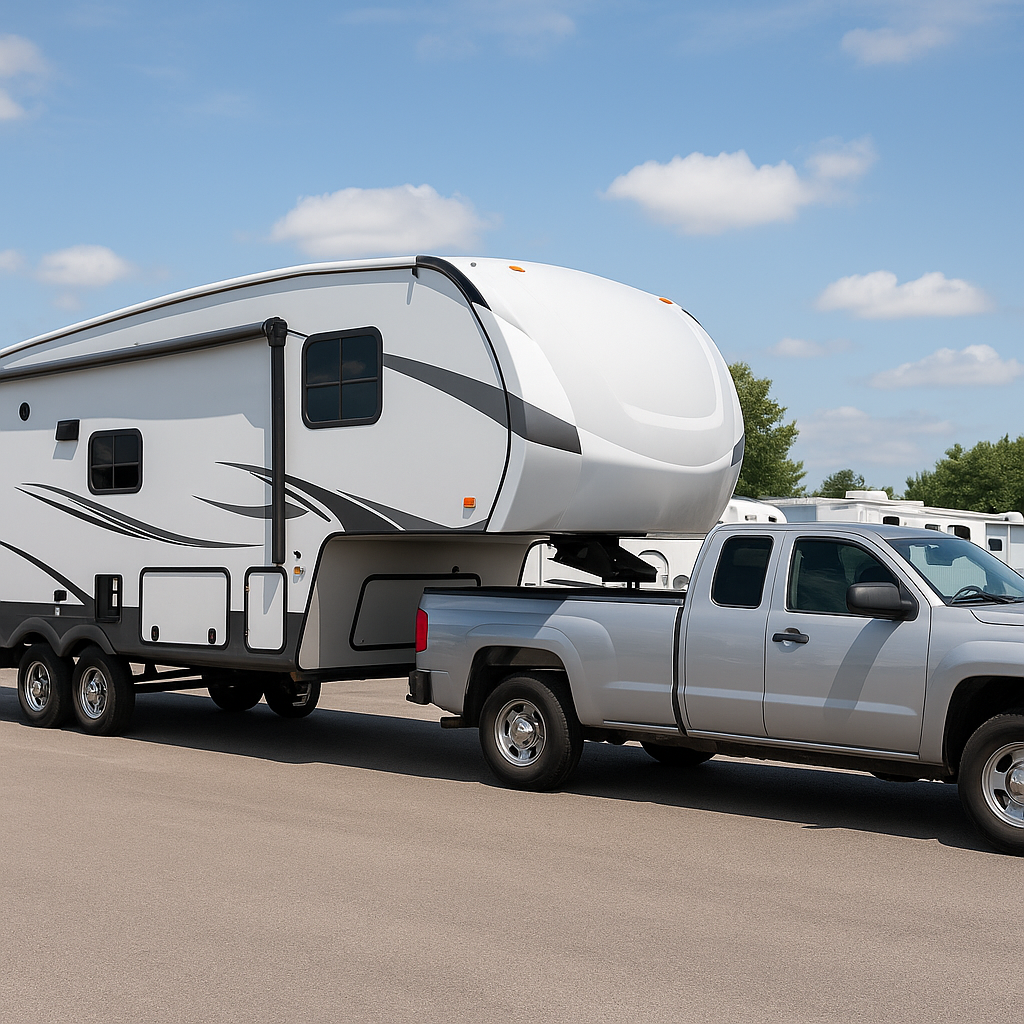
If you’re buying a towable RV—whether it’s a travel trailer or fifth wheel—your tow vehicle is every bit as important as the RV itself. Many first-time buyers fall in love with a trailer on the lot, only to learn later that their current truck can’t safely tow it. The reality is simple: the wrong truck-and-trailer combination isn’t just inconvenient—it’s unsafe, stressful to drive, and can become expensive to fix or upgrade later.
How Buyers Get Caught Off Guard
Dealers are focused on selling RVs, not tow vehicles. It’s common for a salesperson to say “your truck should handle this” without verifying ratings or doing the math. On top of that, brochures often list dry weight—a number that doesn’t include water, propane, batteries, cargo, or aftermarket accessories. A trailer that looks fine on paper can exceed safe limits once it’s loaded for a real trip.
Many new owners also underestimate the importance of payload capacity. Fifth wheels place 15–25% of their weight on the truck bed. Travel trailers typically place 10–15% on the hitch. When that tongue or pin weight is added to passengers, fuel, and gear, even a capable truck can find itself over its limits.
Upgrades can cause problems too. Adding a heavy bed cover, bigger wheels, or extra camping gear eats into your payload quickly—and payload is often the first number most trucks exceed.
The Problem in Real Life
Trying to tow too much weight can overheat your transmission, strain your brakes, and dramatically reduce stopping distance. A travel trailer that sways in crosswinds or a fifth wheel that pushes the truck downhill on grades creates real white-knuckle driving situations. Insurance can even deny claims if you’re found towing over your vehicle’s rated limits.
Even if nothing fails mechanically, towing over capacity makes every drive harder: slower climbs, longer stopping distances, reduced stability, and faster wear on critical components like tires, suspension, and the transmission.
How to Match Your Tow Vehicle and RV Safely
The goal is simple: pair your truck and trailer so they work together, not against each other.
Start by checking the hard numbers. Your vehicle’s GVWR (Gross Vehicle Weight Rating), GCWR (Gross Combined Weight Rating), and payload capacity are the foundation. You can find these on your driver-side door sticker or in the owner’s manual. A safe rule is that your loaded trailer weight should not exceed 80% of your vehicle’s maximum towing capacity—this gives you buffer for hills, wind, and real-world conditions.
If you’re unsure, use a Tow Compatibility Guide or calculator that includes trailer GVWR, pin or tongue weight, passenger load, gear, bed accessories, and hitch type. This gives you a realistic picture—not the overly optimistic numbers you see in ads.
If you need a new tow vehicle, choose one with a factory towing package, integrated brake controller, heavy-duty cooling system, and the right axle ratio. These features make a massive difference in stability and power when towing.
Proper equipment adds even more safety. A weight-distribution hitch with sway control improves handling for travel trailers. Tow mirrors expand your view, brake controllers improve stopping power, and good weight balance inside the trailer reduces sway and strain.
Taken together, these steps ensure your tow vehicle and RV work as a team—giving you safer handling, smoother towing, and a far more enjoyable travel experience.
Falling for Unnecessary Dealer Add-Ons
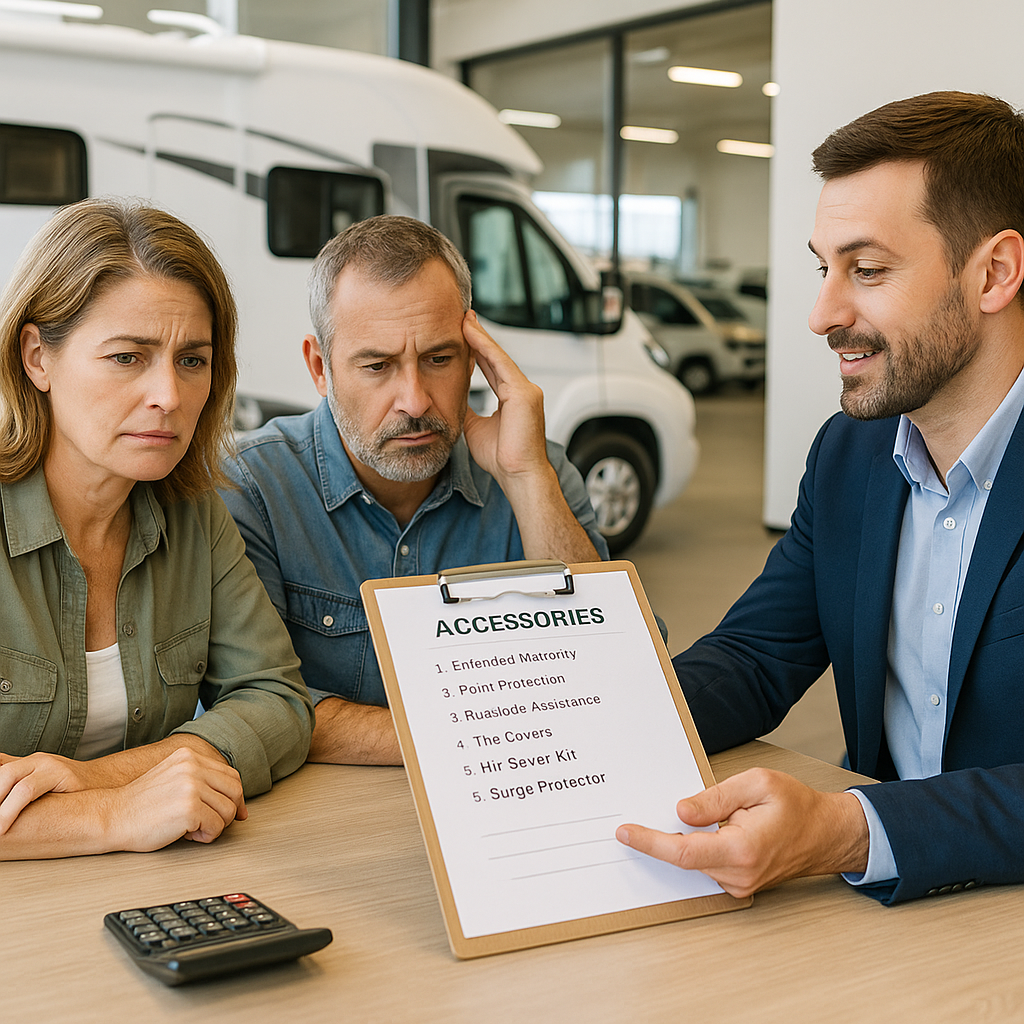
When you’re excited to buy your first RV, it’s tempting to say yes to every accessory or protection plan a dealership recommends. Sales reps often frame add-ons as “must-haves,” and it’s tough to know what’s genuinely useful versus what’s overpriced. Many items sound helpful in the moment, but you can often buy better versions online for half the cost—or skip them entirely.
How Dealers Create Pressure
Upselling is built into the dealership process. A big part of their profit comes from extended warranties, coatings, and accessory bundles. Rolling these items into your financing feels convenient, so buyers often accept them without comparing prices. New RV owners also don’t always know what gear they truly need, which makes it harder to separate essentials from gimmicks. And when a salesperson says, “It’s only a few more dollars a month,” those small numbers add up quickly once the financing stretches over 10–15 years.
The Add-Ons That Rarely Deliver Value
Many dealership add-ons sound practical but don’t actually provide the protection or convenience they promise. Extended warranties often include hidden exclusions that leave major repairs uncovered. Paint and fabric protection coatings can be done yourself for a fraction of the cost. “Starter kits” frequently include low-quality hoses or adapters that will need replacing anyway. Even GPS units or tire-pressure systems offered by dealers are usually older models with poor reviews.
The real issue isn’t that these items are bad—it’s that they’re overpriced and often unnecessary.
Smart Alternatives
You’ll get far better results by choosing your gear yourself. Buying online lets you pick high-rated essentials instead of whatever the dealership bundles into a package. Start with proven basics: a high-quality drinking-water hose, a sturdy sewer kit with a clear elbow, and a surge protector or EMS unit to protect your electronics from campground power issues.
TPMS systems are another worthwhile upgrade, especially for long trips or heavy rigs. In most cases, you’ll find newer models online with better reliability than what dealerships stock.
When it comes to protection plans, always read the full coverage document—not just the brochure summary. And skip bundled “starter kits.” Build your own checklist using your RV Gear Essentials Guide, and you’ll be buying gear once, not twice.
Taking a few minutes to compare prices and read reviews saves you money immediately—and gives you better equipment long-term.


Always review the out-the-door price before signing anything.
Dealers often slip add-ons into the final paperwork when you’re tired and ready to leave. Slow down, read every line, and ask the finance manager to remove anything you didn’t explicitly request. If it’s not on your written list, it doesn’t belong on your contract.
Ignoring Floor Plan Livability
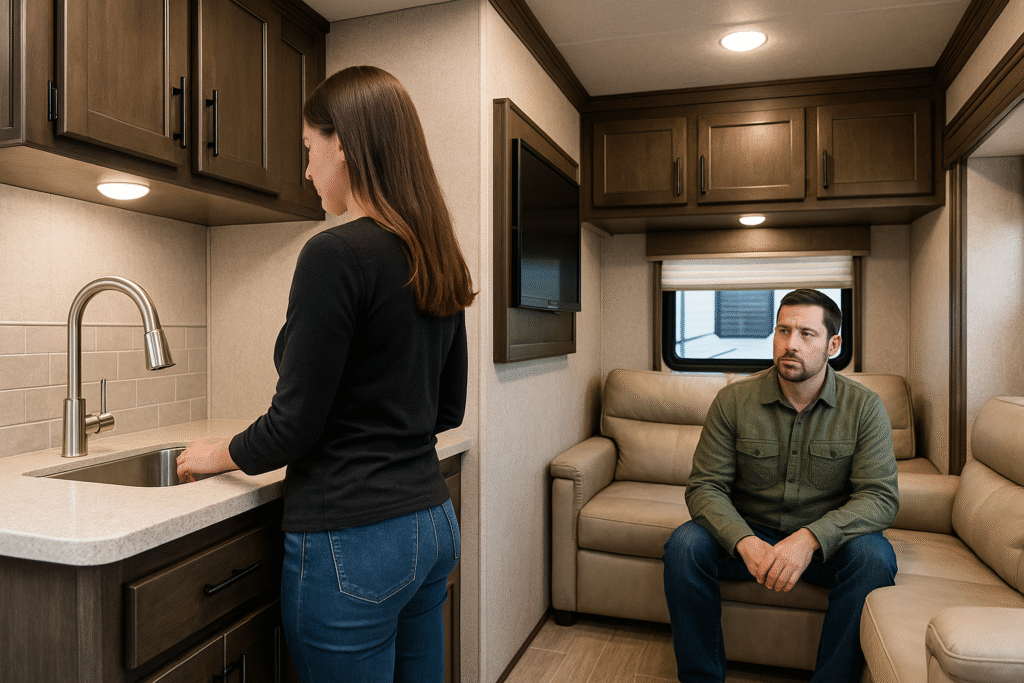
It’s easy to get swept up in the flashier parts of an RV—fireplaces glowing in the showroom, big-screen TVs, gorgeous countertops—but none of that matters if the layout doesn’t work once you’re living in it. Floor plan livability is what truly determines whether your RV feels comfortable, functional, and enjoyable after a few real trips. Many first-time buyers fall in love with the looks, only to realize later that basic daily routines—cooking, dressing, showering, or even walking around—are awkward or uncomfortable.
Why Floor Plan Livability Gets Overlooked
Dealerships know how to stage an RV to perfection. Bright lights, fully extended slides, and stylish décor make everything feel spacious and luxurious. New buyers walk through once, glance around, and assume it will feel the same when parked on a campsite, half-packed, or stuck inside on a rainy day.
Another issue is experience. If you’ve never lived in an RV before, it’s tough to know what you actually need in a layout. Weekend campers, long-haulers, and full-timers all need different flows. What looks perfect in a brochure may fall apart the moment you try to prep dinner or get ready for bed.
Common Layout Problems That Show Up Later
Things that feel minor in the showroom often become major frustrations on the road. Bathrooms that can’t be accessed when slides are closed, beds jammed into corners, kitchens with no prep space, and awkward seating angles that make TV viewing uncomfortable all become daily annoyances. Beautiful cabinetry may hide poor storage design, forcing you to constantly hunt for space.
How to Choose a Floor Plan That Actually Works
Before you buy, slow down and actually live in the layout. Sit at the dinette, stretch out on the bed, stand in the kitchen, and picture a full day inside the RV. Then close the slides and see if the space still works—the bathroom, fridge, and main walkway should remain accessible.
Measure the areas you’ll use most, from bed length to pantry depth. Watch owner walk-throughs online; real RVers point out issues the dealership won’t. And for total confidence, rent the same floor plan through Outdoorsy or RVshare for a weekend. One trip will tell you more than any brochure ever will.
A beautiful RV means little if it isn’t comfortable to live in. When in doubt, choose flow over flair—a smart, well-designed layout will make every trip easier, smoother, and far more enjoyable.
Not Joining the RV Community Before Buying
One of the most overlooked advantages first-time RV buyers have is the RV community itself. Nobody knows these rigs better than the people who live in them, tow them, repair them, and troubleshoot problems out on the road. Yet a lot of new buyers skip this step completely. They rely on salespeople, model brochures, or random YouTube videos without ever talking to the folks who’ve already made the mistakes they’re about to make. The result? Buyers walk into dealerships blind when they could be walking in informed, confident, and way harder to upsell.
Why New RV Buyers Skip the Community
It’s usually not intentional. Most people don’t know where to start. The amount of information online is overwhelming, and dealers push hard to “make a decision today,” which doesn’t leave room for slow, thoughtful research. Some buyers feel awkward asking strangers for advice, and others simply assume they’ll figure it out as they go. But the reality is that skipping the RV community means skipping years of real-world knowledge that would have helped long before you made your choice.
What You Miss When You Skip Real RV Experience
You miss the truth. Not the polished showroom version — the real version. Experienced RVers will tell you exactly which brands hold up, which floor plans fall apart on the road, which tow vehicles actually work with certain trailers, and what the real cost of ownership looks like over the first year. These are insights you will never hear from a salesperson. A five-minute conversation at a campground can save you thousands of dollars and months of frustration because someone else has already lived through the problems you’re trying to avoid. Getting this kind of honesty early gives you the confidence to walk past bad rigs, bad deals, and bad advice.
How to Join the RV Community Before You Buy
Start small and simple. Join forums like iRV2, RVillage, or the RV subreddit and read what owners are saying about the rigs you’re considering. Check out creators who give honest walkthroughs and real reviews — Josh the RV Nerd is one of the best. If you want the most accurate feedback of all, take a slow walk through a nearby RV park. RVers love talking about their rigs, what works, what they regret, and what they’d change if they could do it over. You’ll learn more in one park walk-through than in a full day at a dealership, and you’ll walk into your purchase with the kind of confidence only real-world insight can give you.
Connecting with the RV community before you buy isn’t optional — it’s a shortcut. It saves money, reduces mistakes, and helps you choose an RV that actually fits the way you want to travel. The sooner you plug into that experience, the better your first year of RV ownership will be.
Conclusion
Buying your first RV is a big decision, and it’s easy to get pulled in a dozen different directions when you’re new to the process. But when you slow down, focus on what truly matters, and lean on real-world experience instead of dealership pressure, everything becomes clearer and you will eliminate common RV buying mistakes. The right RV isn’t judged by how flashy it looks in a showroom — it’s the one that fits your travel style, your budget, and your confidence level on the road.
Every mistake in this guide comes from the same place: excitement mixed with uncertainty. And that’s normal. The goal isn’t to avoid every risk, but to understand what you’re stepping into so your first year of RV ownership is smooth, enjoyable, and full of the experiences you’re chasing. When you take the time to test-drive the rig, evaluate the floor plan, verify towing numbers, inspect carefully, and connect with the RV community, you’re already ahead of where most new buyers start.
The RV lifestyle is about freedom — freedom to move, explore, slow down, and spend time where life feels good. Choosing the right RV is the first step toward that freedom. With the knowledge you have now, you can walk into any dealership with total confidence, ask the right questions, avoid the common pitfalls, and choose a rig that supports the way you want to travel.
Your RV journey is just getting started. And now you’ve got the clarity to start it the right way.