
If you’re trying to keep bears away from your RV, it usually starts with a moment you didn’t expect. You’re sitting outside your RV as the sun goes down, everything finally quiet after a long day. The fire is crackling, maybe dinner just wrapped up, and it feels like one of those perfect campground evenings. Then you hear something in the trees. Not a squirrel, not a bird… something heavier. You pause, listen again, and realize it’s getting closer.
At first, most people don’t think “bear.” They assume it’s another camper, maybe a raccoon, or just normal forest noise. But then you notice movement near your cooler, or hear something knocking around your trash. That’s usually the moment it clicks—and by then, the bear is already in your campsite.
What surprises a lot of RV owners is how common this actually is in certain areas. Bears aren’t showing up because they’re aggressive or curious about your RV. They’re showing up because they’ve learned that campsites are an easy source of food. All it takes is one smell—leftover food, a greasy grill, pet food, or even something as simple as a scented item—and they’ll follow it right to your setup.
The part most people don’t realize is how powerful a bear’s sense of smell really is. They can detect scents from miles away, and once they associate campgrounds with food, they will keep coming back. That’s why one small mistake, like leaving a cooler out overnight, can turn into a repeat problem—not just for you, but for everyone who camps there after you.
It’s also why these situations can escalate quickly. A bear that becomes comfortable around people or RVs can lose its natural caution. What starts as a bear sniffing around your campsite can turn into one that expects food and doesn’t leave easily. That’s when things can become dangerous, and it’s a situation no one wants to deal with.
The good news is that most of this is preventable. Knowing how to keep bears away from your RV starts with understanding what attracts them and removing those triggers before they become a problem. And if you do encounter a bear, there are safe, proven ways to handle the situation and encourage it to move on without putting yourself at risk.
This isn’t about avoiding the outdoors or being afraid to camp in bear country. It’s about being prepared. With the right habits and a little awareness, you can enjoy your campsite, keep your RV secure, and reduce the chances of ever having a close encounter in the first place.
Why Bears Come Into RV Campsites
Bears don’t come into RV campsites because they’re looking for people, they come because they’re looking for food. Understanding this is the first step if you want to keep bears away from your RV and avoid unwanted encounters.
Campgrounds create an easy feeding ground for bears. Instead of searching through the wild for natural food sources, they find everything concentrated in one place. Coolers, trash, grills, and leftover food all give off strong smells that draw them in, often without campers realizing it.
Once a bear finds food at a campsite, it learns quickly. It doesn’t take long for bears to associate RVs and campgrounds with an easy meal. After that, they may return regularly, especially during the evening and overnight hours when campsites are quieter.
What makes this more of a problem is how small things can attract them. A cooler left outside, a trash bag not secured, or food residue on a table can all be enough. These don’t seem like major issues, but to a bear, they are clear signals that food is nearby.
Season also plays a role. During late summer and fall, bears are actively trying to build up energy for winter. This makes them more aggressive about finding food and more likely to move through campgrounds looking for opportunities.
If you want to keep bears away from your RV, the key is not reacting after they show up, it’s preventing the situation entirely. Once you understand what attracts them, it becomes much easier to make simple changes that keep your campsite from becoming a target.
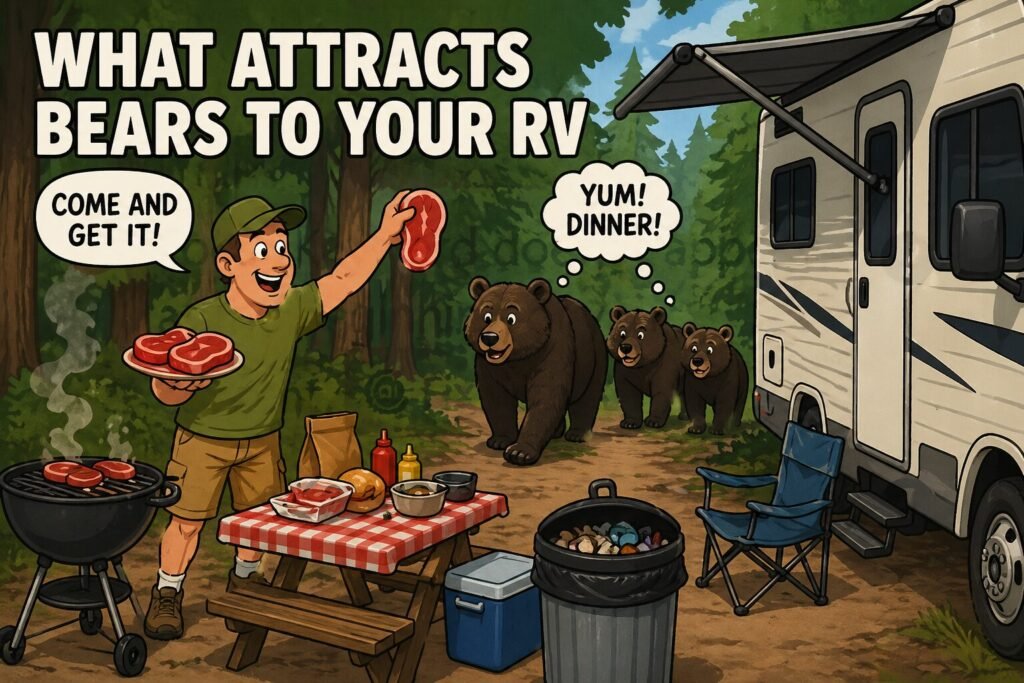
What Attracts Bears to Your RV
If you want to keep bears away from your RV, you need to understand exactly what’s drawing them in. Most of the time, it’s not something obvious. It’s small things that give off scent and signal an easy food source.
Food is the biggest attractant, but it’s not just open food sitting out. Sealed containers, coolers, and even food stored inside your RV can still produce enough scent for a bear to detect. Their sense of smell is strong enough to pick up odors through packaging, doors, and windows.
Many RV owners assume storing food inside the RV is completely safe, and in most established campgrounds, it usually is. However, in areas with active bear populations, especially in national parks or remote campgrounds, bears have been known to investigate RVs if strong food smells are present. That doesn’t mean your RV isn’t safe, but it does mean you should still be careful about how food is stored and avoid leaving strong odors lingering inside.
Trash is another major issue. Garbage bags, even when tied, release strong smells that travel through the campground. Dumpsters that are left open or overflowing can also attract bears and keep them coming back to the same area.
Cooking areas are often overlooked. Grease left on a grill, food scraps on a picnic table, or even dirty dishes can create lingering smells. These are easy targets for bears, especially at night when campsites are quiet.
Pet food is something many people don’t think about. Leaving pet food outside, even for a short time, can attract bears just as quickly as human food. The same goes for anything with a scent, including drinks, snacks, or leftovers.
Even non-food items can be a problem. Toiletries like toothpaste, deodorant, and scented wipes can attract bears in some areas. While this doesn’t happen everywhere, it’s common enough in bear country that it’s worth paying attention to.
If you’re trying to keep bears away from your RV, the goal is to remove anything that smells like food. The fewer scents you leave out, the less likely a bear is to stop and investigate your campsite.
How to Keep Bears Away From Your RV
Keeping bears away from your RV isn’t about reacting when one shows up, it’s about making sure your campsite never becomes interesting to begin with. Bears are always looking for the easiest food source available, and if your campsite doesn’t offer anything worth investigating, they will usually move on without stopping.
The first priority is controlling all food-related smells. Store food inside your RV when it’s not being used, and avoid leaving anything outside, even for a short time. In areas with active bear populations, it also helps to reduce strong odors inside your RV by wiping down surfaces, sealing food tightly, and not leaving food sitting out. While RVs provide a barrier, strong smells can still attract bears to the area.
Trash management is just as important as food storage. Garbage produces some of the strongest odors at a campsite, and it doesn’t take much to draw attention. Always use designated bear-proof dumpsters when available and make sure they are fully closed and latched. If dumpsters aren’t available, keep trash secured inside your RV until it can be properly disposed of. Leaving a bag outside overnight is one of the fastest ways to attract a bear.
Cooking areas need to be cleaned right away. After you finish cooking, take a few minutes to wipe down tables, grills, and any surfaces that had food on them. Grease, crumbs, and spilled drinks can all leave lingering smells that carry through the campsite. These are easy for bears to detect and often get overlooked by campers.
Coolers and storage containers should never be left outside unattended. Even if they are sealed, they still release scent, and bears are strong enough to break into them if they’re interested. What seems secure to you is not much of a barrier to a bear that smells food inside.
Pet food is another common issue. Feeding pets outside is fine, but bowls should be picked up immediately after use. Bags of pet food should always be stored inside your RV. This is one of the most overlooked attractants and can bring wildlife into your campsite quickly.
It also helps to keep your campsite simple and free of unnecessary items. The more things you leave out, the more opportunities there are for scent to build up. Keeping your setup clean and organized reduces the chances of anything being left behind that could attract a bear.
If you’re camping in areas known for bear activity, pay close attention to campground rules and posted warnings. Many campgrounds have specific guidelines for food storage and trash disposal, and they are there for a reason. Following those rules not only protects you but also helps prevent bears from becoming dependent on human food.
The goal is to remove every reason for a bear to stop. When your campsite doesn’t offer food, smells, or easy access to anything interesting, most bears will pass through without ever coming close.
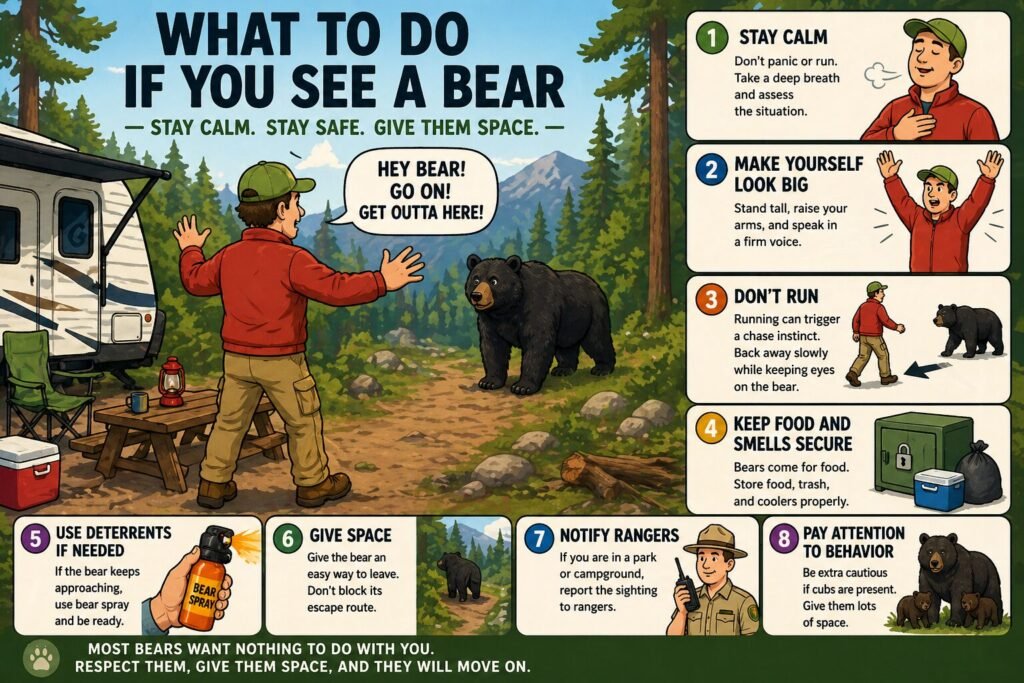
What to Do If You See a Bear
Seeing a bear near your RV or campsite can feel intense, but what you do in that moment matters. The goal is not to panic or run, it’s to stay calm, make yourself known, and give the bear a reason to move on.
The first step is to stay calm and assess the situation. Most bears are not looking for a confrontation. If the bear hasn’t noticed you, avoid sudden movement and slowly create distance. If it has seen you, stand your ground and make it clear that you are human without acting aggressive.
Make yourself look bigger and make noise. Stand up straight, raise your arms, and speak in a firm, steady voice. You don’t need to yell wildly, just be loud enough that the bear recognizes you as a person. In many cases, this is enough to make the bear lose interest and leave.
Never run. Running can trigger a chase instinct, and you won’t outrun a bear. Instead, back away slowly while keeping your eyes on the bear. Give it space and an easy path to leave the area without feeling cornered. Climbing a tree is also not a safe option. Many bears are excellent climbers and can follow you, so staying on the ground and creating distance is the safer approach.
Keep food and smells out of reach immediately. If a bear is in your campsite, it’s usually there for a reason. If it finds food, it may stay longer or return later. Removing the attractant quickly, if it’s safe to do so, can help end the situation.
If the bear continues to approach or doesn’t leave, this is where deterrents come into play. Tools like bear spray are widely recommended in bear country and can be effective when used properly. They are designed to stop a bear without causing long-term harm and give you time to get to safety.
If you are camping in a campground or national park, it’s important to report the sighting. Notifying park staff or rangers helps them track bear activity and warn other campers if needed. In many areas, this is encouraged or required to keep both people and wildlife safe. You’ll often see posted warnings or notices at campgrounds if there has been recent bear activity, so paying attention to those signs can give you an early heads-up before you even set up camp.
Also pay attention to the type of bear behavior. A curious bear moving through is very different from one that is acting defensive or protecting cubs. Giving extra space is especially important if cubs are present.
For official safety guidance and best practices, it’s worth reviewing recommendations from the National Park Service, which outlines how to handle encounters safely in different situations. Many campgrounds in bear country follow similar guidelines recommended by the U.S. Forest Service, which outline how to properly store food and reduce attractants.
Most bear encounters end without incident. Staying calm, making your presence known, and not giving the bear a reason to stay are the key factors in keeping the situation under control.
Final Thoughts on Keeping Bears Away From Your RV
Camping in bear country doesn’t mean you’re doing something risky, it just means you need to be a little more aware of how you manage your campsite. Most bear encounters aren’t random, and they usually don’t happen without a reason. In almost every case, something attracted the bear in the first place.
The good news is that this is one of the most preventable problems you’ll deal with while RVing. When you control food, trash, and scents, you remove the main reasons a bear would ever come near your RV. Small habits, like cleaning up after cooking or securing your garbage, make a bigger difference than most people realize.
It also helps to pay attention to your surroundings. If you’re in an area known for bear activity, take campground warnings seriously and adjust your setup accordingly. These areas are usually clearly marked, and a little extra caution goes a long way in keeping things safe.
At the same time, seeing wildlife is one of the best parts of RVing. Watching animals in their natural environment is something you don’t get from a hotel or a typical vacation. Moments like spotting deer at sunrise or hearing animals moving through the woods at night are part of what makes camping feel real and memorable.
And if you do see a bear, staying calm and handling the situation the right way is just as important as preventing it. Most of the time, the bear is just passing through or looking for food, not looking for trouble. Giving it space and not creating a reason for it to stay is what keeps the situation from escalating.
At the end of the day, this isn’t about avoiding great campsites or staying out of the woods. It’s about understanding how wildlife interacts with campgrounds and making a few simple adjustments so your RV isn’t part of that pattern.
With the right approach, you can camp confidently, enjoy your surroundings, and keep your RV—and your campsite—off the list of places bears come back to.
More RV Safety Tips You Shouldn’t Miss
If The Bears Do Come In
Keep Mice Out of Your RV
Snakes Around RV Campsites
RV Campsite Setup Guide