
Finding the right RV campsite size is one of the most important parts of planning a stress-free RV trip. A campsite might look beautiful in the photos, but if your RV doesn’t actually fit the site, that perfect reservation can quickly turn into a frustrating experience. Choosing the right campsite is about more than scenery — it’s about understanding your RV’s true dimensions and making sure the campground site can safely accommodate your rig.
Many new RV owners assume that if a campground lists a site as “30 feet” or “40 feet,” their RV will fit without any problems. In reality, campground site lengths can be misleading. Trees, narrow turns, sloped pads, and the position of utility hookups can all affect whether your RV fits comfortably. Even experienced RV travelers sometimes arrive at a campground only to realize the site is tighter than expected.
When I first started traveling with my 31-foot travel trailer, I made just about every rookie mistake you can imagine. I pulled into sites with low branches, struggled with tight campground turns, and once ended up on a pad that barely fit my tires. It was stressful and embarrassing at the time, but those early lessons taught me how important it is to understand both RV campsite size and the true dimensions of your rig before you reserve a site.
Over time, I learned how to measure my RV correctly, read campground site descriptions more carefully, and use simple tools like campground maps and satellite views to confirm whether a campsite will actually work. Those small steps make a huge difference when you’re planning a trip, especially if you’re traveling to a new campground or national park where site space can be limited.
In this RV campsite size guide, I’ll walk you through the simple steps that experienced RV owners use to choose the right campsite. You’ll learn how to measure your RV’s real dimensions, understand how campground site lengths work, and use a few easy techniques to confirm your RV will fit before you click the reserve button.
With a little planning, you can avoid the stress of arriving at a campsite that doesn’t fit your RV and instead pull in confidently, knowing the site will work for your setup.
When you know your RV’s true dimensions, choosing the right campsite becomes much easier. Accurate measurements help you evaluate campground listings more realistically, avoid reserving sites that are too small, and prevent damage to slides, awnings, or roof components. Taking a few minutes to measure your rig properly gives you the confidence to book campsites that truly match your RV campsite size requirements, making your travel days far less stressful and much more enjoyable.setup requires.
Know Your RV’s True Dimensions Before You Book
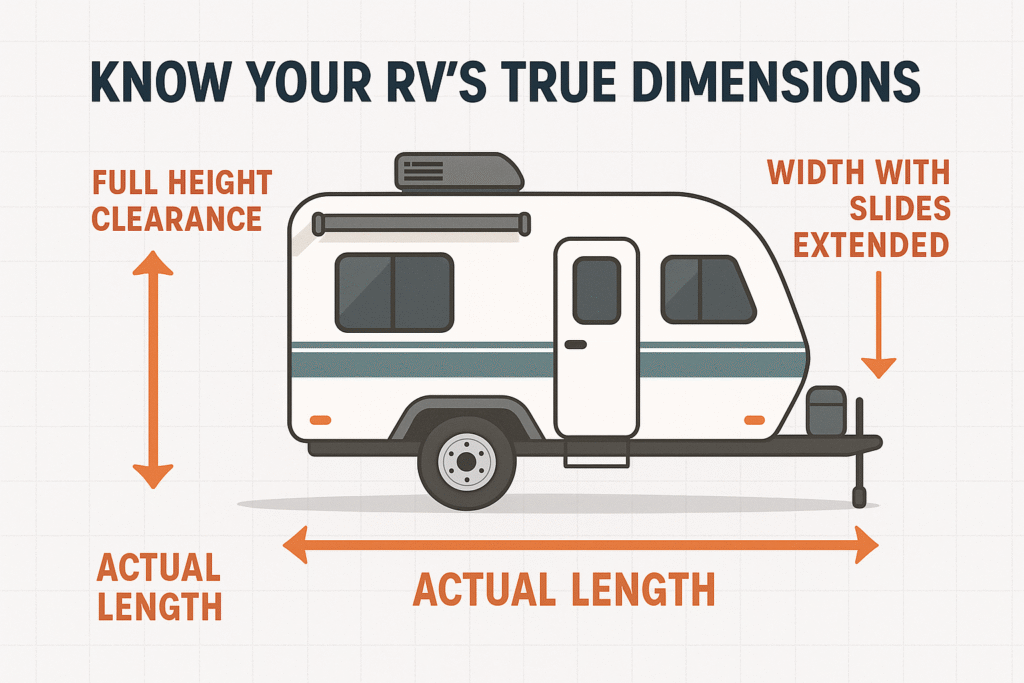
Before you can match your RV to the right campsite, you need to know the real measurements you’re working with—not the marketing numbers from a brochure and not the rough estimates many owners rely on when they first start RVing. Your RV’s true length, width, and height play a huge role in determining whether a campsite will actually work for your setup. Understanding these dimensions makes it much easier to evaluate RV campsite size, maneuver through campground roads, and confidently reserve a site that fits your rig.
One of the biggest surprises for new RV owners is that the length printed in brochures often refers to the interior floorplan, not the full exterior length of the RV. In real-world terms, the number on paper can be several feet shorter than the space your rig actually requires. To get an accurate measurement, you should measure from the very front of the RV—this includes the hitch, tongue jack, propane cover, or tow bar—all the way to the furthest point at the rear. Items like spare tires, ladders, bike racks, or cargo carriers all add length that needs to be considered when choosing a campsite.
It’s very common for a “30-foot” travel trailer to measure closer to 33 or even 35 feet when everything on the frame is included. Those extra few feet can make the difference between fitting comfortably in a campground site or struggling to squeeze into a space that’s too tight.
Width is another measurement that many RV owners overlook when planning their campsite reservations. Most RVs travel down the road at around 8 to 8½ feet wide, but that number changes dramatically once your slides are extended. Depending on the model, a trailer or motorhome with slides can expand to 12, 14, or even 16 feet of total width. Measuring your RV with the slides fully extended helps ensure you choose a campsite where you can actually open your RV once you’re parked. Tight campsites, trees, utility posts, and neighboring rigs can quickly become problems if you don’t know your expanded footprint.
Height is the dimension that tends to cause the most expensive mistakes, especially for new RV owners. RV height should always be measured from the ground to the tallest component on the roof, which is usually the air conditioner unit, vent cover, or satellite dome—not the center of the roof itself. Most towable RVs fall between 11 and 13 feet tall, while many Class A motorhomes are between 12 and 13½ feet. Once you get above the 13-foot range, paying attention to clearance becomes extremely important when traveling through older campgrounds, under tree branches, or along roads with low bridges.
Accessories can also affect how much space your RV actually needs at a campsite. Slides add several feet of space to one or both sides of the rig, awnings extend outward when deployed, and roof accessories like solar panels, Wi-Fi antennas, skylights, or storage pods can add unexpected inches to your overall height. In older campgrounds especially, leaning trees, uneven terrain, and tight site spacing can quickly reduce the usable space available.
Match Your RV Type to the Right Campsite
Not every campsite is designed for every type of RV, and understanding that difference is one of the easiest ways to avoid frustration when planning a trip. Campgrounds across North America vary widely in how they’re built. Older state parks, national parks, and scenic campgrounds were often designed decades ago when RVs were much smaller. Newer private RV parks and resorts, on the other hand, are usually built with today’s larger motorhomes and trailers in mind. When you match your RV type to the kinds of campgrounds that typically accommodate it best, finding a campsite that fits becomes far easier.
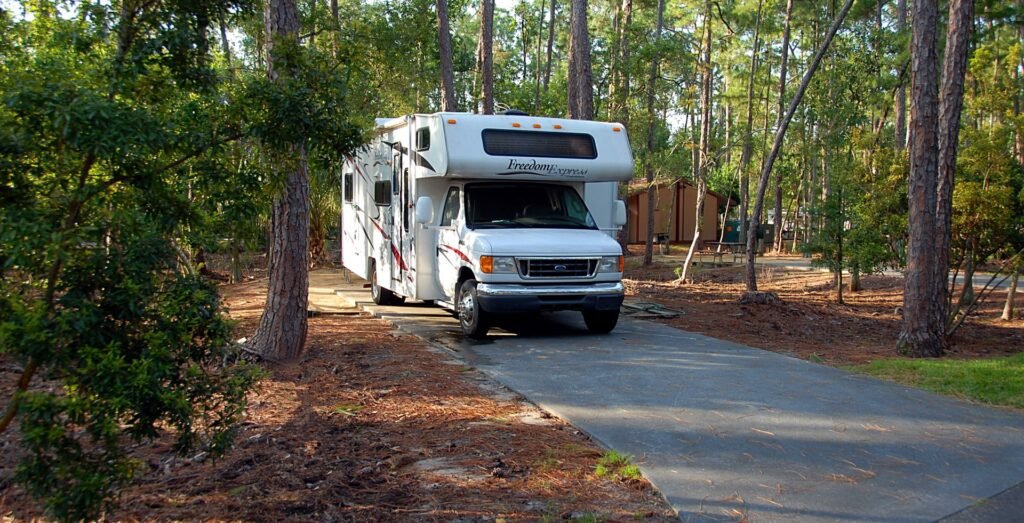
Large motorhomes like Class A and Super C coaches offer incredible comfort and space on the road, but they require campgrounds that can physically handle their size. Many of these rigs fall between 33 and 45 feet in length, and they often sit over 12 feet tall. While some public campgrounds do have sites that can accommodate big rigs, many state and national park campgrounds were built long before RVs reached their current size. Tight internal roads, sharp turns, and shorter campsite pads can make maneuvering a large motorhome difficult or even impossible in certain loops.
Big motorhomes tend to work best in private RV parks, RV resorts, and newer campgrounds that advertise themselves as “big-rig friendly.” These parks usually feature longer pads, wider roads, and pull-through sites that allow large coaches to park without complicated backing maneuvers. They also commonly provide 50-amp electrical hookups, which most large motorhomes are designed to use. While adapters allow a 50-amp rig to run on a 30-amp pedestal when necessary, doing so usually requires careful management of power usage inside the coach.
Class C motorhomes fall into a middle category that works well in many different campground environments. Typically ranging between 24 and 32 feet, these rigs are large enough to provide comfortable living space but small enough to access many of the same campsites available to travel trailers. Because of their more moderate length and tighter turning radius, Class C motorhomes can often fit into a wider range of state park and national park sites compared to large Class A coaches.
Most Class C motorhomes are designed to use 30-amp electrical service, although larger models sometimes include 50-amp capability depending on the manufacturer and floorplan. Their flexibility makes them a good choice for RVers who want to travel between private campgrounds, scenic public parks, and smaller campground loops without constantly worrying about site restrictions.
Class B camper vans offer the greatest flexibility of all RV types when it comes to campsite size. Typically measuring between 17 and 23 feet long, these compact rigs can fit into nearly any campground space that allows RVs. Their smaller footprint makes navigating narrow roads, tight campground loops, and wooded campsites much easier than with larger motorhomes or trailers.
Because of their size and efficient design, many Class B vans are built with off-grid travel in mind. Solar panels, battery systems, and smaller electrical loads mean they often do not require large electrical hookups to operate comfortably. This allows owners to choose campsites based on scenery and location rather than focusing strictly on utility access. National parks, forest service campgrounds, and scenic areas with smaller sites are often perfect matches for camper vans.
Travel trailers and fifth wheels introduce one additional factor that RVers must consider when choosing a campsite: the length of the entire towing setup. Campground listings usually provide the length of the campsite pad itself, but that measurement does not always account for the combined length of both the trailer and the tow vehicle. A travel trailer that measures 28 feet on its own can easily require a campsite that is 40 feet or longer once the truck is included in the overall setup.
Fifth wheels often require slightly less pad length than a travel trailer of similar size because the front portion of the trailer extends over the bed of the truck when towing. However, they still need adequate room for turning into the campsite and enough space on each side to extend slide-outs comfortably once parked. Utility hookups must also be positioned where water, sewer, and electrical connections can reach the trailer without stretching hoses and cables too far.
Private campgrounds and commercial RV parks typically accommodate towable RVs quite well because their sites are designed for modern RV travel. Older public campgrounds, however, can sometimes present challenges due to narrow loops, shorter pads, and closely spaced campsites. Understanding how your specific RV type fits within these campground designs will help you choose locations where your setup will work comfortably.
Matching your RV type to the right campground layout is one of the most effective ways to avoid stressful arrivals and difficult parking situations. When you know the general types of campsites that suit your rig best, you can focus on enjoying the destination instead of worrying whether your RV will actually fit once you get there.
Understand Campsite Types and What They Actually Offer
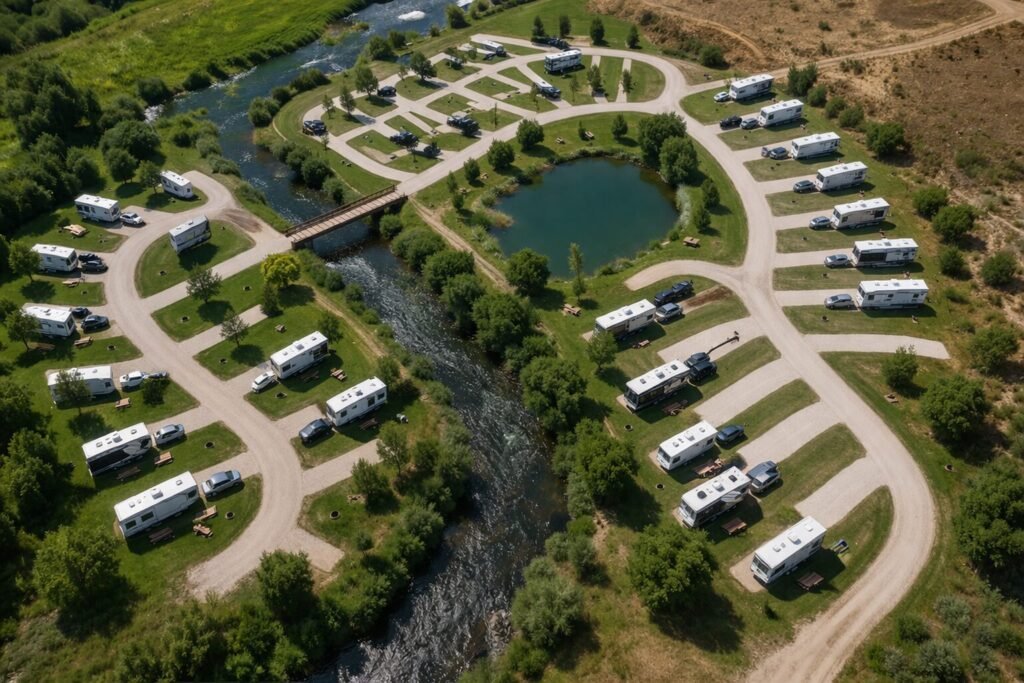
Every campground labels its sites a little differently, and those labels can determine whether your RV actually fits once you arrive. A “pull-through,” “back-in,” “full hookup,” or “partial hookup” site can mean different things depending on the campground, the age of the park, and how the sites were originally designed. Understanding the main RV campsite types helps you know what to expect before you book and prevents surprises when pulling into a campground.
Pull-through campsites are designed for the easiest arrival and departure. Instead of backing in, you drive straight through the site and exit from the other end. These sites are ideal for larger rigs, big motorhomes, and RVers who are making quick overnight stops and don’t want to unhook their tow vehicle. Many private RV parks place pull-through sites along the main campground roads for easier access, and they are often long enough for the entire RV and tow vehicle to remain connected.
Back-in campsites are the most common type of site in many campgrounds. These require backing your RV into the site from the campground road. Public campgrounds such as state parks and national parks rely heavily on back-in sites because they fit naturally into wooded loops and irregular terrain. While they require a little more maneuvering, back-in sites often provide better spacing, more trees, and a quieter camping experience once you are set up.
Full-hookup campsites provide the most convenience because all utilities are available directly at the site. These sites include electricity, fresh water, and a sewer connection so your RV can operate normally without worrying about tank capacity. Private RV parks and resorts commonly offer full hookups, usually with either 30-amp or 50-amp electrical service depending on the size of your RV.
Partial-hookup campsites typically provide water and electricity but do not include a sewer connection at the site. These are very common in state parks, national parks, and older campgrounds where installing sewer lines throughout the park was not practical. When staying at a partial-hookup site, RVers simply monitor their tank levels and use the campground dump station periodically during their stay.
Dry camping, also known as boondocking, means camping without any hookups at all. There is no water, electricity, or sewer connection, so your RV operates entirely from its onboard systems including fresh water tanks, batteries, and propane. These sites are common on public lands such as national forests, BLM land, desert areas, and remote mountain locations where developed campground infrastructure is limited.
Check the Road and Pad Before You Reserve
Before you hit “Book Now,” take a minute to look beyond the campsite photo and think about how you’ll actually get there. Many campgrounds were built decades before today’s larger RVs became common, which means narrow interior roads, older tree growth, and tight campsite pads can turn a good reservation into a stressful arrival. Looking closely at access and pad layout ahead of time helps confirm the site is truly workable for your specific RV.
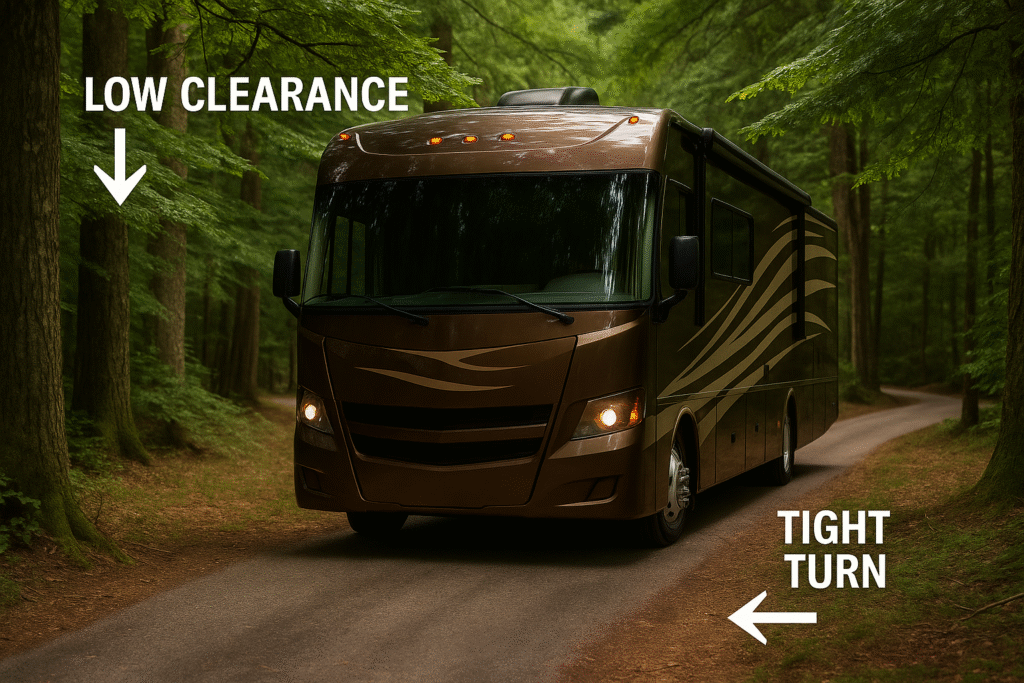
The road into the campground is the first thing to evaluate. Not every park entrance or internal road was designed for long rigs or trailers. Some approach roads include steep grades, tight curves, narrow bridges, or switchbacks that can make maneuvering difficult, especially while towing. Grades around 8–10% can challenge even powerful trucks and motorhomes when climbing or descending slowly through a campground entrance. Satellite view in mapping apps is useful for spotting narrow approaches, tight turns, and whether the entrance is straight or requires a sharp turn from the highway. Campgrounds that specifically advertise “Big Rig Friendly” or “Easy Access” usually have wider roads and more forgiving layouts, but it’s still worth confirming the actual route.
Overhead clearance is another detail many RVers forget to check until they’re already committed to the drive. Tree branches, hanging signs, older park infrastructure, and low bridges can create unexpected height restrictions on campground roads. Most modern RVs are built to stay under about 13 feet 6 inches tall, but rooftop air conditioners, antennas, and satellite domes can still make certain park entrances tight. Older state parks and forest campgrounds sometimes have mature trees growing close to the roadway, which can narrow the usable height even when official clearances look safe.
The campsite pad itself can also be misleading when viewed online. Many campground listings report only the paved portion of the site rather than the total usable space. A site listed as 40 feet long may only have 40 feet of gravel while the remaining space slopes toward trees or a roadway. For trailers and fifth-wheels, you need enough room for the trailer plus the tow vehicle, and ideally a few extra feet to comfortably straighten out and level. Some parks allow the tow vehicle to park sideways or in overflow areas, but that isn’t always guaranteed.
Surface type affects setup more than many new RVers expect. Concrete pads are typically the easiest because they’re level and stable for stabilizer jacks. Gravel pads drain well but often require leveling blocks to fine-tune the RV’s position. Grass or dirt pads may look appealing but can become soft or uneven after rain, sometimes causing jacks or tires to sink slightly overnight. Knowing the surface ahead of time helps you bring the right leveling gear and stabilizer pads.
Even when the pad length works, side clearance can create problems once the RV is set up. Slide-outs require several feet of space to extend fully, and obstacles like trees, picnic tables, fire rings, posts, or electrical pedestals can limit how far they can open. Some campsites look spacious from the front but have trees positioned exactly where a slide would extend. Checking satellite images or campground photos can often reveal these obstacles before you arrive.
The goal is simple: confirm that you can reach the site safely, fit the entire RV comfortably on the pad, and still have enough room around the coach once everything is set up. Taking a few minutes to verify road access, pad length, surface type, and slide-out clearance can prevent the most common campground setup problems RVers run into on arrival.
Whether you’re a seasoned RV traveler or new to the lifestyle, the RV LIFE GPS is an essential tool for navigating with ease and peace of mind. With its customized turn-by-turn directions (specific to your RV’s height, weight, and length), you can journey with confidence.
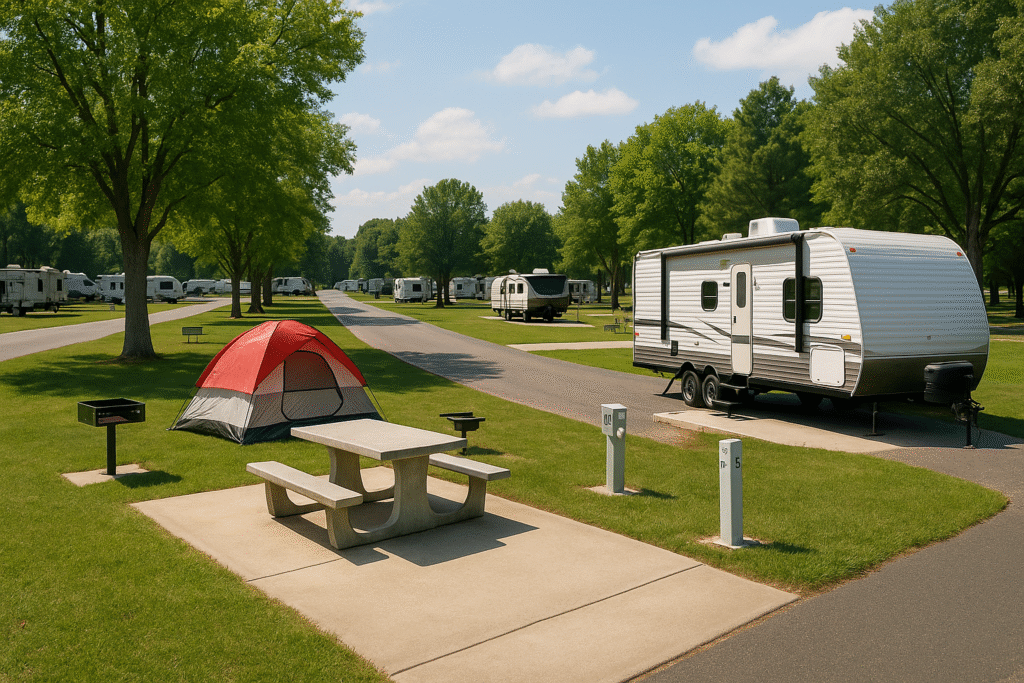
Location, Amenities and Accessibility Factors That Matter
Once your RV fits the site and the hookups match what you need, the next step is choosing a spot that actually feels good to stay in. The best campsites balance convenience, comfort, and scenery so you can relax without constantly driving around the campground for basic needs.
Even if your RV has its own bathroom and shower, campground restrooms and shower houses can make life easier, especially for families or longer stays. Well-maintained facilities give you more space, stronger water pressure, and unlimited hot water compared to your RV’s tanks.
Reviews are often the best way to judge cleanliness and maintenance because some parks maintain their facilities daily while others may fall behind during busy weekends. Laundry rooms can also make a big difference during extended trips. Larger parks and RV resorts often have multiple washers and dryers, while smaller campgrounds may only have one or two machines, which can lead to long wait times.
If you’re staying at a partial-hookup site or dry camping, easy access to a dump station becomes important. The layout of the dump station matters more than many people expect. Tight turns, narrow approaches, or a single dump lane can quickly create backups during busy checkout times. Parks that provide wide dump-station access or multiple lanes make the process much easier, especially for larger rigs. It’s also helpful when campgrounds provide separate rinse water and freshwater fill stations so you don’t have to wait in line just to refill your tank.
Campground stores can also save you time and effort during your stay. A well-stocked store can provide basic groceries, firewood, ice, RV supplies, and small essentials you might have forgotten to pack. Larger RV resorts often sell propane as well, which allows you to refill tanks without breaking camp and driving into town. Smaller parks may only carry limited supplies, so if propane access is important for cooking, heating, or refrigeration, it’s worth confirming availability before you arrive.
Recreation options can shape the overall campground experience as well. Many parks offer amenities like pools, playgrounds, walking trails, or bike paths that help families stay entertained without leaving the campground. Some RV resorts host organized activities, movie nights, or seasonal events that create a more social atmosphere. If you prefer a quieter stay, look for campgrounds with designated quiet loops or sites farther away from activity areas. Pet owners may also want to check whether the park offers dog parks or walking areas and whether any leash rules or breed restrictions apply.
Connectivity has also become an important factor for many RV travelers. Campground cellular service can vary dramatically—even within the same park—depending on terrain, trees, and distance from nearby towers. Checking campground reviews on apps like Campendium often reveals real-world signal tests by carrier, which can be more reliable than basic coverage maps. If you rely on internet access for work, navigation, or streaming, a cell booster or satellite system like Starlink can make a big difference. Sites located closer to the campground office, lodge, or Wi-Fi access points usually provide stronger and more stable connections.
The exact position of your campsite inside the campground can also affect your stay more than many RVers expect. Sites near the entrance allow quick access for coming and going but often come with more traffic and road noise. Campsites deeper inside the park tend to be quieter and may offer better scenery, especially near lakes, rivers, or wooded areas. Corner and edge sites sometimes provide extra space, airflow, and privacy compared to sites in the middle of a row.
The direction your site faces can also influence comfort throughout the day. North-facing sites often stay cooler during hot summer months, while south-facing pads receive more sunlight during cooler seasons. Waterfront and premium view sites typically cost more, but they often deliver the scenery that makes a campground memorable. If your trip is centered around relaxing outside, the amount of sun, shade, and overall view from your campsite can matter just as much as the hookups themselves.
Choosing the right campsite isn’t just about utilities. Taking a few minutes to consider facilities, connectivity, campground layout, and the exact position of your site can turn a basic reservation into a comfortable place you’ll actually enjoy staying.
Reservation Strategies and Tips
Finding the perfect campsite doesn’t help much if it’s already booked. With RV travel more popular than ever, many desirable campgrounds fill months in advance, and the most scenic sites can disappear within minutes of reservations opening. Knowing when to book, where to look, and what to verify before confirming a site can make the difference between settling for what’s left and securing a spot that actually fits your rig and travel plans.
How far in advance you should book depends largely on the season and how popular the destination is. Summer weekends and major holidays tend to fill the fastest, especially near lakes, beaches, and national parks. In those situations many RVers reserve sites six to twelve months ahead of time. National parks and some coastal campgrounds typically open reservations about six months in advance, and the most desirable sites often disappear quickly once the booking window opens.
During shoulder seasons like spring and fall, planning one to three months ahead is usually enough unless you’re visiting a well-known destination. In the off-season, weekday sites are often available with much shorter notice, and it’s sometimes possible to find good campsites with only a week or two of planning.
Using multiple booking tools improves your chances of finding available sites. No single website lists every campground, and each platform may show different cancellations or inventory. Federal campgrounds and most national parks are managed through Recreation.gov, while many state parks use systems such as ReserveAmerica. Apps like Campendium, The Dyrt, and Hipcamp often help uncover private campgrounds or unique sites that might not appear in traditional booking systems. Some travelers also use alert services that notify them when someone cancels a reservation, which can be helpful when trying to book popular parks that appear fully reserved.
Before confirming a reservation, taking a moment to verify details about the site itself can prevent surprises when you arrive. A quick phone call to the campground can often provide information that booking websites don’t clearly explain. Asking about the exact pad length and width, nearby obstacles like trees or rocks, the location of hookups, shade during the afternoon, and the road conditions leading into the site can help confirm whether your RV will actually fit comfortably. These small details matter, especially for larger rigs or parks with tight loops and older layouts.
Even fully booked campgrounds experience cancellations, so flexibility can sometimes open up opportunities. Checking availability a few days before your planned arrival often reveals sites that have just been released back into the system. Many cancellations occur within the week leading up to a reservation, so regularly checking during that time can pay off. Shifting your arrival or departure by a single day can also make a previously unavailable campsite suddenly appear.
Understanding cancellation policies is just as important as securing the reservation itself. Many private campgrounds offer full refunds if you cancel at least a week before arrival, while some state and national park systems charge small cancellation fees or require longer notice. Waiting too long to cancel may result in losing part of your reservation cost, and some parks treat a no-show as a full forfeiture of the stay. Reviewing these policies before booking helps you plan with confidence and avoid unnecessary fees if your travel plans change.
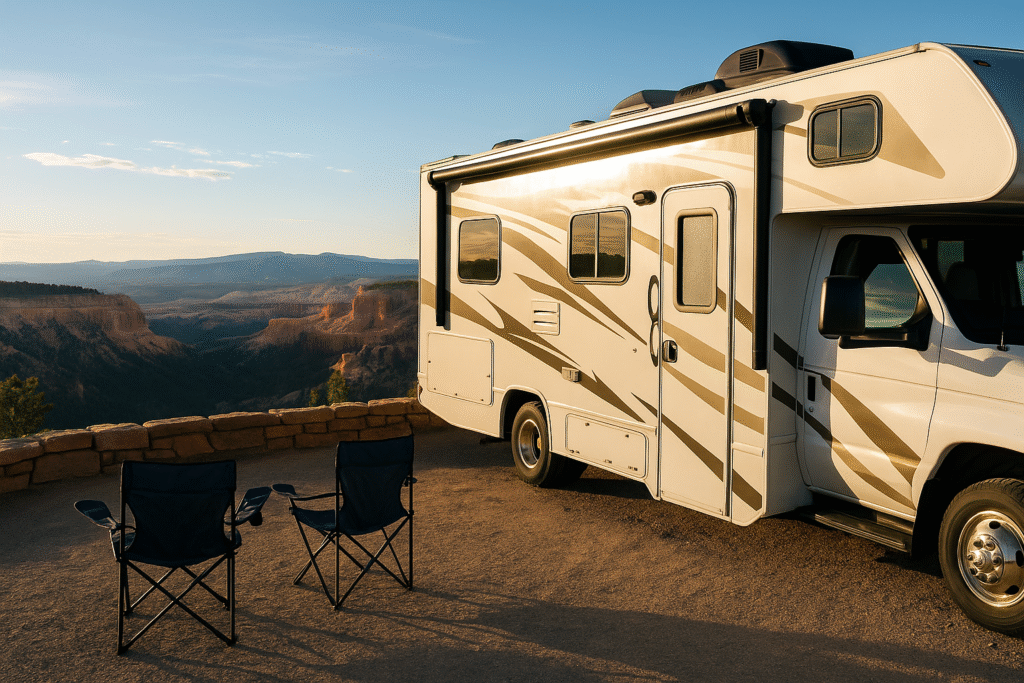
Special Considerations for Different RV Sizes
RV size has a major impact on which campsites will realistically work for your trip. A 45-foot Class A motorhome behaves very differently than a compact camper van, and a mid-size travel trailer sits somewhere in between. Thinking ahead about total length, turning space, road access, and electrical needs helps prevent stressful arrivals where you discover tight corners, low branches, or dead-end loops that make maneuvering difficult.
Large RVs such as Class A motorhomes and big fifth wheels in the 35–45 foot range require campgrounds built with wider roads, longer pads, and infrastructure designed for heavier rigs. When traveling in this category, it’s usually best to focus on campgrounds that specifically advertise big-rig access or modern park layouts with wide interior loops. Many older campgrounds were designed decades ago when RVs were much smaller, and those parks can include tight curves, narrow entrances, or tree cover that makes arrival challenging for large rigs.
Choosing 50-amp sites whenever possible can also make setup easier, not just because of the extra electrical capacity but because those sites are often built with longer pads and straighter pull-through approaches. Arriving during daylight helps tremendously as well, since branches, posts, and tight corners are much easier to judge in natural light than under headlights. When booking, it can also help to call ahead and ask the campground what the longest RV they’ve hosted is, which often provides a quick reality check on whether your rig will truly fit.
Mid-size RVs such as Class C motorhomes and travel trailers in the 25–35 foot range tend to fall into the “sweet spot” for campground flexibility. This size category fits comfortably into many state parks and national park sites while still offering enough interior space for longer trips.
Many campground layouts are effectively designed around rigs in this range, which means you’ll often have more site options than very large RVs. Back-in sites frequently work well for mid-size rigs because they’re often quieter and positioned in more scenic areas compared to the busiest pull-through lanes. In moderate weather, these rigs can also comfortably use 30-amp electrical sites, which sometimes cost a little less than larger full-power spots if you manage your power usage carefully.
One thing to watch for, however, is slide-out clearance. Trees, picnic tables, and posts near the edge of the pad can limit how far slides extend even when the site technically fits your RV. Having a backup camera or using simple communication tools like walkie-talkies during setup can make positioning the rig much easier when space is tight.
Smaller RVs such as camper vans, Class B motorhomes, and compact travel trailers under 25 feet offer the most flexibility when it comes to campsite selection. These rigs can often fit into tent sites, mixed-use loops, or older campgrounds that enforce strict length limits. Many national parks and forest campgrounds that restrict larger rigs still accommodate vans and small trailers comfortably. If you enjoy boondocking or exploring remote areas, smaller RVs also handle rougher access roads much more easily than longer rigs. Forest service roads, BLM land, and remote mountain camps often become far more accessible when your overall length stays under 25 feet, allowing you to reach quieter campsites that larger rigs simply can’t access.
Choosing the right campsite always comes down to matching your RV size with the type of campground you’re visiting. Understanding how different rig lengths interact with road layouts, pad sizes, and campground infrastructure makes it much easier to pick sites that allow for a relaxed arrival and a comfortable stay.
Seasonal Camping Considerations
The time of year you travel can change almost everything about a campground stay, from site availability to comfort and even the type of equipment you’ll need. A campsite that feels perfect in summer might be miserable in winter, and a sunny open pad that works well in spring can become unbearably hot in July. Understanding how seasons affect campground conditions helps you choose sites that stay comfortable throughout your trip.
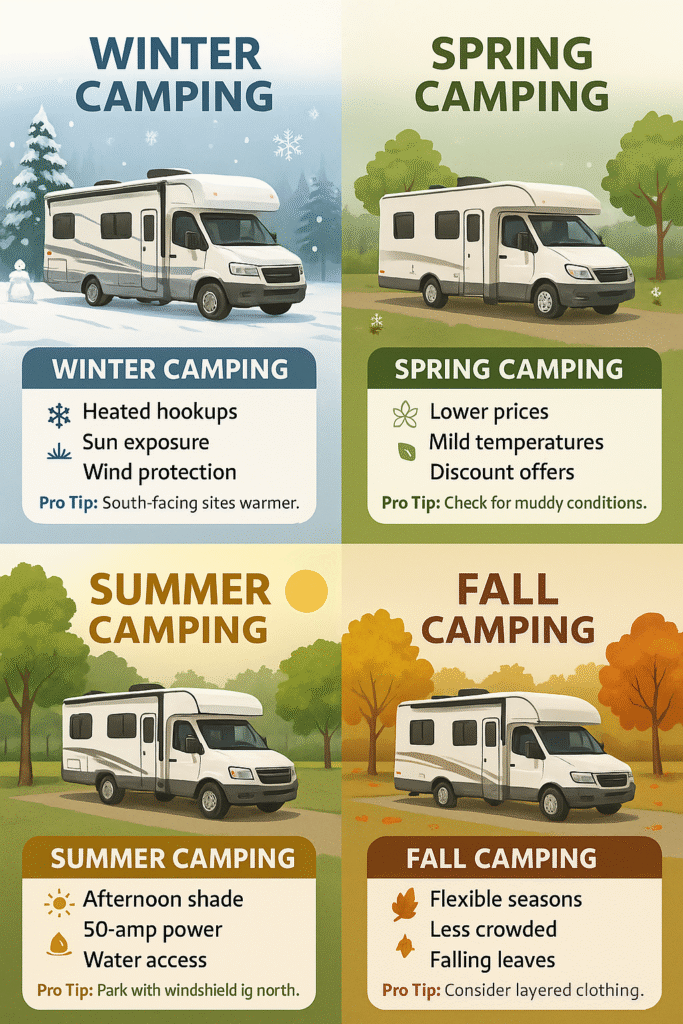
Winter camping can be beautiful and peaceful, but it introduces challenges that many RVers don’t expect at first. Water lines and hoses can freeze quickly in sustained cold, and icy pads or shaded sites may stay slick for days without direct sunlight. Before booking a winter stay, it’s important to confirm whether the campground offers heated water hookups or plan to bring a heated hose to prevent freezing.
Wind exposure also becomes a major factor during colder months. Sites tucked near trees, hillsides, or buildings can reduce wind and help retain heat inside the RV. Some campgrounds close entire loops during winter, so checking the park map ahead of time helps avoid surprises on arrival. Choosing a site that faces south can also make a noticeable difference, since southern exposure warms the pad earlier in the day and melts ice more quickly, making mornings outside far more comfortable.
Summer camping shifts the priorities in the opposite direction. When temperatures climb, shade and airflow become far more important than direct sunlight. Sites with mature trees or afternoon shade on the passenger side of the RV tend to stay cooler throughout the day. Electrical service also matters more in hot weather, especially if you plan to run multiple air conditioners. Choosing a 50-amp site whenever possible gives your RV the electrical capacity needed to keep interior temperatures manageable during heat waves.
Surface type plays a role as well. Blacktop and paved pads absorb heat all day and release it slowly into the evening, which can make nights feel warmer than expected. Campgrounds located near lakes, rivers, or pools often feel noticeably cooler and provide natural ways to escape the heat. Parking orientation can also help manage temperature inside the RV. When possible, pointing the windshield toward the north keeps direct sunlight off the largest glass surface and reduces the amount of afternoon heat building up inside.
Spring and fall, often called shoulder seasons, are some of the best times to travel because they combine comfortable temperatures with lighter crowds. Campgrounds tend to be quieter and easier to reserve, and many parks offer discounted rates during these months.
Conditions on the ground can still vary, though. Spring snowmelt and rain can leave grassy or dirt pads muddy, while autumn storms can soften the ground under thick layers of fallen leaves. Temperatures during shoulder seasons can swing dramatically throughout the day, sometimes shifting 30 to 40 degrees between morning and afternoon. Having flexible ventilation, layered clothing, and the ability to quickly adjust heating or cooling inside the RV becomes important.
For many travelers, these seasons provide the most comfortable camping weather, offering warm days, cool nights, and scenic surroundings without the extremes of summer heat or winter cold.
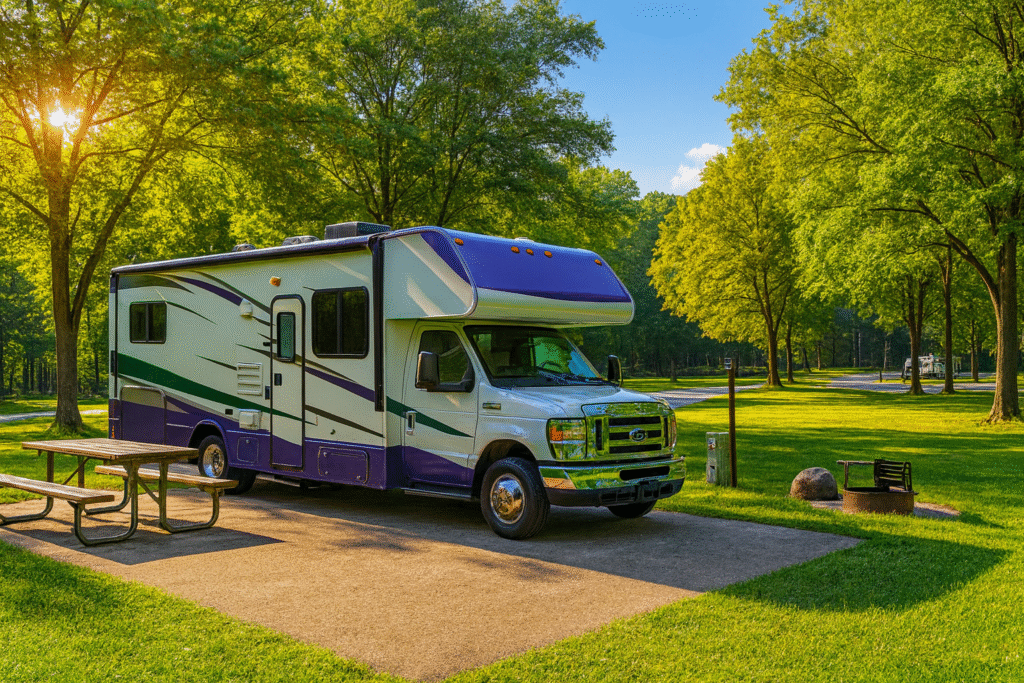
Conclusion: Finding the Perfect Campsite for Your RV
Finding the right campsite for your RV ultimately comes down to matching your rig’s size, needs, and travel style with a site that truly fits. When you understand your RV’s real dimensions, recognize the differences between full-hookup, partial-hookup, and dry camping sites, and take time to evaluate campground layouts before booking, you remove much of the guesswork that leads to stressful arrivals or uncomfortable stays.
A little preparation before your trip goes a long way. Checking campground maps, confirming pad length and surface type, reviewing road access, and booking early during busy seasons all help ensure your campsite will actually work for your RV. These simple steps can prevent tight turns, low-clearance surprises, and cramped setups that turn what should be a relaxing stop into a frustrating one.
When your campsite matches your rig properly, everything becomes easier. Setup is quicker, maneuvering is safer, and you can focus more on enjoying the destination instead of worrying about whether your RV fits the space. The right site also improves overall comfort, giving you better access to campground amenities, quieter surroundings, and a more relaxing camping experience.
With the strategies and insights covered in this guide, you’ll be able to approach campsite reservations with confidence and choose locations that work well for both your RV and the way you like to travel. And before you book your next stay, consider downloading the Free RV Campsite Fit Checklist (PDF) and using it as a quick reference to make sure every site you reserve is safe, comfortable, and truly RV-friendly.
Once you know how to choose the right campsite, the next step is understanding how to set up your RV systems correctly. These guides walk you through the essentials every RVer should know.