
Getting reliable internet on the road isn’t as simple as connecting to campground WiFi and calling it good. What seems convenient at first usually turns into slow speeds, constant buffering, and dropped connections—especially in the evenings when everyone around you is trying to get online at the same time.
A lot of RVers go into this thinking internet will work just like it does at home, but the reality is very different. Campground networks are often outdated or overloaded, cell service changes from one location to the next, and obstacles like trees, mountains, and distance from towers can weaken your signal more than you’d expect.
That’s usually when the frustration sets in. Something as basic as checking email, loading a map, or streaming a show can turn into a hassle, and many people end up bouncing between unreliable WiFi and weak hotspot connections just trying to stay connected.
The difference comes down to having the right setup—and more importantly, understanding how it all works together. A properly configured RV internet router doesn’t just connect you to the internet, it helps you pull in stronger signals, manage multiple connections, and create a more stable network inside your RV.
Instead of depending on whatever signal happens to be available, you’re building a system that works for you. That means fewer interruptions, faster speeds when it matters, and a much smoother experience whether you’re working remotely, traveling full-time, or just trying to relax at the end of the day.
In this guide, we’ll break down what actually works, what doesn’t, and how to choose the right equipment so you can stay connected no matter where the road takes you.
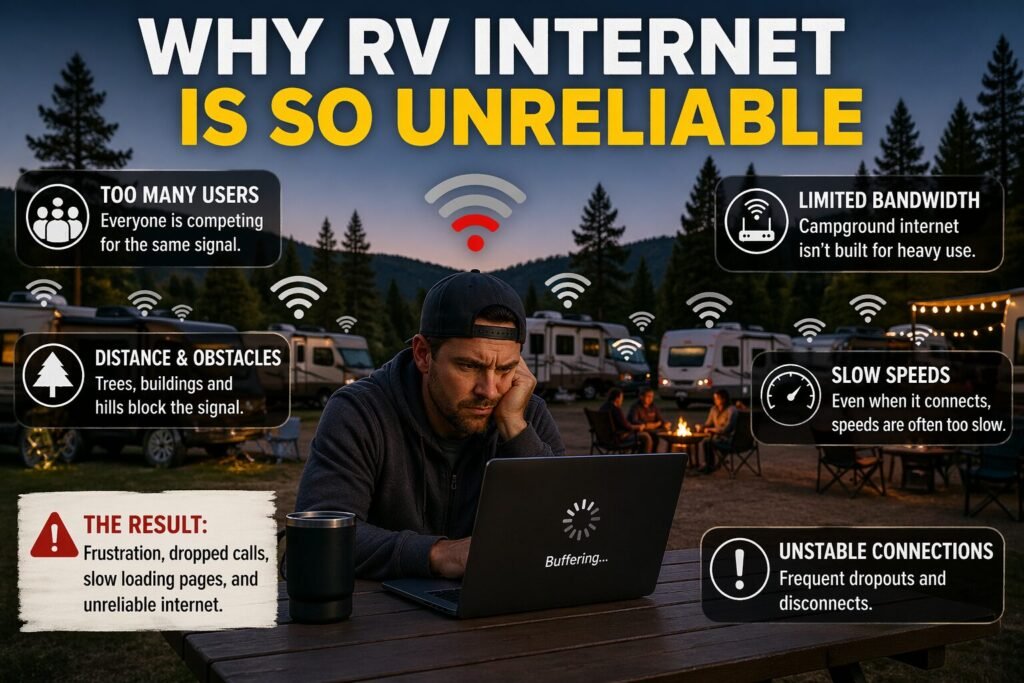
Why RV Internet Is So Unreliable
One of the biggest surprises for new RVers is just how inconsistent internet becomes once you leave home. At home, your connection comes from a hardwired system built for stability. On the road, everything changes—you’re relying on shared networks, wireless signals, and infrastructure that wasn’t designed for heavy demand.
Campground WiFi is usually the first thing people try, and it’s also where most frustration starts. These networks are often shared between dozens—or even hundreds—of campers at once, which leads to slow speeds and unreliable connections, especially during peak hours when everyone is online (you can see how network congestion affects performance in this overview from Federal Communications Commission).
Even when the signal shows full bars, that doesn’t always mean the connection is strong. Bandwidth gets divided between every user on that network, so the more people connected, the worse your experience becomes. That’s why campground WiFi can feel unpredictable, even when everything looks like it should be working.
Cellular internet sounds like a better option, but it comes with its own challenges. Signal strength depends heavily on your location, distance from towers, and the terrain around you. Mountains, trees, and even weather conditions can weaken your signal more than most people expect.
You’ll also notice that coverage can change quickly. One campsite might give you a solid connection, while the next stop just a few miles away leaves you struggling to load a webpage. That inconsistency is what makes relying on a single source of internet so difficult when traveling.
If you’re new to all of this, it helps to understand how these systems work together. This complete RV internet guide breaks down WiFi, cellular, and satellite options so you can see how each piece fits into a reliable setup.
The biggest takeaway is that there’s no single perfect solution for RV internet. The people who stay consistently connected aren’t relying on just one signal—they’re using a combination of tools that work together depending on where they are.
That’s exactly where having the right RV internet router setup starts to make a difference. Instead of depending on one weak connection, you’re creating a system that can pull in better signals, manage multiple sources, and give you a much more stable experience overall.
What You Actually Need for Reliable RV Internet
Once you understand why RV internet is so inconsistent, the next step is knowing what actually fixes it. The biggest mistake most people make is trying to rely on a single connection—whether that’s campground WiFi or a basic phone hotspot—and expecting it to work everywhere they go.
Reliable RV internet doesn’t come from one source. It comes from having a setup that can adapt depending on where you are. Some days you might have a strong cellular signal, other times campground WiFi might be usable, and in remote areas, satellite could be your only option. The key is being able to switch between these without losing connection or dealing with constant setup changes.
At the core of that setup is your RV internet router. This is what ties everything together. Instead of connecting each device individually to different networks, the router creates a single, stable network inside your RV and manages your internet sources behind the scenes.
A good router allows you to connect to multiple inputs—like cellular data, WiFi, or even satellite—and distribute that connection to all your devices. It can also help improve performance by prioritizing traffic, maintaining a stronger connection, and reducing dropouts when signals fluctuate.
Beyond the router itself, there are a few key pieces that make a big difference. Cellular plans designed for data use, external antennas to improve signal strength, and boosters that help pull in weaker signals can all work together to create a much more reliable setup.
The goal isn’t to have the most expensive equipment—it’s to have the right combination that works for how you travel. Whether you’re moving frequently, staying in campgrounds, or spending time off-grid, your setup should support that lifestyle without constant frustration.
Once you have the right foundation in place, everything else becomes easier. Instead of chasing a signal every time you park, you’ll have a system that works with you, not against you—and that’s where choosing the right router really starts to matter.
Best RV Internet Routers (Recommended Setups)
Now that you understand how RV internet works, the next step is choosing a router that can actually handle life on the road. Not all routers are built the same, and the one you choose will have a big impact on how reliable your connection is day to day.
The goal isn’t just to get online—it’s to stay connected without constantly switching networks, resetting devices, or dealing with weak signals. A good RV internet router gives you a central system that manages everything in the background so your connection feels consistent no matter where you are.
There are a few standout options that RVers consistently rely on, depending on how they travel and what kind of setup they need.
Pepwave Routers (Best Overall for RVers)
Pepwave routers are one of the most popular choices for RV internet, especially for full-time travelers and anyone who depends on a stable connection. These routers are designed specifically for mobile use and can handle multiple internet sources at the same time.
They allow you to combine cellular data, campground WiFi, and even Starlink into one system. The router automatically switches between connections or uses them together, which helps prevent dropouts and keeps your internet running smoothly.
They’re not the cheapest option, but they’re known for reliability and flexibility. If staying connected is important—especially for work—this is one of the most dependable setups you can build.
GL.iNet Gaming Routers (Fast Option)
The GL.iNet GL-MT6000 (Flint 2) is a powerful upgrade for RVers who want faster speeds and a more stable connection across multiple devices. This router is built for heavier use, making it a great choice if you’re streaming, working remotely, or running several devices at the same time. It supports the latest WiFi standards, which helps improve performance and reduce slowdowns compared to basic travel routers.
You can connect it to a hotspot, campground WiFi, or other internet sources and create a strong, secure network inside your RV. While it’s not as advanced as full multi-WAN systems like Pepwave, it offers a great balance of performance and price for RVers who want something more capable without going all-in on a high-end setup.

Wireguard VPN and OpenVPN speeds up to 900Mbps and 880Mbps respectively, giving you complete control over your gaming, streaming and working bandwidth. Actual speed may differ depending on internet service provider, network environment, VPN server location, VPN service provider, etc.
GL.iNet Travel Routers (Best Budget Option)
If you’re looking for something simple and affordable, GL.iNet travel routers are a solid starting point. These are smaller routers that work well for basic setups, especially if you’re mainly using campground WiFi or a hotspot.
They’re easy to set up and allow you to create your own private network inside your RV. This means all your devices connect to one router instead of jumping between different WiFi sources.
While they don’t have the advanced features of higher-end systems, they’re a great entry-level option for weekend travelers or anyone just getting started with RV internet.
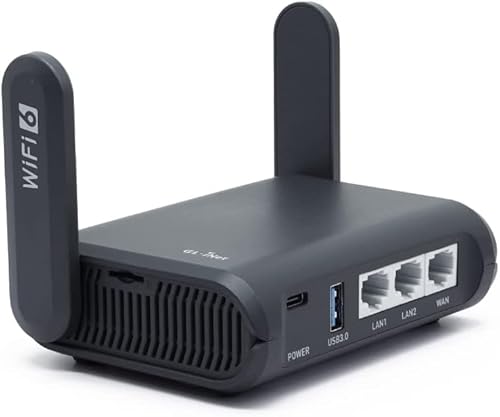
Slate AX offers powerful Wi-Fi 6 network connection with a dual-band combined Wi-Fi speed of 1800 Mbps (600 Mbps for 2.4GHz and 1200 Mbps for 5GHz). Enhance Wi-Fi performance with MU-MIMO, OFDMA, BSS color and able to connect to up to 120 devices simultaneously.
TP-Link AX3000 Travel Router (Easy Setup Option)
The TP-Link AX3000 Travel Router is a great option for RVers who want something simple, familiar, and easy to get up and running quickly. It delivers solid performance for everyday use, including browsing, streaming, and connecting multiple devices without much hassle.
Setup is straightforward, which makes it a good choice if you don’t want to spend time learning more complex systems. You can connect it to a campground WiFi network or a mobile hotspot and then create your own private network inside your RV for more consistent connectivity. While it doesn’t offer the advanced features of higher-end routers, it’s a reliable and user-friendly option for travelers who just want better internet without overcomplicating things.

TP-Link’s fastest Wi-Fi 6 travel router, with wireless speeds of up to 2402 Mbps on 5 GHz and 574 Mbps on 2.4 GHz. Actual Wi-Fi speeds vary based on source bandwidth, environment, and distance to devices.
Starlink + Router Setup (Best for Remote Areas)
A Starlink and router setup has quickly become one of the most reliable ways to get internet in remote areas where cellular signals simply don’t exist. Instead of relying on nearby towers or crowded campground networks, Starlink connects directly to satellites, giving you access to internet in places that would otherwise be completely offline. For RVers who enjoy boondocking or traveling far from developed campgrounds, this can be a game changer.
However, Starlink on its own isn’t always a complete solution. Performance can still be affected by obstructions like trees, mountains, or even heavy weather, and it requires a clear view of the sky to work at its best. That’s where pairing it with a router becomes important. A good RV internet router allows you to integrate Starlink with other connections—like cellular or campground WiFi—so you’re not relying on just one source at all times.
With the right setup, your router can automatically manage these connections, switching between them or prioritizing the strongest signal depending on where you are. This creates a much more stable and flexible system, especially if you move frequently or travel through areas with mixed coverage. Instead of constantly reconnecting devices or troubleshooting weak signals, everything runs through one network inside your RV.
While Starlink does require more power and a higher upfront cost than other options, many RVers find the tradeoff worth it for the freedom it provides. When combined with a capable router, it becomes part of a complete system that can keep you connected in both populated campgrounds and off-grid locations, making it one of the most versatile setups available today.
Choosing the Right Setup for You
The best router setup depends on how you travel and what you expect your internet to handle day to day. If you’re full-time or working remotely, investing in a more advanced system like a Pepwave setup can make a huge difference in reliability and overall experience. When your income or daily routine depends on being connected, having a system that can manage multiple connections and adapt automatically becomes more of a necessity than a luxury.
On the other hand, if you’re traveling occasionally or mostly using your RV for weekend trips, a simpler setup can still work well. You may not need all the advanced features, but having a basic router that creates a stable network inside your RV will still make things easier and more consistent compared to relying on random WiFi connections.
What matters most is choosing a setup that fits your travel style instead of trying to copy what someone else is using. The right RV internet router should simplify your experience, not add more frustration or complexity. When everything is set up correctly, your devices connect automatically, your signal stays more consistent, and you spend less time troubleshooting and more time enjoying where you are.
At the end of the day, a good internet setup should feel almost invisible. You shouldn’t have to think about switching networks every time you move, resetting connections, or wondering if something is going to work. The goal is to have a system that quietly does its job in the background, so whether you’re parked at a busy campground or out in a remote spot, staying connected feels easy and reliable.
Start here to build a complete RV internet setup that actually works on the road: