
The RV sewer system is one of those parts of RV camping that sounds a lot worse than it usually is. Before that first real dump station or full hookup site, it is easy to imagine leaking hoses, bad smells, clogged tanks, and one wrong move turning into a campground disaster. Most new RV owners feel that way at first, and honestly, it is a normal thing to be nervous about.
The truth is, the RV sewer system is not that complicated once you understand how it works. Your black tank holds toilet waste, your gray tank holds sink and shower water, and your sewer hose is simply the connection between the RV and the campground sewer inlet or dump station. The problems usually start when people do not understand how those parts are supposed to work together.
A lot of RV sewer problems come from small mistakes that build into bigger issues. Leaving the black tank valve open at a full hookup site, using too little water when flushing, dumping tanks in the wrong order, using cheap sewer hoses, or skipping basic tank maintenance can all lead to clogs, odors, leaks, and messy hookups. These are not complicated problems, but they can become frustrating fast if you do not know what caused them.
Having the right RV sewer setup makes the whole process much easier. A good sewer hose, tight fittings, a clear elbow, proper hose support, gloves, and a simple dumping routine can take most of the stress out of the job. Once the process makes sense, dumping the tanks becomes just another normal part of RV camping instead of something to dread.
This guide breaks down the RV sewer system in a simple, real-world way so you understand how the black tank and gray tank work, how to hook up and dump properly, what gear makes the job cleaner, and how to avoid the common mistakes that cause odors, clogs, and campground sewer problems.
How the RV Sewer System Works
At its core, the RV sewer system is pretty simple. Wastewater leaves the toilet, sinks, and shower, then collects in holding tanks underneath the RV until you are ready to dump them. The system does not have to be scary, but it does need to be used the right way.
The black tank holds toilet waste. This includes anything flushed down the RV toilet, so it needs enough water to help break waste down and keep things moving when it is time to dump. The black tank is usually the tank that causes the most problems when RV owners use too little water, leave the valve open, or wait too long to clean it properly.
The gray tank holds water from the sinks and shower. This water is usually not as messy as black tank waste, but it can still smell bad if food particles, grease, soap scum, or hair build up inside the tank. Many new RV owners are surprised to learn that gray tanks can smell almost as bad as black tanks when they are not maintained.
When it is time to empty the tanks, waste flows out through the RV sewer outlet, into the sewer hose, and then into the campground sewer connection or dump station. Gravity does most of the work, which is why your sewer hose setup matters. If the hose is kinked, sagging, or running uphill, waste can sit in the hose instead of flowing cleanly to the sewer connection.
The biggest thing to understand is that an RV sewer system is not the same as household plumbing. In a house, waste is flushed away immediately with plenty of water and carried through permanent plumbing. In an RV, waste sits in holding tanks until you dump it. That means water usage, tank levels, valve position, and dumping order all matter much more.
One of the most common beginner mistakes is leaving the black tank valve open at a full hookup campsite. It seems logical because the RV is connected to sewer, but it actually causes problems. Liquid drains away while solids stay behind, which can lead to clogs and the dreaded buildup RV owners try hard to avoid.
A better routine is to keep the black tank valve closed until the tank is at least partially full, then dump it all at once. That rush of liquid helps carry waste out of the tank and through the sewer hose. After that, dumping the gray tank helps rinse the hose with sink and shower water before disconnecting.
Once you understand how the black tank, gray tank, valves, sewer hose, and dump connection work together, the whole process becomes much easier. Dumping tanks may never be the most exciting part of RV camping, but with the right setup and habits, it should be clean, simple, and routine.
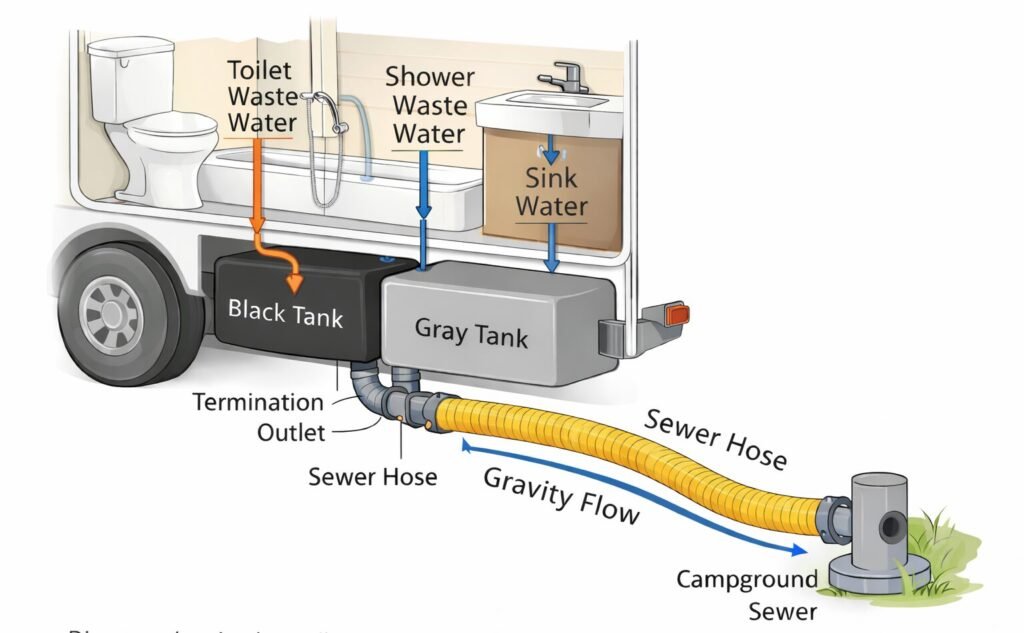
Black Tank vs Gray Tank: What’s the Difference?
The RV sewer system uses two main holding tanks, and each one handles a different type of wastewater. The black tank collects toilet waste, including solids, liquids, and RV toilet paper. Because of what it holds, the black tank needs plenty of water to help waste break down and move out of the tank properly when dumped.
The gray tank collects water from the sinks and shower. It does not hold toilet waste, but it can still smell bad if food particles, grease, soap residue, or hair build up inside. This is why it is smart to avoid letting grease and food scraps go down the RV sink whenever possible.
When dumping, the black tank is usually emptied first, followed by the gray tank. Some RV owners briefly open the gray tank valve for a few seconds first just to test the hose connection and make sure there are no leaks before opening the black tank valve. After that, the black tank should be dumped, followed by the gray tank so the cleaner sink and shower water helps rinse the sewer hose before disconnecting. That one small habit can save a mess if a fitting is loose or the sewer hose connection is not seated correctly.
Main Parts of an RV Sewer System
An RV sewer system has a few main parts that work together every time you use the toilet, run water down the sink, take a shower, or dump the tanks. Once you understand what each part does, it becomes much easier to see why proper setup, enough water, and good dumping habits matter so much.
The holding tanks are where everything starts. The black tank holds toilet waste, while the gray tank holds wastewater from sinks and the shower. These tanks store wastewater until you are ready to dump, which is very different from a house where waste immediately flows away through permanent plumbing. Each tank has its own gate valve that controls when wastewater is released. These valves are usually located near the sewer outlet, and they should stay closed until you are ready to dump. The black tank valve is especially important because leaving it open at a full hookup campsite can let liquid drain away while solids stay behind in the tank.
The termination outlet is the main sewer connection on the outside of the RV. This is where the sewer hose attaches before anything leaves the RV. Most RV sewer hoses use a twist-lock bayonet fitting, and that connection needs to be seated firmly before any valve is opened. A loose fitting here can turn a simple dump into a mess very quickly.
The sewer hose carries waste from the RV to the campground sewer inlet or dump station. This is one of the most important pieces of RV sewer gear because it handles everything leaving the tanks. A cheap or worn-out hose can crack, leak, collapse, or pop loose at the worst possible time. A better sewer hose with secure fittings is worth having because it makes the whole process cleaner and more dependable. A clear elbow or clear fitting is another helpful part of the setup. It lets you see when the tanks are still draining and when the water starts running clear during rinsing. It may not be the prettiest accessory, but it makes it much easier to know what is actually happening instead of guessing.
A sewer hose support helps keep the hose sloped downhill from the RV to the sewer inlet. Since the RV sewer system relies mostly on gravity, the hose needs a steady path for waste and water to move through. If the hose is sagging, kinked, or running uphill in spots, wastewater can sit inside the hose instead of draining cleanly.
The campground sewer inlet or dump station connection is the final point where everything leaves your setup. Some sites have threaded sewer openings, while others require a rubber donut or adapter to help seal the hose connection. A secure connection here helps prevent odors, leaks, and hose movement while dumping.
The roof vent is another part many RV owners do not think about until odors become a problem. Tank vents allow gases to escape above the RV instead of building pressure inside the tanks or pushing smells back into the camper. If a roof vent is blocked by debris, insects, or damage, sewer odors can become much more noticeable inside the RV.
When all of these parts work together, the RV sewer system is fairly simple. Waste stays in the tanks until dump time, the valves control when it leaves, the hose carries it away, and gravity does most of the work. Most problems happen when one part is loose, blocked, worn out, or used the wrong way.
Gravity-Fed Design: Why RV Sewer Systems Need Slope
RV sewer systems work by gravity, not pressure. There is no pump forcing waste out of the tanks in most standard RV setups. When you open a tank valve, the waste needs to flow downhill through the sewer outlet, into the sewer hose, and toward the campground sewer connection or dump station.
That is why sewer hose setup matters so much. If the hose has a steady downhill slope, waste and water move through it much more easily. If the hose is flat, sagging, kinked, or angled uphill, waste can sit in low spots instead of draining completely. That can lead to odors, slow draining, clogs, and a mess when disconnecting. This is also why enough water in the black tank is so important. Solids do not move well by themselves. The liquid in the tank helps carry waste out when the valve is opened. Without enough water, the tank may drain poorly and leave buildup behind.
A sewer hose support helps keep the hose lifted and sloped correctly, especially at full hookup campsites where the hose may stay connected for several days. It does not make the system pressurized, but it helps gravity do its job.
Once you understand that the RV sewer system depends on gravity, a lot of the common advice starts to make more sense. Use enough water, keep the black tank valve closed until dumping, avoid low spots in the sewer hose, and make sure everything slopes toward the sewer connection before opening the valve.
Using the Black Tank Correctly
The black tank is the part of the RV sewer system that causes the most anxiety for new RV owners, but most black tank problems come down to one simple thing: not enough water. Tank treatments can help with odor control, but water is what actually keeps waste moving, breaking down, and leaving the tank properly when it is time to dump.
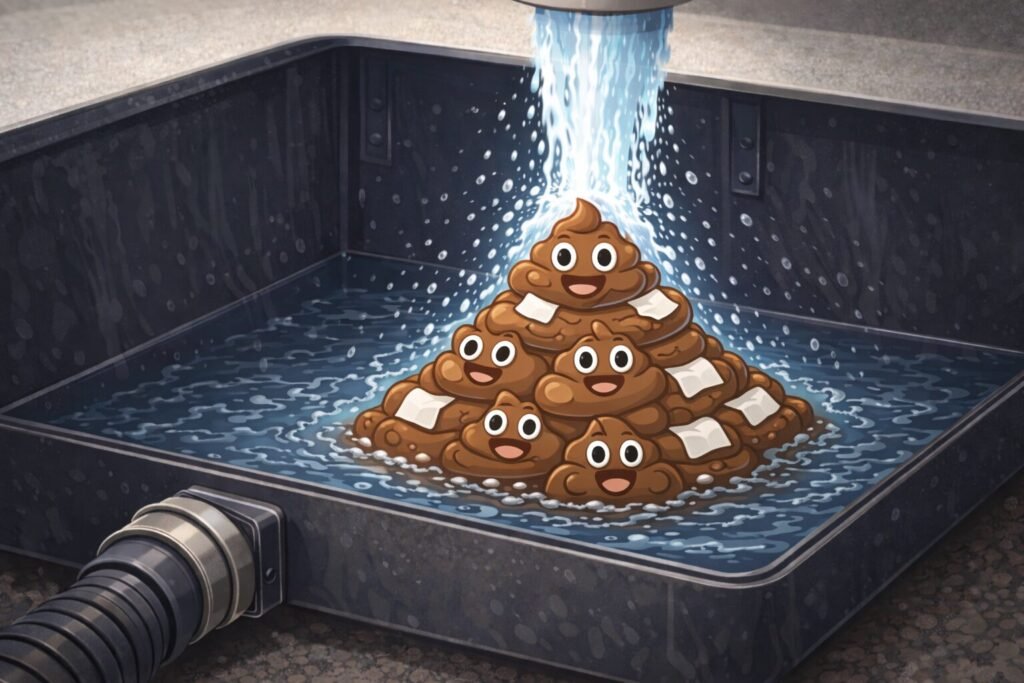
The black tank is not designed to work dry. Every time the toilet is flushed, waste and toilet paper need enough liquid to spread out inside the tank instead of piling up directly under the toilet. When too little water is used, solids can collect in one spot and eventually create a clog or pyramid buildup. That is when RV owners start noticing bad smells, slow draining, false tank readings, or toilets that do not flush correctly. Before using the toilet, there should already be some water in the black tank. After dumping, many RV owners add several gallons of water back into the tank so the bottom is not dry. This gives new waste somewhere to land and helps prevent toilet paper and solids from sticking to the tank floor.
During normal use, it is better to hold the flush pedal down a little longer than to do quick dry flushes. That extra water may feel wasteful, especially when camping without hookups, but it is one of the best ways to keep the black tank healthy. In most cases, using too little water causes far more trouble than using a little extra. It also helps to wait until the black tank has enough liquid in it before dumping. A nearly empty tank does not have much force behind it when the valve opens. When the tank is at least partly full, the rush of liquid helps carry waste out through the sewer outlet and into the sewer hose much more effectively.
This is also why leaving the black tank valve open at a full hookup site is a bad habit. The liquid drains away while solids stay behind, which is exactly what causes buildup. Even when connected to sewer, the black tank should usually stay closed until it is ready to dump.
Tank treatments still have their place. They can help reduce odors, support waste breakdown, and make the tank easier to rinse. But they cannot fix poor flushing habits, too little water, or a tank valve left open all weekend.
A better way to think about the black tank is simple: water does the heavy lifting, treatment helps the process, and good habits prevent most sewer problems before they start.
Common RV Sewer Problems and What Causes Them
Most RV sewer problems do not happen all at once. They usually build up over time from small habits that seem harmless at first. Using too little water, leaving valves open, skipping tank rinses, or letting grease and food particles go down the drain can all create bigger problems later.
One of the most common issues is black tank buildup. This usually happens when waste and toilet paper drop into a tank that does not have enough water. Instead of breaking down and spreading out, solids can pile up beneath the toilet and eventually restrict drainage. This can lead to bad smells, clogs, false tank readings, and slow dumping. Odors inside the RV are another common sewer complaint. Sometimes the smell comes from the black tank, but not always. Dry toilet seals, dry P-traps, blocked roof vents, dirty gray tanks, or poorly rinsed tanks can all cause sewer smells inside the camper. This is why it is important to look at the whole system instead of assuming every smell is coming from the toilet.
Gray tanks can also cause problems. Even though they do not hold toilet waste, they collect sink water, shower water, soap residue, grease, hair, toothpaste, and small food particles. Over time, that buildup can create odors and slow drainage if the tank is not dumped and flushed regularly.
Leaking sewer connections are usually caused by loose fittings, worn seals, cracked hoses, or a connection that was not fully locked in before opening the valve. This is why many RV owners briefly open the gray tank first for a few seconds to test the sewer hose connection before dumping the black tank. Gate valves can also stick, leak, or fail to seal completely. Sometimes debris gets caught in the valve, and other times the seals simply wear out. If a valve is hard to move or continues dripping after it is closed, it may need cleaning, lubrication, or replacement.
In cold weather, sewer hoses and exposed drain lines can freeze if liquid is left sitting in them. This is especially common when the hose is not sloped properly or when gray water sits in low spots overnight. Keeping the hose drained and using proper winter camping habits can help prevent frozen sewer problems.
Most RV sewer problems trace back to the same basic causes: not enough water, poor valve habits, loose connections, dirty tanks, or skipped maintenance. Once you understand what causes the problem, preventing it becomes much easier.
RV Sewer System Maintenance and Cleaning Tips
Keeping an RV sewer system clean is not about doing one big deep clean once a year. It is mostly about simple habits that prevent buildup, odors, and valve problems before they start. A little routine maintenance after dumping can save a lot of frustration later.
After dumping the black tank, rinse it whenever possible. Many RVs have a built-in black tank flush connection, which makes this much easier. Letting water run through the tank for a few minutes helps remove leftover waste and toilet paper that can stick to the tank walls or settle near the bottom. If your RV does not have a black tank flush, you can still help clean the tank by adding water back through the toilet after dumping. Some RV owners also use tank rinsing wands or flushing tools to help break loose buildup. The goal is not to make the tank spotless, but to keep waste from drying, sticking, and creating odors.
The gray tank should not be ignored either. Sink grease, food particles, soap scum, toothpaste, and hair can all collect inside the gray tank over time. Dumping the gray tank regularly, rinsing it when possible, and avoiding grease down the sink can help prevent smells and slow draining.
Sewer hoses also need attention. After dumping, let the hose drain completely before storing it. Keep sewer hoses and fittings stored separately from freshwater hoses, electrical cords, and camping gear. Even if everything looks clean, sewer equipment should always have its own storage area.
Gate valves should move smoothly and seal properly. If a valve becomes stiff, hard to pull, or starts dripping after it is closed, debris may be caught in the valve or the seals may be wearing out. Catching that early is much better than discovering a leaking valve at the campground. It also helps to keep a little water in the toilet bowl between uses. This helps keep the toilet seal from drying out and reduces the chance of tank odors coming back into the RV. If the toilet bowl will not hold water, the seal may need cleaning, conditioning, or replacement.
Good RV sewer maintenance does not need to be complicated. Use enough water, rinse tanks when possible, keep hoses clean and drained, protect your seals, and deal with small leaks or odors before they become bigger problems.
Final Thoughts on RV Sewer System Essentials
The RV sewer system does not have to be complicated or intimidating. Once you understand how the black tank, gray tank, sewer hose, valves, and dump connection work together, the whole process becomes much easier to manage.
Most RV sewer problems come from a few simple mistakes. Using too little water, dumping the black tank too soon, leaving the black tank valve open at a full hookup site, skipping tank rinses, or ignoring dry seals can all lead to odors, clogs, false tank readings, and messy dumping problems.In most cases, the black tank should be dumped when it is at least partly full so there is enough liquid to help waste flow out properly. Tank treatments can help with odor control, but they are not a replacement for water, proper dumping habits, and routine rinsing. The sewer hose can stay connected at a full hookup campsite, but the tank valves should usually stay closed until it is time to dump.
Once the system makes sense, RV sewer maintenance becomes just another normal part of camping. Use enough water, dump black first and gray last, keep your hose connections secure, rinse when possible, and take care of small problems before they turn into bigger ones. With the right habits and setup, managing your RV sewer system should stay simple, clean, and predictable.
RV Sewer System Essentials (Must-Have Gear)
View our recommended RV sewer gear and campground essentials.
More beginner guides that explain the other essential RV systems and setup.