When you arrive at a campground and connect your RV to the city water supply, you’re trusting that the park’s water pressure is safe for your RV plumbing system. In many campgrounds that’s true, but in others the water pressure can be much higher than most RV plumbing is designed to handle. Older campground infrastructure, pressure fluctuations during busy weekends, and poorly regulated water systems can sometimes deliver water pressure well above safe levels.
Most RV plumbing systems are designed to operate comfortably somewhere between 40 and 60 PSI. When pressure rises beyond that range, it can put unnecessary stress on your RV’s faucets, fittings, water heater, and PEX water lines. Over time, high water pressure can loosen fittings, cause small leaks, or in extreme cases damage plumbing components inside the RV. These types of problems often show up after you’ve been connected to campground water for a while, which can make them frustrating and expensive to fix.
Because campground water pressure can vary so much from one location to another, experienced RV owners almost always connect a water pressure regulator whenever they hook up to city water. A regulator attaches directly to the campground spigot and reduces the incoming pressure before it enters your RV’s plumbing system. This simple device acts as a protective barrier between unpredictable campground water pressure and the plumbing system inside your RV.
RV water pressure regulators are small, inexpensive pieces of equipment, but they play an important role in protecting your RV. Using one can help prevent leaks, protect your water heater and fixtures, and keep your plumbing system operating safely no matter what campground you’re visiting. Many RV owners consider a water pressure regulator just as essential as a sewer hose or electrical adapter.
In this guide we’ll look at some of the best RV water pressure regulators available today, explain the differences between common types of regulators, and highlight the features that RV owners should look for when choosing one. Whether you’re new to RV camping or simply looking to upgrade your current setup, using the right regulator can help keep your RV’s plumbing system safe and reliable every time you connect to campground water.
Fixed vs Adjustable RV Water Pressure Regulators
Not all RV water pressure regulators work the same way. Most regulators fall into two main categories: fixed pressure regulators and adjustable pressure regulators. Understanding the difference between these two types can help you choose the right option for your RV setup.
A fixed pressure regulator is the simplest type. These regulators are designed to reduce campground water pressure to a preset level, usually somewhere around 40–50 PSI. They are easy to use because there are no settings to adjust. You simply connect the regulator to the campground spigot, attach your water hose, and the regulator automatically limits the pressure entering your RV.
Many RV owners like fixed regulators because they are inexpensive, durable, and simple to use. They work well for basic protection and are often recommended for newer RV owners who want a straightforward solution.
An adjustable RV water pressure regulator, on the other hand, allows you to control the exact pressure entering your RV plumbing system. These regulators typically include a small adjustment screw and a built-in pressure gauge so you can monitor the water pressure directly.
Adjustable regulators give you more flexibility because campground water pressure can vary significantly from one location to another. With an adjustable regulator, you can fine-tune the pressure to stay within a safe range while still maintaining strong water flow inside the RV.
Many experienced RV owners prefer adjustable regulators because they provide more control and allow you to see exactly what pressure your RV plumbing system is receiving. While they are usually more expensive than fixed regulators, the added control and visibility can make them a worthwhile upgrade for frequent RV travelers.
Best RV Water Pressure Regulators
Choosing the right RV water pressure regulator depends on how much control you want over your campground water pressure. Some RV owners prefer simple fixed regulators, while others like adjustable models with built-in gauges so they can monitor pressure more precisely.
Below are a few RV water pressure regulators that RV owners commonly use to protect their plumbing systems while connected to campground water.
Camco Brass RV Water Pressure Regulator – Best Budget Option

- Automatic Pipe Burst Protection: Ensure your pipes are safe using the built-in PSI Guard, preset at 40-50 PSI for automatic burst protection. (Maximum incoming pressure is 125 PSI.)
The Camco brass water pressure regulator is one of the most widely used regulators among RV owners. It’s a simple fixed-pressure regulator designed to reduce incoming water pressure to a safer level before it enters your RV plumbing system. Many RVers like this model because it’s inexpensive, durable, and easy to install.
Renator M11-0660 Adjustable RV Water Pressure Regulator

Adjust and monitor your water pressure to control what goes into your RV's plumbing. Installation is as easy as attaching a water hose (each product comes with an illustrated guide).
The Renator adjustable water pressure regulator includes a built-in pressure gauge that allows you to monitor and adjust campground water pressure more precisely. This type of regulator is popular with experienced RV owners who want more control over their water pressure at different campgrounds.
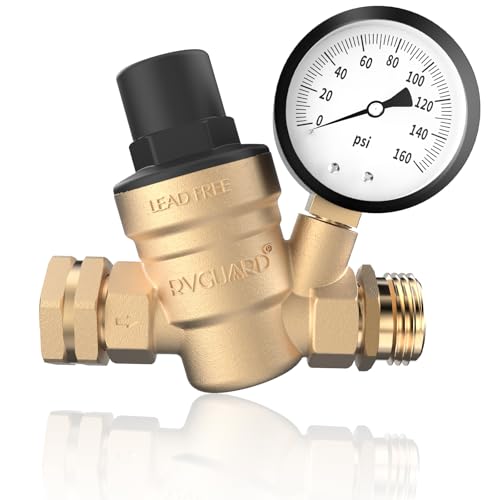
RVGUARD Adjustable RV Water Pressure Regulator – Best Adjustable Regulator (The one I use.)
Prevent water pipes from being damaged due to high pressure
The RVGUARD regulator is another adjustable option designed for RV use. Its brass construction and pressure gauge make it a good option for RV owners who want to monitor campground water pressure and adjust it to a safe operating level.
How to Install an RV Water Pressure Regulator
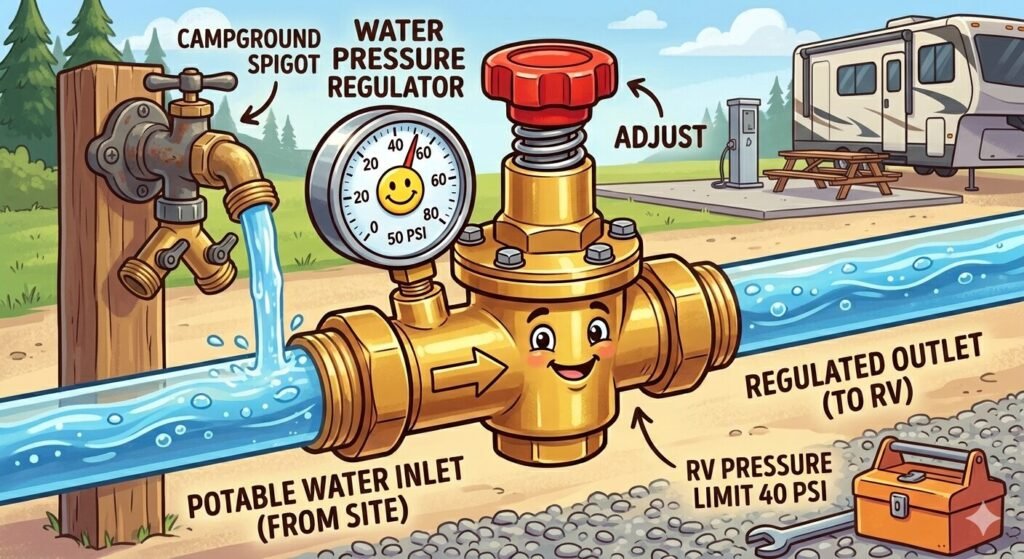
Installing an RV water pressure regulator is simple and only takes a few seconds when you arrive at a campsite. The regulator connects directly to the campground water spigot and reduces the pressure before water enters your RV plumbing system.
Most RV owners install the regulator at the campground spigot, not at the RV connection. This allows the regulator to control the pressure as soon as the water leaves the campground supply.
A common setup looks like this:
Campground Spigot → Water Pressure Regulator → Water Filter → Drinking Water Hose → RV Water Connection
Installing the regulator at the spigot also protects your water hose and water filter from high pressure. Once everything is connected, turn on the campground water slowly and check for leaks before using the water inside your RV.
If you’re new to setting up RV hookups, it’s helpful to understand the full connection process when arriving at a campsite. Our RV campsite hookup guide explains the step-by-step process for connecting water, sewer, and electrical utilities safely when you arrive at a campground.
Common RV Water Pressure Mistakes
Most new RV owners don’t realize campground water pressure can vary widely from park to park. Some campgrounds have very low pressure, while others can push water well over 80 PSI through the lines.
One of the most common mistakes is connecting a water hose directly to the campground spigot without using a regulator. High pressure can damage RV plumbing components, including plastic fittings, water lines, faucets, and even the RV water pump check valve.
Another mistake is using extremely cheap fixed regulators that restrict water flow too much. These often reduce pressure so much that showers and sinks inside the RV barely work properly.
Adjustable regulators allow you to dial in a safe pressure level while still maintaining good water flow throughout the RV. Most RV plumbing systems work best somewhere around 40–50 PSI.
Taking a few seconds to install a quality water pressure regulator can prevent expensive plumbing repairs and keep your RV water system working properly throughout your trip.
Final Thoughts on RV Water Pressure Regulators
Using a water pressure regulator is one of the simplest ways to protect your RV plumbing system when connecting to campground water. Campground water pressure can vary widely from one location to another, and without a regulator, high pressure can damage water lines, fittings, and appliances inside your RV.
A good regulator helps keep water pressure at a safe level while still allowing enough flow for showers, sinks, and normal daily use. Once you add one to your campsite setup routine, it only takes a few seconds to connect whenever you arrive at a new campground.
Many experienced RV owners consider a water pressure regulator a basic piece of equipment that should always be used when hooking up to city water.
see more guides here: