
How to Keep Snakes Away From Your RV and Campsite is something many RV owners eventually wonder about, especially when camping in areas where wildlife is common. Snakes are something most RV owners hope they never see around their campsite, but in many camping areas they are simply part of the natural environment. Campgrounds are often located near forests, lakes, and open fields where snakes naturally live and hunt.
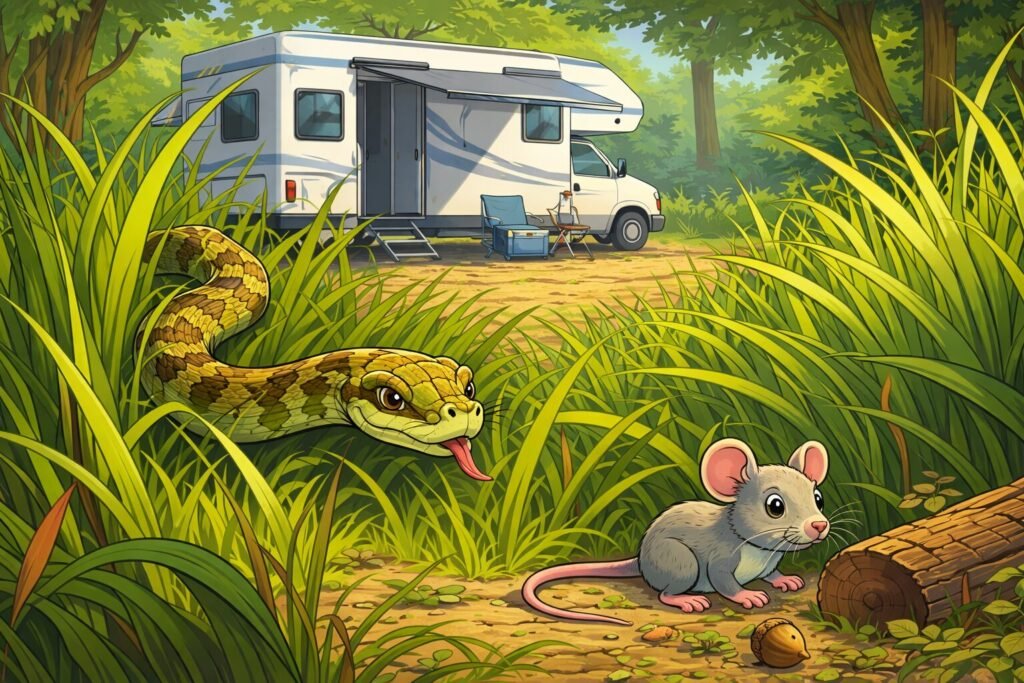
What surprises many RV owners is that snakes usually aren’t attracted to RVs themselves. Instead, they are attracted to the things that tend to gather around campsites. The biggest one is mice.
Mice and other small rodents are very common around campgrounds. They look for food scraps, pet food, trash, and sheltered places to hide. The underside of a travel trailer, storage compartments, wood piles, and even tall grass around a campsite can all become hiding places for rodents. Where mice go, snakes often follow.
Snakes eat mice as one of their primary food sources, so an area with rodent activity becomes a hunting ground. If mice are living under your RV or moving around your campsite at night, it increases the chances that a snake may show up looking for an easy meal. This is why controlling rodents is one of the most important steps in preventing snakes around your campsite. If you are already dealing with rodents, it’s worth learning how to keep mice out of your RV, because removing their food source makes your campsite far less attractive to snakes.
Snakes also look for quiet, shaded areas where they can hide during the heat of the day. The space under an RV can provide exactly that kind of shelter. Tall grass, brush piles, stacked firewood, and clutter around a campsite can create ideal hiding spots as well. The good news is that there are several simple steps RV owners can take to make their campsite much less attractive to snakes.
Learning how to keep snakes away from your RV and campsite starts with understanding what draws them in the first place. Once you remove the food sources, eliminate hiding places, and keep your campsite clean, the chances of encountering snakes drop significantly.
Why Snakes Show Up Around RV Campsites
Snakes usually appear around RV campsites for a simple reason: food, shelter, and suitable temperatures. Most snakes are not interested in people or RVs themselves. They are simply following the conditions that make hunting and hiding easier.
One of the biggest attractors is rodents. Campgrounds often have mice and other small animals because food is nearby and there are plenty of places to hide. Trash bags, pet food, crumbs around outdoor tables, and unsecured storage compartments can all attract mice. Since snakes commonly eat mice, areas with rodent activity naturally draw snakes as well.
Another reason snakes appear around campsites is shelter. The shaded space under an RV can provide a cool, protected place where snakes can rest during the heat of the day. Firewood piles, tall grass, bushes, and clutter around a campsite can also create hiding spots that make snakes feel safe.
Snakes are also attracted to warm places. Because they are cold-blooded animals, they rely on outside temperatures to regulate their body heat. Warm ground, sun-heated pavement, rocks, and even the area around RV tires or undercarriages that hold heat from the sun can become appealing places for snakes to rest.
Water sources can play a role as well. Many campgrounds are located near lakes, rivers, or ponds, and snakes often live near water where frogs, insects, and small animals are abundant. This makes it fairly common for snakes to occasionally move through campsites while hunting.
Understanding these factors helps explain why snakes sometimes show up around RVs. In most cases, they are not seeking out people or campers. They are simply moving through areas where food, shelter, and warmth are available. By reducing those attractions, RV owners can greatly lower the chances of snakes appearing around their campsite.
Ways to Keep Snakes Away From Your RV and Campsite
Keeping snakes away from your RV and campsite mostly comes down to making the area less attractive to them. Snakes are usually just looking for food, shelter, warmth, and water. When those things are limited, snakes typically move on to easier places to hunt and hide.
One of the most important steps is controlling rodents. Mice and other small animals are a primary food source for many snakes. If mice are living under your RV, in storage compartments, or around your campsite, snakes may eventually follow. Keeping food sealed, cleaning up crumbs, securing trash, and learning how to keep mice out of your RV can significantly reduce the chances of attracting snakes.
Keeping your campsite clean and organized also helps discourage snakes. Piles of gear, stacked firewood, and clutter around your campsite can create hiding spots where snakes feel protected. Try to keep the ground around your RV clear and avoid storing items directly under the trailer where animals can hide.
Managing vegetation around your campsite is another simple way to reduce snake activity. Tall grass, bushes, and brush piles provide ideal cover for snakes and the rodents they hunt. If possible, choose campsites with trimmed grass and open areas where snakes are easier to spot and less likely to hide.
Be careful with firewood storage as well. Firewood piles are one of the most common hiding places for snakes at campgrounds. If you bring firewood, keep the stack a short distance away from your RV rather than directly beside the camper.
Eliminating standing water can also help reduce wildlife activity. Snakes often live near water sources where frogs, insects, and small animals gather. Avoid leaving pet water bowls, leaking hoses, or puddles around your campsite that could attract prey animals.
Lighting your campsite can sometimes discourage wildlife movement as well. While snakes are not always afraid of light, well-lit areas make it harder for rodents to move around unnoticed, which can reduce the activity that attracts snakes in the first place.
Some RV owners also use natural deterrents around their campsite. Certain smells and textures are believed to discourage snakes from crossing into an area. Products designed to repel snakes are available at many outdoor and hardware stores, although results can vary depending on the environment.
Another simple habit is checking around your RV before stepping out at night. Snakes are more active in cooler evening hours, especially during warmer months. Using a flashlight when walking around your campsite helps you stay aware of your surroundings.
Finally, always maintain a respectful distance if you do see a snake. Most snakes are not aggressive and will move away once they detect human activity. Avoid trying to handle or disturb the animal, and give it space to move away from your campsite.
By reducing rodent activity, eliminating hiding places, keeping vegetation trimmed, and maintaining a clean campsite, RV owners can greatly reduce the chances of snakes appearing around their RV and campsite. These simple precautions make camping safer and more comfortable without disrupting the natural wildlife that lives around many campgrounds.
What to Do If You See a Snake Around Your RV
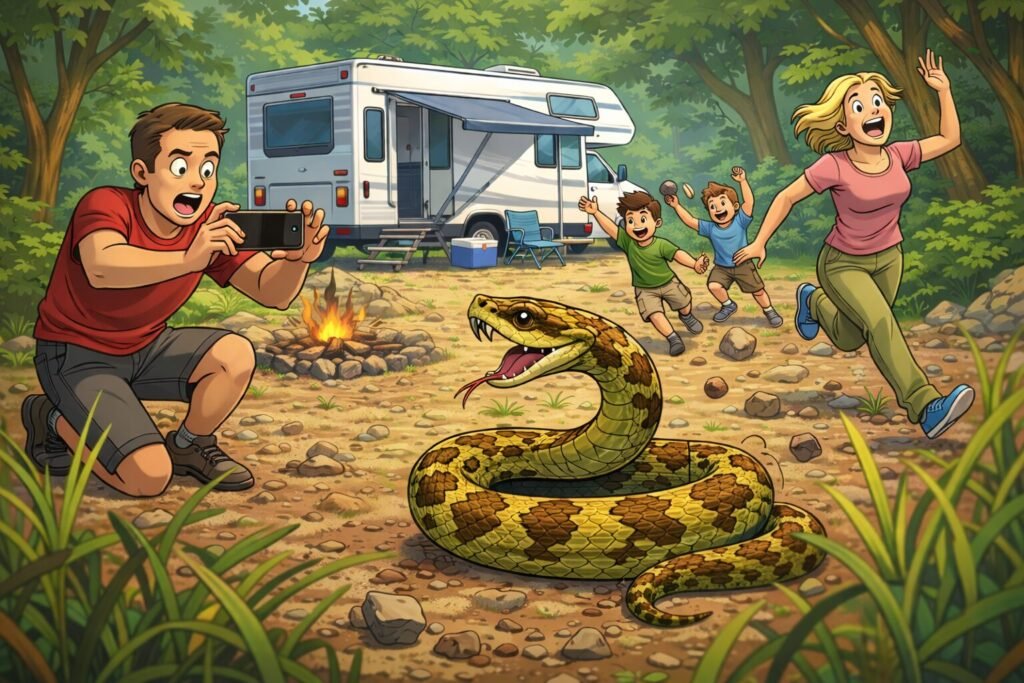
Even if you take steps to keep snakes away from your RV and campsite, it’s still possible to encounter one occasionally, especially when camping in natural areas. The most important thing to remember is that most snakes want nothing to do with people and will move away if they feel threatened.
If you see a snake near your campsite, the first step is to stay calm and keep your distance. Avoid sudden movements or trying to approach the snake. Most snakes will retreat once they notice people nearby or feel vibrations from footsteps.
Give the snake a clear path to leave the area. Snakes often move through campsites while hunting and are not trying to stay there permanently. By stepping back and allowing space, the snake will usually continue on its way.
Do not attempt to handle, chase, or kill the snake. Many snake bites happen when people try to interact with them. It’s also difficult for most people to correctly identify venomous and non-venomous snakes, so it’s safest to simply avoid contact.
If the snake is directly under your RV or lingering in your campsite, creating gentle vibrations by walking nearby or lightly tapping the ground with a stick can encourage it to move along. Snakes are very sensitive to ground vibrations and often leave the area quickly.
Keep pets and children away from the snake while it is nearby. Curious pets are one of the most common reasons people have close encounters with snakes at campgrounds.
In rare situations where a snake refuses to leave or appears aggressive, campground staff or local park rangers should be notified. Many parks have procedures for safely relocating wildlife when necessary.
Seeing a snake can be surprising, but it is usually a temporary encounter. With a calm response and a little space, most snakes will quickly move away and continue on their way through the natural environment.
Common Snake Deterrents RV Owners Use
In addition to keeping campsites clean and removing things that attract snakes, many RV owners also try different deterrents to help keep snakes away from their RV and campsite. Some of these methods are widely used at campgrounds, although results can vary depending on the location and the type of snake in the area.
One option some campers try is commercial snake repellent. These products are usually sold as granules that can be sprinkled around the perimeter of a campsite or around the RV itself. Many contain ingredients like sulfur or naphthalene that produce strong odors believed to discourage snakes from entering the area. While some campers report success with these products, others say they have mixed results.
Another method sometimes used is electronic pest deterrents. These small devices plug into an electrical outlet or run on batteries and produce vibrations or ultrasonic sound designed to discourage rodents and other small animals. Because snakes often follow rodents, reducing rodent activity may indirectly reduce snake activity as well.
Some RV owners also try natural deterrents. Strong smells such as vinegar, cinnamon oil, or clove oil are sometimes used around campsites because certain animals dislike these scents. However, these methods are generally considered temporary and usually need to be reapplied frequently.
Keeping a campsite well maintained is still the most reliable deterrent. Removing hiding places, controlling rodents, and keeping food properly stored will always be more effective than relying on repellents alone.
It’s also important to remember that snakes are an important part of the ecosystem. They help control rodent populations and usually avoid human activity whenever possible. The goal is not to harm them, but simply to make your RV campsite a place they choose to avoid.
Common Snakes Found Around RV Campgrounds in Different Regions
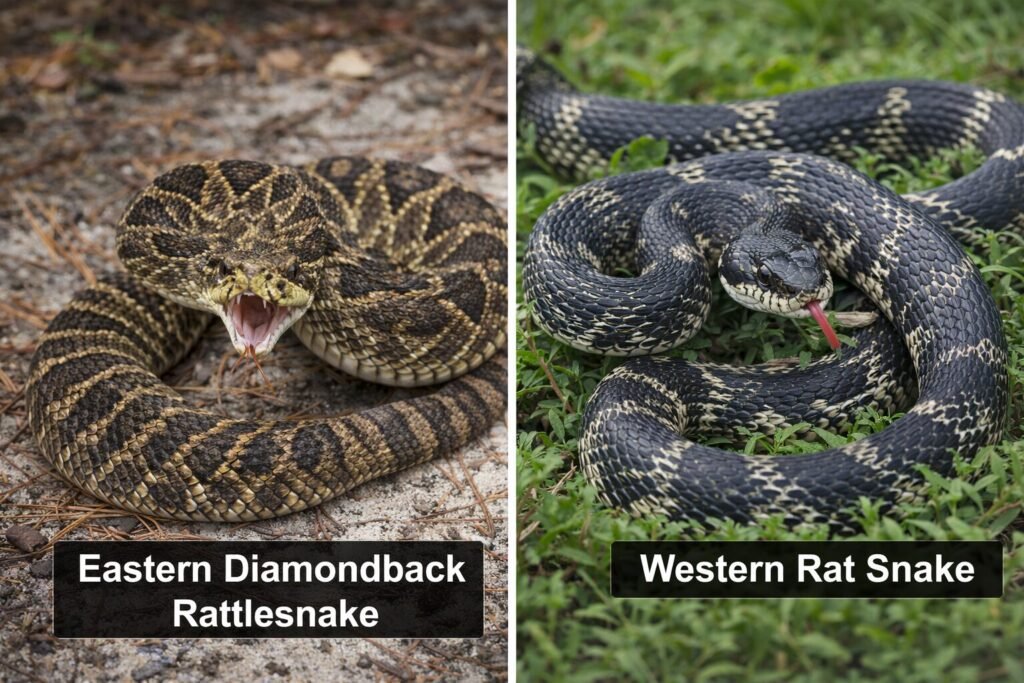
The types of snakes you may encounter while camping often depend on the region of the country where you are traveling. Most snakes found near campgrounds are harmless and help control rodent populations, but it’s still helpful to know what species are common in the areas you visit.
In the western United States, campers may occasionally see gopher snakes, garter snakes, or rattlesnakes in desert and mountain regions. Gopher snakes are non-venomous and often mistaken for rattlesnakes because of their similar coloring.
In the southern United States, snakes are more common due to the warmer climate. Rat snakes, king snakes, and water snakes are frequently found around wooded campgrounds and near lakes or rivers. Venomous species such as copperheads and cottonmouths are also present in some areas.
In the Midwest, common snakes around campsites include garter snakes, milk snakes, and fox snakes. These species are generally harmless and often help reduce rodent populations around farms, fields, and wooded campgrounds.
In the northeastern United States, campers most often encounter garter snakes, ribbon snakes, and occasionally timber rattlesnakes in more remote forested areas.
Learning to identify common snakes in the areas where you camp can help you better understand which ones are harmless and which ones should be avoided. A helpful resource for identifying snakes by region is the National Wildlife Federation’s guide to North American snakes:
Understanding the types of snakes that live in different environments can make camping feel less intimidating and help RV owners respond calmly if they ever encounter one near their campsite.
What To Do If You Get Bit By A Snake While Camping
Snake bites around RV campsites are rare, but it’s important to know what to do if it ever happens. Most snakes people encounter while camping are not aggressive and will try to avoid people. Bites usually occur when someone accidentally steps on a snake, reaches into tall grass or wood piles, or tries to handle the animal.
If a snake bite occurs, the most important thing to do is stay calm and get medical help as quickly as possible. Panic can raise heart rate and cause venom to spread faster through the body. Move away from the snake to prevent another bite, but do not try to capture or kill it.
Call 911 or emergency services immediately. If you are in a campground, notify campground staff because they can often direct emergency responders to your exact location faster.
Keep the bitten area as still as possible and positioned slightly below heart level if you can. Remove rings, watches, or tight clothing near the bite because swelling may occur. Try to remain calm and limit movement while waiting for medical help.
Do not cut the bite, attempt to suck out venom, apply ice, or use a tourniquet. These old myths can actually make the injury worse and are no longer recommended by medical professionals.
If possible, try to remember what the snake looked like, but do not waste time trying to photograph or capture it. Medical professionals can treat snake bites effectively even without identifying the exact species.
The good news for RV owners is that snake bites are extremely uncommon around campsites. Most snakes want nothing to do with people and will move away when they sense activity. By keeping your campsite clean, reducing rodents, and avoiding tall grass or clutter, you greatly reduce the chances of ever encountering one.
Final Tips for How to Keep Snakes Away From Your RV and Campsite
Most encounters with snakes around RVs happen because the campsite unintentionally provides what snakes are looking for. When food sources, hiding places, and warm resting spots are reduced, snakes usually move on to easier areas.
One of the most helpful habits is simply keeping your campsite tidy. Avoid leaving food outside overnight, keep trash sealed, and store pet food inside your RV when it is not being used. These small habits help prevent rodents from gathering around your campsite, which in turn reduces the chances of attracting snakes.
It also helps to stay aware of the environment around you when setting up camp. Before parking your RV, take a moment to look around the site. Check for tall grass, large brush piles, stacked firewood, or rock piles that could provide hiding spots for wildlife.
Walking around your campsite occasionally during the day can also help. The vibrations from footsteps and normal activity usually discourage snakes from staying close to areas where people are active.
When camping in warmer regions, using a flashlight at night is a good safety habit. Snakes are often more active in the evening when temperatures cool down, and a quick look around before stepping outside your RV can help you stay aware of your surroundings.
In most situations, snakes are simply passing through and will avoid people whenever possible. By keeping your campsite clean, reducing rodent activity, and eliminating hiding places, RV owners can make their campsite far less appealing to snakes.
With a little awareness and a few simple precautions, you can enjoy camping while greatly reducing the chances of snakes showing up around your RV and campsite.
More RV Wildlife and Campsite Guides