
RV maintenance cost per year is one of the most misunderstood parts of RV ownership. Many owners budget carefully for fuel, campground fees, and travel expenses, but underestimate what it actually takes to maintain an RV over time. Unlike a car, an RV combines vehicle systems, home-style appliances, plumbing, electrical components, and weather-exposed structures — all of which require regular upkeep.
In this guide, we break down real annual RV maintenance costs, including routine maintenance, system upkeep, and the expenses that tend to catch owners off guard. You’ll see how maintenance costs vary by RV type, how much you can expect to spend each year, and which costs are predictable versus occasional.
Most importantly, this article will show you how to plan ahead. When RV maintenance is budgeted properly, it stops feeling like a surprise expense and becomes a manageable part of ownership. Whether you own a travel trailer, fifth wheel, or motorhome, understanding your true maintenance costs helps protect your investment, reduce stress, and keep you on the road longer with fewer interruptions.
Many new owners are surprised by how maintenance fits into the bigger picture of RV ownership expenses. For a full breakdown of purchase, operating, and long-term costs, see The Real Cost of Owning an RV in 2026.
Annual RV Maintenance Cost Overview
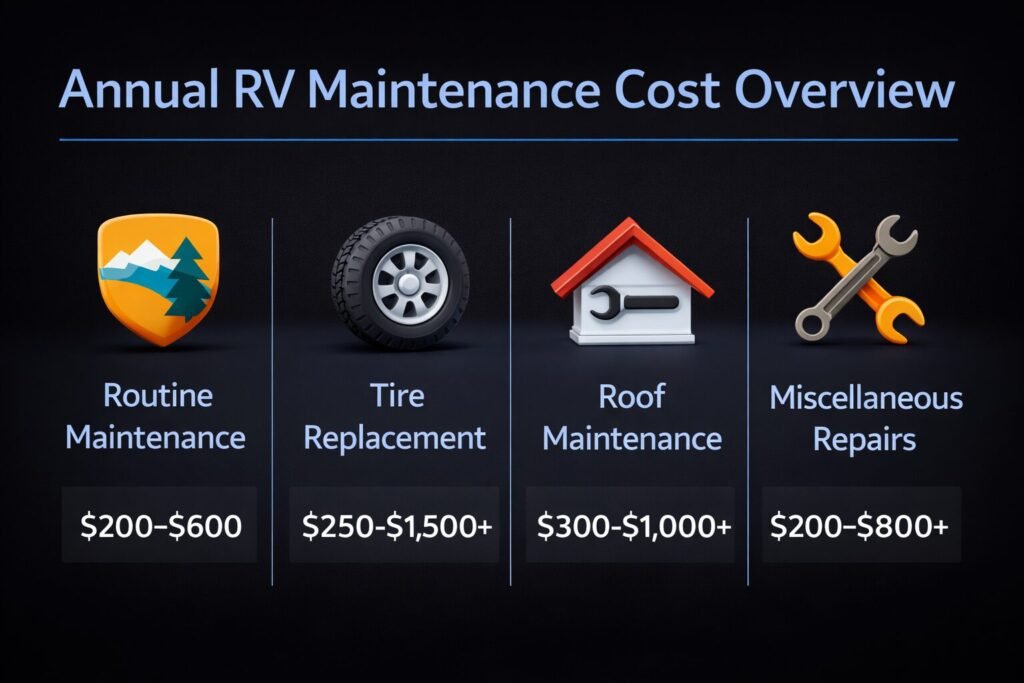
RV maintenance cost per year varies depending on the type of RV you own, how often you travel, and whether you handle basic upkeep yourself or rely on professional service. While costs can fluctuate, most RV owners can expect predictable annual maintenance expenses if they plan ahead.
As a general rule, annual RV maintenance costs typically fall within these ranges:
Travel trailers and smaller towables tend to cost the least to maintain, often ranging from several hundred to a couple thousand dollars per year. Fifth wheels and larger towables require more maintenance due to size, weight, and additional systems. Motorhomes generally have the highest annual maintenance costs because they combine vehicle maintenance with RV systems.
These costs include routine inspections, preventive maintenance, and wear-and-tear items that affect every RV over time. Understanding these baseline numbers makes it easier to budget realistically and avoid unexpected repair bills later.
Routine RV Maintenance Costs You Can’t Skip
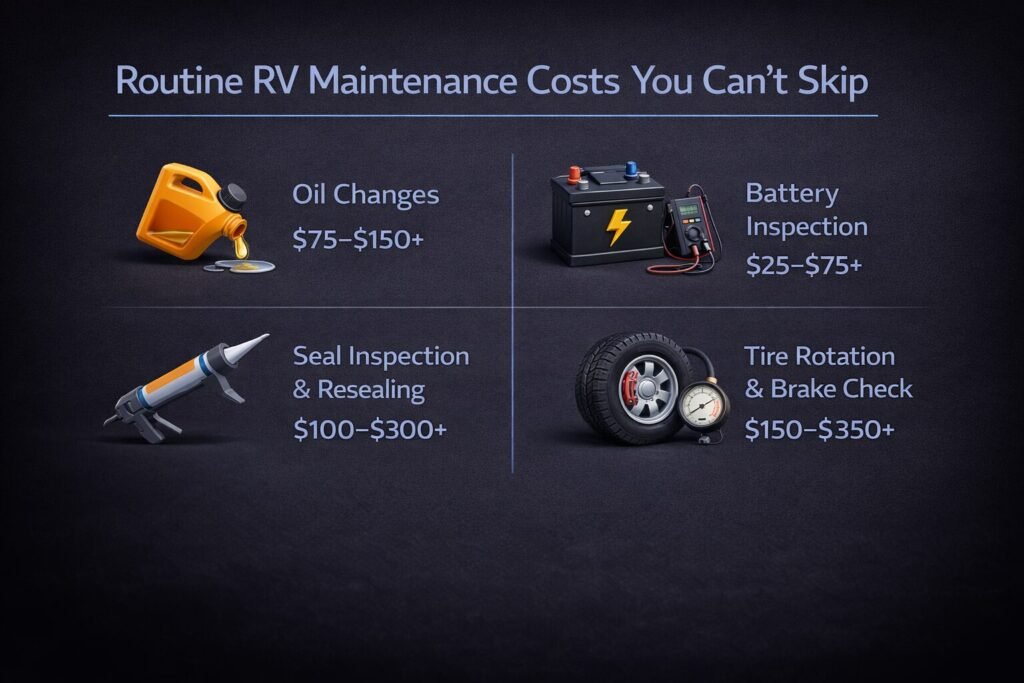
Routine RV maintenance costs are predictable, but they’re often ignored until something breaks. Staying ahead of basic upkeep is the difference between manageable annual expenses and expensive, trip-ending repairs. While every RV is different, certain maintenance tasks apply to all rigs, regardless of size or travel style.
One of the most important ongoing costs is roof inspection and sealing. RV roofs are constantly exposed to sun, rain, wind, and temperature swings. Most manufacturers recommend inspecting roof seals at least twice per year and resealing as needed. Materials are inexpensive if handled early, but neglected roof issues can lead to water damage that costs thousands to repair.
Tires are another unavoidable maintenance expense, even if you don’t drive often. RV tires age out long before they wear out. Most need replacement every five to seven years regardless of tread depth. This applies to both motorhomes and towables, and it’s one of the most common expenses new owners fail to plan for.
Wheel bearings, brakes, and suspension components also require periodic service. Towable RVs typically need bearing inspections and repacking every year or two, while motorhomes add brake service and chassis inspections to the list. These costs are relatively modest when done on schedule but become far more expensive if deferred.
Batteries and electrical upkeep are another recurring cost. Lead-acid batteries generally last three to five years, while lithium batteries last longer but cost more upfront. Regular testing, cleaning terminals, and ensuring proper charging helps extend battery life and prevents unexpected failures while traveling.
Plumbing and propane systems require routine checks as well. Water heaters, seals, valves, and hoses all experience wear over time. Annual inspections help catch small leaks or failing components before they cause interior damage or safety concerns.
Taken together, these routine RV maintenance costs form the foundation of your annual upkeep budget. None of them are optional, but all of them are predictable. Planning for these expenses ahead of time keeps your RV reliable, protects its value, and helps you travel with confidence rather than crossing your fingers every trip.
According to the RV Industry Association, regular maintenance plays a critical role in extending the lifespan and safety of RVs over time.
RV Maintenance Costs by RV Type
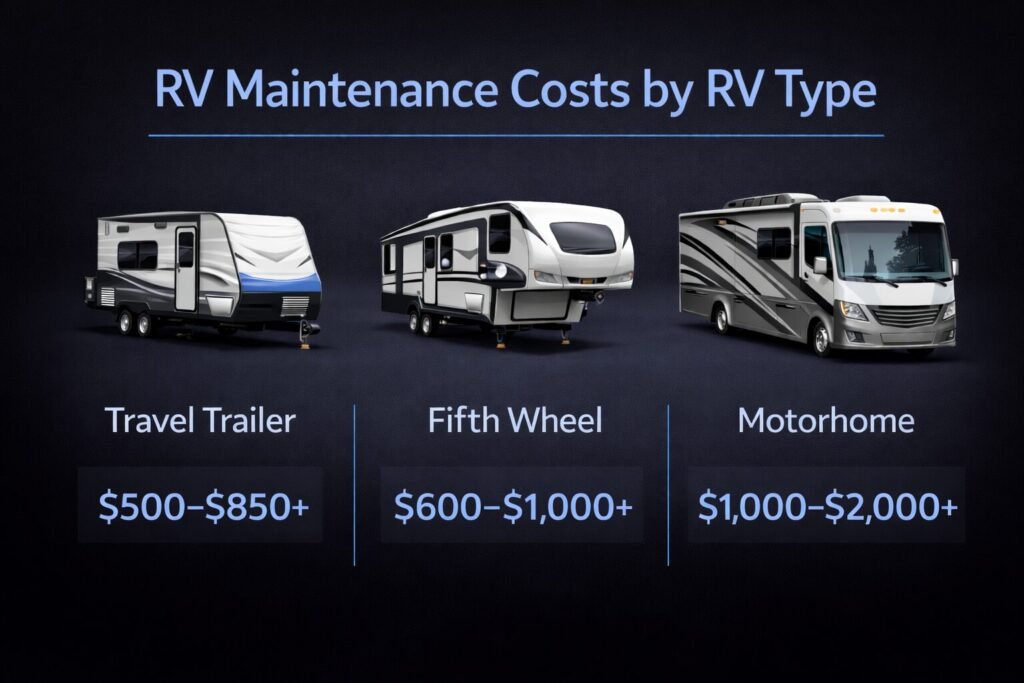
RV maintenance cost per year can vary significantly depending on the type of RV you own. Size, weight, number of systems, and whether the RV has an engine all play a major role in annual upkeep expenses. Understanding these differences helps set realistic expectations before problems arise.
Travel trailers and smaller towables typically have the lowest maintenance costs. Because they don’t have engines or drivetrains, owners are mainly responsible for maintaining tires, brakes, bearings, roof seals, and interior systems. Annual maintenance costs for travel trailers tend to stay on the lower end when upkeep is done consistently.
Fifth wheels generally cost more to maintain than standard travel trailers due to their larger size, heavier components, and more complex suspension systems. Additional slide-outs, higher-capacity appliances, and larger tires all contribute to increased annual maintenance expenses. While still towable, fifth wheels require closer attention to structural and running gear components.
Class C motorhomes combine RV systems with a truck-based chassis, which adds vehicle maintenance to the equation. In addition to roof, plumbing, and appliance upkeep, owners must budget for oil changes, brake service, engine maintenance, and drivetrain inspections. These added vehicle-related costs raise the average annual maintenance budget compared to towables.
Class A motorhomes typically have the highest RV maintenance costs per year. Their size, complex systems, and commercial-grade components require more frequent professional service. Diesel pushers, in particular, add higher service costs for engine maintenance, air suspension systems, and braking components. While these RVs offer unmatched comfort, their upkeep reflects their complexity.
Class B camper vans fall somewhere in the middle. Although smaller and more fuel-efficient, they often use compact, high-end components that can be expensive to repair or replace. Maintenance costs are influenced by both the vehicle platform and the specialized RV systems installed within a tight space.
Each RV type comes with predictable maintenance responsibilities. The key isn’t avoiding these costs, but understanding them ahead of time. When owners choose an RV that matches both their lifestyle and their maintenance budget, long-term ownership becomes far more enjoyable and far less stressful.
Appliance and System Maintenance Expenses
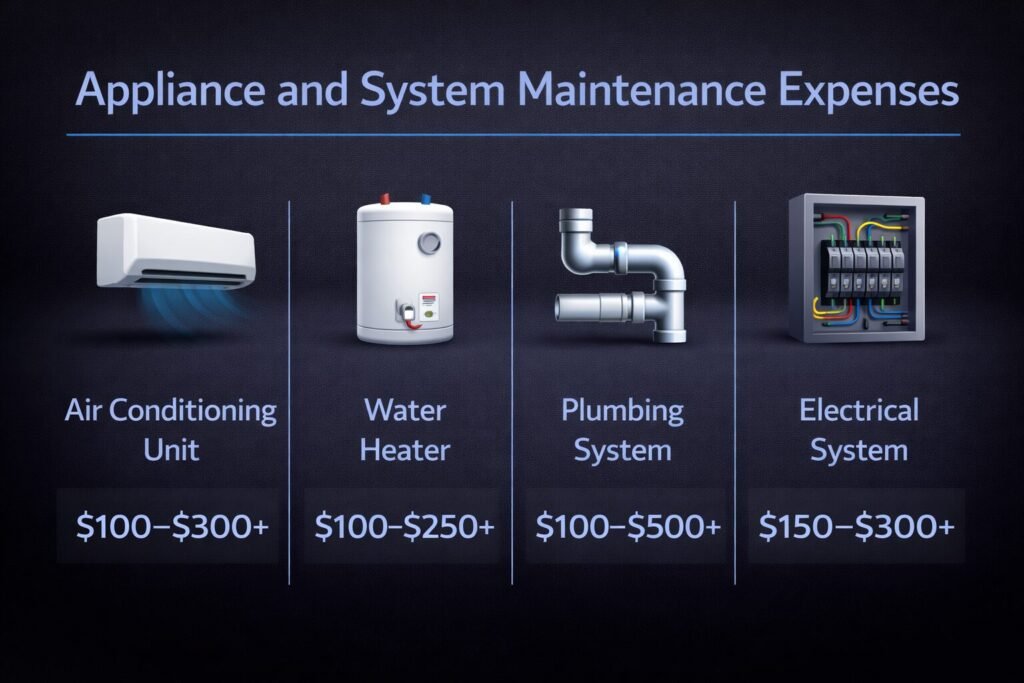
RV appliances and onboard systems play a major role in overall RV maintenance cost per year. While these components are designed for mobile living, they experience more vibration, temperature swings, and usage cycles than similar systems in a house. Over time, routine maintenance and occasional repairs are unavoidable.
Heating and cooling systems are among the most important components to maintain. Air conditioners require periodic cleaning and inspection, especially if you travel in dusty or hot environments. Furnaces also need routine checks to ensure safe operation. Ignoring basic service can shorten lifespan and lead to failures when you need them most.
Refrigerators are another critical system. RV refrigerators, whether absorption or residential-style units, must be kept level and properly ventilated. Maintenance often includes cleaning vents, checking seals, and monitoring performance. When issues arise, repairs can be costly, which is why preventive care matters.
Water heaters require regular attention as well. Annual flushing removes sediment buildup that reduces efficiency and shortens the life of the tank. Anode rods, when equipped, must be inspected and replaced periodically to prevent corrosion. These are low-cost maintenance tasks that prevent expensive replacements later.
Plumbing systems include pumps, valves, seals, and hoses that wear over time. Freezing, vibration, and pressure changes all contribute to leaks or failures. Regular inspections help identify small problems before they cause water damage inside the RV.
Electrical systems and converters also factor into annual maintenance expenses. Connections should be inspected, batteries tested, and charging systems monitored to ensure reliable power. While many electrical issues are minor, troubleshooting can become expensive if ignored.
When combined, appliance and system maintenance costs form a predictable part of RV ownership. These expenses aren’t constant every year, but planning for them spreads the cost over time and prevents major financial surprises when a system eventually needs service or replacement.
DIY vs Professional RV Maintenance Costs
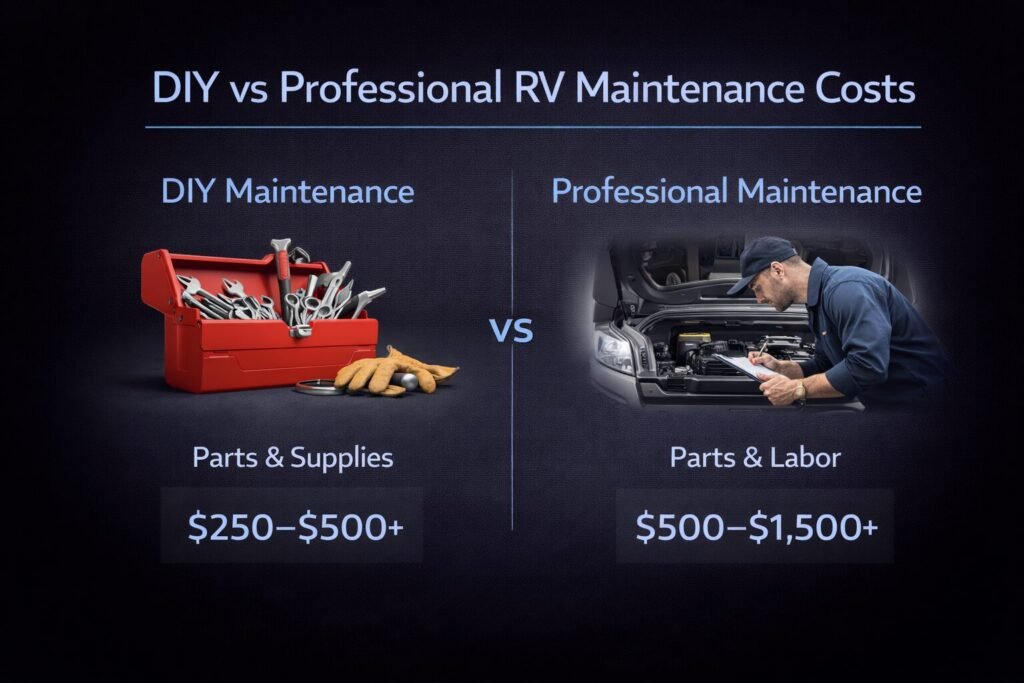
One of the biggest factors affecting RV maintenance cost per year is whether owners handle basic upkeep themselves or rely entirely on professional service. The difference in cost can be significant, but it also depends on comfort level, time, and mechanical skill.
DIY RV maintenance often covers tasks like inspecting roof seals, flushing water heaters, checking tire pressure, servicing batteries, and performing basic plumbing checks. These tasks typically require minimal tools and low-cost supplies, yet they account for a large portion of routine maintenance needs. Owners who handle these items themselves can reduce annual maintenance expenses substantially while gaining a better understanding of their RV’s systems.
Professional RV service, on the other hand, becomes necessary for more complex or safety-related work. Brake service, suspension repairs, electrical diagnostics, appliance replacement, and engine-related maintenance for motorhomes often require specialized tools and training. Labor rates vary by region, but professional service costs add up quickly when multiple systems need attention.
Many RV owners find that a hybrid approach works best. Handling basic preventive maintenance at home while budgeting for professional service when needed keeps costs predictable without risking improper repairs. This approach also helps catch issues early, reducing the likelihood of major breakdowns.
The key is honesty about your abilities. Attempting advanced repairs without proper knowledge can create bigger problems and higher costs. At the same time, learning simple maintenance tasks pays off year after year by lowering your overall RV maintenance expenses and increasing confidence on the road.
How to Budget RV Maintenance Costs Per Year
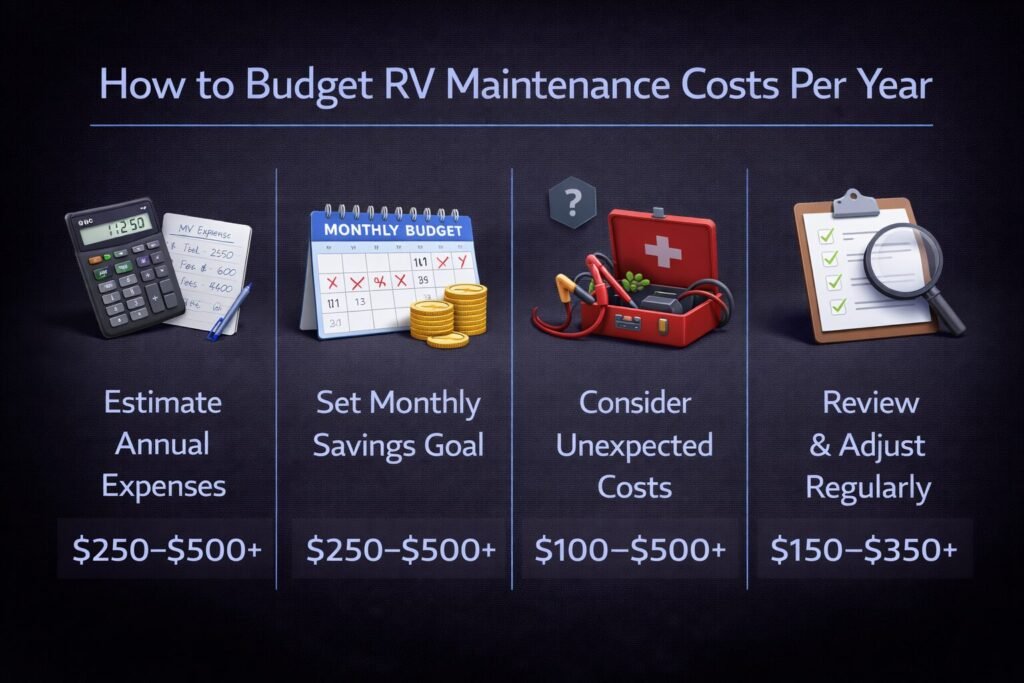
Budgeting for RV maintenance cost per year isn’t about guessing or setting aside a large emergency fund. It’s about understanding predictable expenses and spreading them out so maintenance never feels like a financial hit. When done correctly, RV maintenance becomes just another planned part of ownership rather than a surprise.
A simple approach is to create a monthly maintenance sinking fund. Instead of reacting to repairs when they happen, owners set aside a fixed amount each month dedicated solely to RV upkeep. Over time, this fund covers routine maintenance, tire replacement, appliance service, and unexpected repairs without disrupting travel plans.
Maintenance costs should also be adjusted based on RV type and usage. Larger RVs and motorhomes require higher monthly contributions, while smaller towables typically need less. RVs used frequently or year-round experience more wear and require a higher maintenance budget than rigs used only a few weekends per year.
Another key factor is timing. Some expenses occur annually, while others happen every few years. Tires, batteries, roof resealing, and major appliances don’t fail all at once, but planning for them as part of a long-term budget prevents financial strain when replacement time comes.
It’s also wise to budget separately for preventive maintenance and unexpected repairs. Preventive maintenance costs are predictable and controllable, while unexpected repairs happen occasionally despite best efforts. Having funds available for both allows you to handle problems quickly and avoid extended downtime.
When RV maintenance costs are planned instead of ignored, ownership becomes far more enjoyable. Budgeting removes stress, protects your investment, and ensures your RV is always ready for the next trip rather than sidelined by avoidable issues.
Are RV Maintenance Costs Worth It?
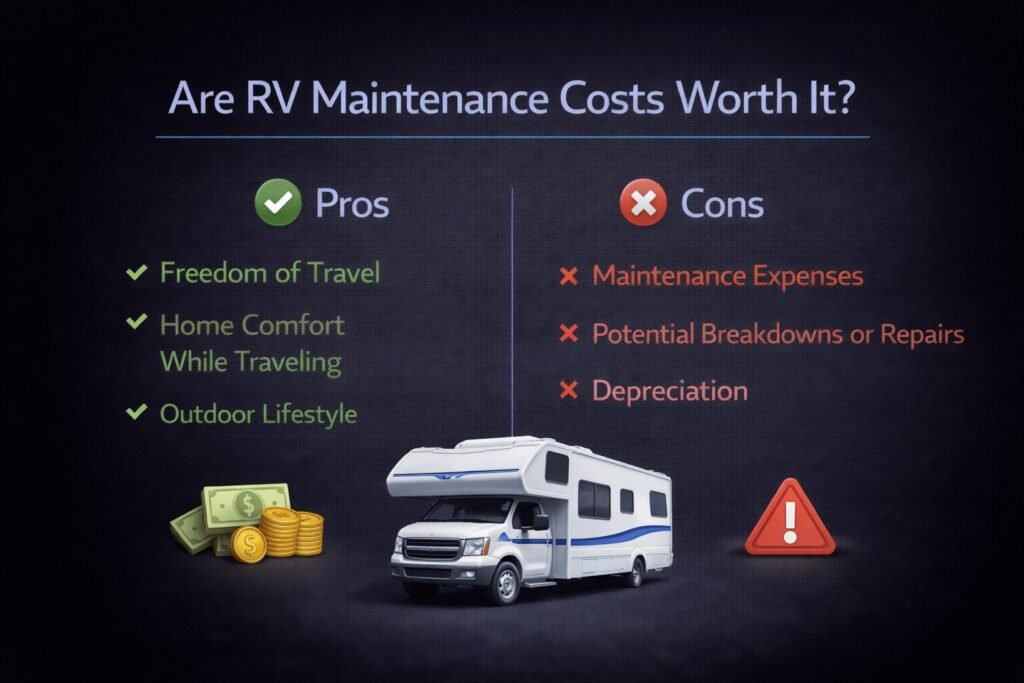
RV maintenance costs are an unavoidable part of ownership, but they’re also what keep an RV safe, reliable, and enjoyable to use. When viewed in isolation, maintenance expenses can feel frustrating. When viewed as part of the overall RV lifestyle, they make far more sense.
Regular maintenance protects one of your largest investments and prevents small issues from turning into major repairs. Roof inspections, tire replacement, system servicing, and routine checks all extend the life of the RV and preserve its resale value. Skipping maintenance may save money short-term, but it almost always leads to higher costs later.
For many owners, RV maintenance costs are still lower than comparable expenses associated with other travel options. Hotels, airfare, rental vehicles, and vacation fees add up quickly, while an RV offers flexibility, comfort, and repeat use over many years. Maintenance becomes the trade-off for freedom and convenience.
Perhaps most importantly, properly maintained RVs create peace of mind. Knowing your rig is ready for the road allows you to focus on travel, family time, and experiences instead of worrying about breakdowns or preventable failures.
When RV maintenance cost per year is planned, understood, and managed, it’s absolutely worth it. The goal isn’t to eliminate maintenance expenses — it’s to control them so your RV remains a source of enjoyment rather than stress.
Final Thoughts on RV Maintenance Costs

RV maintenance costs are predictable when you understand what to expect and plan for them ahead of time. By budgeting for routine upkeep, system maintenance, and occasional repairs, RV ownership becomes far less stressful and far more enjoyable. Instead of reacting to problems as they arise, owners who plan ahead stay in control of both their time and their budget.
Routine maintenance protects the value of your RV while reducing the risk of breakdowns that can disrupt trips or cut a season short. Simple preventive care often costs far less than major repairs and helps extend the life of key components. Over time, these small efforts add up to more reliable travel and fewer unexpected setbacks.
When maintenance is treated as part of the RV lifestyle rather than an inconvenience, it becomes an investment in long-term freedom and peace of mind. Proper planning keeps your focus where it belongs — on the journey, the experiences, and the flexibility that make RV travel worth it in the first place.
Related Reading