
The RV sewer system is one of the most important systems on your rig, yet it’s also one of the most misunderstood. When it’s set up correctly and used the right way, managing waste is simple, clean, and routine. Problems usually come from poor equipment, improper hookups, or basic mistakes that are easy to avoid with the right knowledge. This guide breaks down the RV sewer system essentials every RV owner should know, from how the system works to the gear that makes hookups reliable and mess-free. Whether you’re new to RVing or have years of experience, understanding proper sewer setup, usage, and maintenance helps protect your RV, the campground, and your peace of mind.
How the RV Sewer System Works
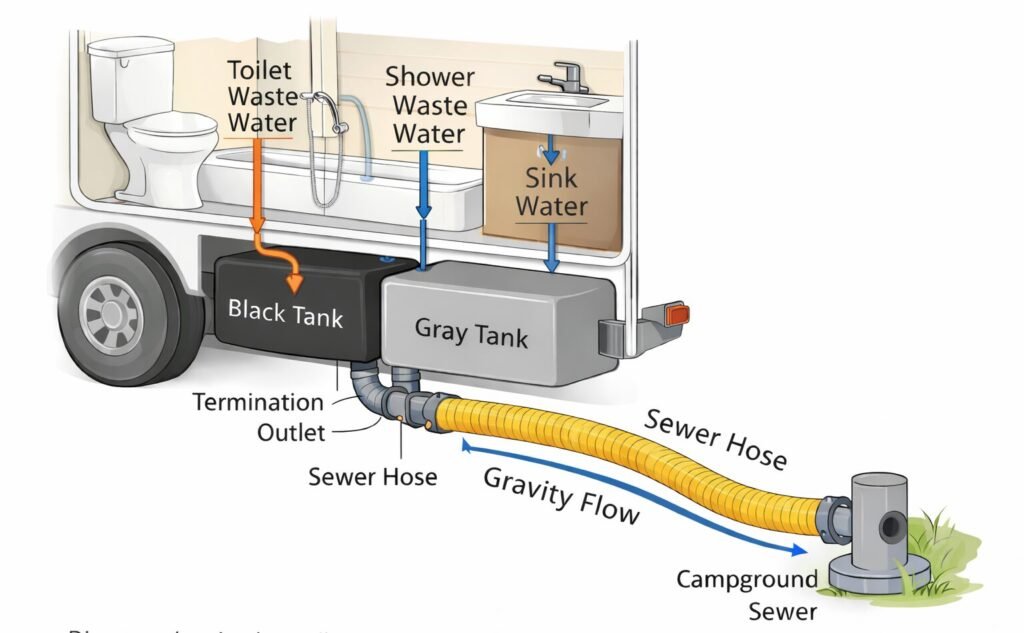
At its core, the RV sewer system is simple, but small misunderstandings are what cause most of the mess, odors, and frustration RV owners run into. Unlike household plumbing, an RV sewer system relies on gravity, proper water usage, and a few key components working together in the right order. When any part of that system is misunderstood or misused, problems show up fast. Understanding how the system is designed to work—and how it’s meant to be used—makes everything from daily bathroom use to dumping tanks easier, cleaner, and far less stressful. Once you see how the pieces fit together, the entire process starts to make sense.
RV Sewer System Essentials (Must-Have Gear)
Having the right sewer equipment makes the difference between a clean, stress-free hookup and a frustrating, messy experience. RV sewer systems rely on gravity, secure connections, and proper flow, which means the gear you use matters just as much as how you use it. Quality hoses, tight-fitting connections, and proper support help prevent leaks, control odors, and keep waste moving the way it should. This essential gear is designed to work together as a system, reducing common problems like clogs, spills, and unpleasant smells while making setup and teardown quicker and more predictable at the campsite. If you’re new to RVing or setting up a new rig,
These items pair perfectly with the gear covered in the First-Time RV Starter Essentials guide, helping ensure every system works together smoothly from the start.

| 
| 
|
Our Rating:
4.4 | Our Rating:
4.7 | Our Rating:
3.5 |
The Two Holding Tanks: Black vs Gray
Every RV sewer system is built around two separate holding tanks, each with a specific purpose. The black tank collects waste from the toilet only, including solids, liquids, and toilet paper. Because of what it holds, the black tank relies on plenty of water to move waste properly and prevent buildup inside the tank. Using too little water is one of the most common causes of clogs, odors, and false tank readings.
The gray tank collects wastewater from sinks and the shower. While it doesn’t contain human waste, gray water still carries food particles, soap residue, and grease, which can create odors if the tank isn’t drained regularly. During dumping, the black tank is emptied first, followed by the gray tank. This allows the cleaner gray water to rinse the sewer hose and fittings before disconnecting, helping keep the entire system cleaner and easier to manage.
Main Parts of an RV Sewer System
An RV sewer system is made up of several key components that work together to move waste safely from the RV to the campground sewer connection. At the core are the black and gray holding tanks, which store wastewater until it’s time to dump. Each tank is controlled by a gate valve (can be manual or electronic) located at the termination point, allowing you to release waste one tank at a time.
The termination outlet is the single exit point where both tanks connect to the sewer hose. A sewer hose attaches here using a secure bayonet-style fitting and carries waste downhill to the campground sewer inlet. To help gravity do its job, a sewer hose support is often used to maintain proper slope. Finally, the system relies on a roof vent to release gases and prevent pressure buildup inside the tanks, helping reduce odors inside the RV.
Gravity-Fed Design (Why Nothing Is Pressurized)
RV sewer systems are designed to work using gravity, not pressure. Unlike household plumbing, there are no pumps pushing waste out of the tanks. When the gate valve is opened, waste flows downward naturally through the sewer hose and into the campground sewer inlet. This is why hose placement, slope, and proper connections matter so much.
A consistent downward slope allows solids and liquids to move together, reducing the chance of clogs or buildup inside the hose. When the hose is flat—or worse, angled uphill—waste can settle instead of flowing, leading to blockages, odors, and messy disconnects. Because the system relies on gravity alone, volume and flow do the work, not force. That’s also why opening the valve too slowly or without enough liquid in the tank can cause problems.
Understanding that the system is gravity-fed helps explain many best practices, from using enough water in the black tank to always setting up the sewer hose with a proper slope before dumping.
Using the Black Tank Correctly (Why Water Matters More Than Chemicals)
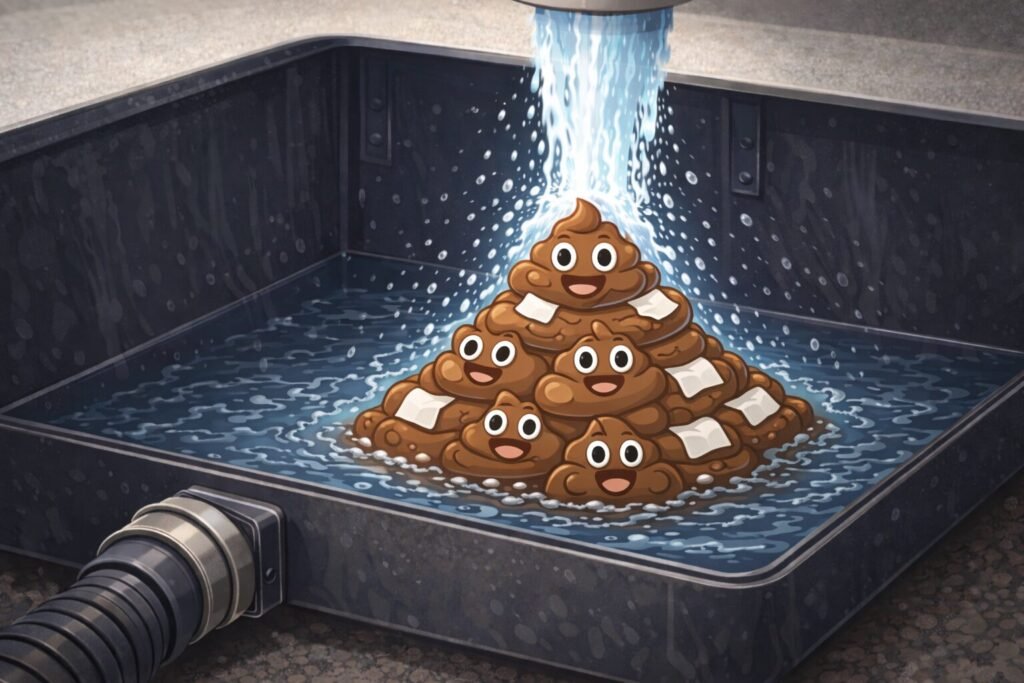
Using the Black Tank Correctly (Why Water MThe black tank works best when it has plenty of water, not when it’s treated with extra chemicals. Waste needs liquid to move, break down, and exit the tank cleanly. Using too little water allows solids and toilet paper to pile up directly below the toilet, creating clogs, odors, and inaccurate tank readings—a problem often referred to as a “pyramid” buildup.
Before using the toilet, it’s important to ensure there is already water in the black tank. During use, holding the flush pedal down long enough to send a good amount of water with each flush helps keep waste suspended instead of stuck. When dumping, waiting until the tank is at least two-thirds full provides enough volume and weight for waste to flow out smoothly.
Proper water flow is critical for tank performance. If you don’t fully understand how your RV water system works, read our complete RV water system guide here.
Tank treatments can help with odor control, but they cannot replace proper water usage. Consistent water flow is what keeps the black tank functioning the way it was designed to work.atters More Than Chemicals)
Common RV Sewer Problems (And What Causes Them)
Most RV sewer problems develop gradually rather than all at once. Small habits, such as using too little water or leaving valves open, often lead to larger issues over time. One of the most common problems is a buildup inside the black tank caused by flushing without enough water. When waste drops into a dry or low-water tank, it can pile up beneath the toilet instead of flowing outward, eventually restricting drainage and creating odors.
Unpleasant smells inside the RV are usually the result of dry seals, blocked roof vents, or tanks that haven’t been rinsed thoroughly. Gray tanks can also cause trouble when grease, soap residue, hair, and food particles accumulate, slowing drainage and producing odors. Leaking gate valves are another frequent issue, typically caused by debris caught in the valve or worn seals. In colder conditions, frozen sewer lines can occur when water is left sitting in hoses or exposed pipes. Nearly all of these problems trace back to the same root causes: too little water, improper valve use, or skipping routine rinsing and maintenance.
Proper Dumping Order (Why Black Tank First, Then Gray)
Dumping your RV tanks in the correct order is one of the simplest ways to keep the sewer system clean and trouble-free. The black tank should always be dumped first. Because it contains solid waste and toilet paper, it benefits from the strongest flow and the longest drain time. Emptying the black tank first allows waste to exit while there is maximum volume and pressure working in your favor.
Once the black tank has finished draining, the gray tank should be dumped next. Gray water from sinks and the shower is relatively cleaner and helps rinse leftover residue from the sewer hose and fittings. This final rinse reduces odors, minimizes buildup inside the hose, and makes disconnecting cleaner and easier. Reversing the order leaves contaminated material sitting in the hose and increases the chance of smells and mess during teardown. When done consistently, this simple sequence keeps the entire sewer system functioning as designed.
Best Practices for Clean, Spill-Free Dumping
A clean RV sewer dump starts before any valves are opened. The sewer hose should be securely connected at both ends and supported so it slopes continuously downhill to the campground sewer inlet. Once everything is in place, valves should be opened slowly to allow waste to flow smoothly instead of surging through the hose. Rushing this step increases the chance of splashing, leaks, or hose movement.
After dumping the black tank, taking time to rinse it thoroughly helps remove lingering waste and reduces future buildup. When the gray tank is dumped last, its cleaner water helps flush residue from the hose, making disconnecting cleaner and less unpleasant. Once dumping is complete, all valves should be fully closed before removing the hose. Capping the termination outlet and storing the hose properly prevents drips, odors, and contamination. When these steps are followed consistently, dumping becomes a routine task rather than a stressful one.
RV Sewer System Maintenance and Cleaning Tips
Regular maintenance is what keeps an RV sewer system working smoothly over the long term. After dumping, rinsing the black tank thoroughly helps remove leftover waste and toilet paper that can stick to the sides of the tank. Allowing tanks to drain fully before closing the valves reduces residue and helps prevent odors from forming between trips. Keeping the sewer hose clean, drained, and stored separately from other gear also plays a big role in preventing smells and contamination.
Periodically checking gate valves for smooth operation can catch small leaks before they turn into bigger problems. If a valve becomes stiff or begins to drip, it’s often a sign that debris is caught inside or seals are wearing out. Maintaining water in the toilet bowl and black tank between dumps helps keep seals moist and gases contained. When cared for consistently, the sewer system remains reliable, easier to manage, and far less likely to cause unpleasant surprises at the campsite.
Frequently Asked Questions About RV Sewer Systems
New and experienced RV owners alike often have questions about proper sewer system use. One of the most common is how often tanks should be dumped. In most cases, dumping the black tank when it is at least two-thirds full provides the best flow and helps prevent buildup. Another frequent question is whether tank treatments are necessary. While treatments can help control odors, they are far less important than using enough water and following proper dumping practices.
Many RVers also wonder if it’s safe to leave the sewer hose connected at a campsite. Keeping the hose connected is fine, but valves should remain closed until dumping to avoid solids drying out inside the tank. Questions about sewer smells usually trace back to dry seals, poor rinsing, or blocked vents. Understanding how the system is designed to work answers most of these concerns and helps prevent issues before they start.
Final Thoughts on RV Sewer System Essentials
The RV sewer system doesn’t have to be complicated or intimidating. When it’s understood and used the right way, it becomes just another routine part of RV life. Using enough water, dumping in the correct order, and maintaining clean connections go a long way toward preventing problems. With a few good habits and the right setup, managing the sewer system stays simple, clean, and predictable, allowing you to focus more on enjoying your time on the road.
More beginner guides that explain the other essential RV systems and setup.