
Choosing the best RV sewer hose is one of those things many new RV owners don’t think much about at first. When people are preparing for their first trip, they focus on fun gear, leveling blocks, chairs, and campsite setup. The sewer hose often gets picked quickly at the store because it “looks sturdy enough.” After all, it’s just a hose, right? Unfortunately, many RV owners learn pretty quickly that not all sewer hoses are built the same.
On one of our early trips, the first sewer hose we bought looked thick and durable when it came out of the package. It had solid-looking fittings and seemed like it would easily handle campground dumping. But after only a couple uses, we noticed a small leak forming along one of the folds while emptying the tank. It wasn’t a huge rupture, but it was enough to remind us that this is one piece of RV gear you don’t want to fail at the wrong moment.
That experience taught us quickly that the best RV sewer hose needs to be more than just flexible plastic tubing. A good hose needs reinforced construction, strong bayonet fittings that lock securely to the RV outlet, and materials that resist punctures, crushing, and wear from being stored and extended repeatedly. Since sewer hoses are compressed and stretched many times during normal RV travel, weaker hoses can split along the accordion folds or develop leaks at connection points.
Another thing new RV owners often discover is that campground sewer hookups are rarely positioned exactly where you want them. Sometimes the sewer inlet is several feet away from your RV outlet, which means having a hose that can extend without sagging or collapsing is important. Durable materials and thicker hose walls help maintain proper flow and reduce the chances of leaks while dumping tanks.
The best RV sewer hoses are designed to handle these real-world campground conditions. Many modern options use heavy-duty polyolefin materials that resist abrasion and crushing while still collapsing down small enough to store in an RV bumper compartment. Features like clear elbow connectors, swivel fittings, and secure bayonet locks also make the dumping process easier and help RV owners confirm when tanks are fully emptied.
In this guide, we’ll look at what features actually matter when choosing the best RV sewer hose, how hose thickness and construction affect durability, and which options RV owners rely on for dependable performance at campgrounds and dump stations. A good sewer hose may not be the most glamorous RV accessory, but having a reliable one can make campsite setup cleaner, easier, and far less stressful.
If you want a reliable sewer hose that most RV owners trust, this is one of the most durable and easy-to-use all in one options available.

All-in-One Convenience: This 11-piece RV camping kit includes (1) storage box, (1) secure lid, (1) 20' sewer hose with pre-attached clear elbow, (1) 4-in-1 adapter, (2) storage caps, and (5) sewer hose supports—everything you need, together!
What to Look for in a RV Sewer Hose
When choosing the best RV sewer hose, durability and reliability should always come first. Your sewer hose is responsible for safely moving waste from your RV’s holding tanks to the campground sewer inlet, so it needs to handle repeated use without cracking, leaking, or collapsing.
One of the most important factors to consider is the material used to construct the hose. Most high-quality RV sewer hoses use reinforced polyolefin or similar heavy-duty materials designed to resist punctures, abrasion, and crushing. Since hoses are frequently compressed and expanded during storage and setup, strong accordion-style construction helps prevent splits along the folds.
Connection fittings are another important feature to pay attention to. The best RV sewer hoses typically use bayonet-style fittings that lock securely onto the RV’s waste outlet. A tight, secure connection prevents leaks and makes the dumping process cleaner and easier at the campsite.
Hose flexibility and storage size also matter when selecting the right option. Many RV owners store their sewer hoses inside the rear bumper or a dedicated storage compartment, so a hose that compresses easily without losing durability is ideal.
Another helpful feature found on many modern hoses is a clear elbow connector. These transparent fittings allow RV owners to see when waste has finished flowing through the hose, making it easier to know when the tanks are fully emptied.
Choosing the best RV sewer hose may seem like a small decision, but a well-built hose can make campground dumping much simpler and far more dependable throughout your RV travels.
RV Sewer Hose Thickness and Materials Explained
One feature that many RV owners overlook when choosing the best RV sewer hose is the thickness of the hose material itself. While many hoses may look similar on the outside, the wall thickness and material quality can make a significant difference in durability and lifespan.
Most RV sewer hoses are made from reinforced polyolefin plastic designed to resist punctures, abrasion, and repeated compression. The accordion-style design allows the hose to collapse for storage and extend during use, but thinner hoses are more likely to split along the folds after repeated stretching and compression.
Many RV sewer hoses are made from reinforced polyolefin materials designed to resist punctures and abrasion. The RV Industry Association provides safety standards and guidelines for RV sanitation systems used in modern RVs.
Many higher-quality sewer hoses use thicker materials, often measuring around 18–23 mm across the reinforced spiral ridges when expanded. These thicker hoses tend to resist crushing better and hold their shape when extended across the ground to a sewer inlet. Thinner hoses, sometimes closer to 15–17 mm across the ridges, may still function properly but can wear out faster with regular campground use.
The thickness of the spiral reinforcement also affects how well the hose maintains flow while dumping tanks. A sturdier hose is less likely to sag or kink, which helps waste move smoothly through the hose and into the campground sewer connection.
Another advantage of thicker hose construction is resistance to accidental damage. Sewer hoses are often dragged across gravel pads, dirt, and concrete when setting up at campsites. Stronger materials help protect the hose from punctures and small tears that can eventually lead to leaks.
While thickness alone does not guarantee the best RV sewer hose, it is a good indicator of overall durability. RV owners who travel frequently or dump tanks often usually benefit from investing in a hose built with stronger materials and reinforced construction.
RV Sewer Hose Connections and Fittings
Another important factor when choosing the best RV sewer hose is the type of connection fittings used on the ends of the hose. A secure connection between the RV outlet and the campground sewer inlet helps prevent leaks and keeps the dumping process cleaner and easier.
Most modern RV sewer hoses use bayonet-style fittings on the RV side of the hose. These fittings twist and lock into the four small tabs located on the RV’s sewer outlet. When properly attached, the connection creates a tight seal that keeps the hose securely in place while emptying the black and gray tanks.
On the campground side, many hoses include a clear elbow adapter that connects the hose to the sewer inlet in the ground. These clear connectors are helpful because they allow RV owners to see when the waste water has finished flowing through the hose. This makes it easier to know when the tanks are fully emptied and when it’s time to close the dump valves.
Some sewer hose kits also include swivel fittings, which allow the connectors to rotate independently from the hose. This makes it much easier to line up connections without twisting the entire hose during setup. Swivel fittings can save time and reduce stress on the hose material when connecting at tight campsites.
A secure seal at both ends of the hose is essential for preventing leaks. Many RV owners also add a rubber sewer donut or threaded adapter to help seal the connection at the campground sewer pipe, especially at older campgrounds where the openings may not fit perfectly.
When evaluating the best RV sewer hose, looking for strong fittings and reliable connection systems can make a big difference in how easy and clean the dumping process feels at the campsite.
RV Sewer Hose Length and Storage Options
Choosing the right length is another important part of selecting the best RV sewer hose. Campground sewer connections are not always positioned exactly where you need them, and sometimes the inlet may be several feet away from your RV’s waste outlet.
Most RV sewer hoses are sold in 10-foot or 20-foot sections, and many RV owners carry two hoses that can connect together when extra length is needed. A 20-foot setup usually provides enough reach for most campground sites while still being manageable to store and handle.
Having the option to extend your hose can make campsite setup much easier. Some campgrounds place the sewer inlet slightly behind or in front of the RV pad, so having additional length helps prevent stretching the hose too tightly or forcing awkward angles in the connection.
Storage is another thing to consider when choosing a sewer hose. Many travel trailers and motorhomes store their sewer hose inside the rear bumper compartment, which means the hose needs to compress small enough to fit inside that space. Accordion-style hoses are designed to collapse tightly so they can slide easily into the bumper after dumping the tanks.
Some RV owners prefer storing their hose in a dedicated storage tube or plastic bin instead of the bumper. This can help keep the hose separated from other equipment and prevent odors from spreading inside the storage compartment.
The best RV sewer hose will extend easily when needed but also compress small enough for convenient storage between trips. Finding a balance between length, flexibility, and storage size can make campground setup quicker and less frustrating.
RV Sewer Hoses for Durability and Reliability
When looking for the best RV sewer hose, durability and reliability should be the main priorities. A good sewer hose should handle repeated use, resist punctures, and maintain strong connections without leaking. While many hoses may appear similar on the shelf, some models are known among RV owners for holding up better over time.
One of the most widely used options is the Camco RhinoFLEX sewer hose. This hose is known for its thick polyolefin construction and reinforced spiral design that resists crushing and abrasion. It also compresses small enough to fit inside most RV bumper storage compartments, which makes it convenient for travel trailers and motorhomes that store their sewer hose in the rear bumper.

Superior Dual RV Tank Dumping: Streamline dual tank dumping with the RhinoEXTREME 20' RV Sewer Hose Kit. Made with the toughest RV sewer hose, this complete kit ensures easy & efficient dual tank dumping.
Another dependable option is the Valterra Dominator sewer hose. This hose uses heavy-duty construction with rotating fittings that make it easier to connect without twisting the hose. The reinforced design helps prevent sagging while dumping tanks, which can improve flow and reduce stress on the hose material.
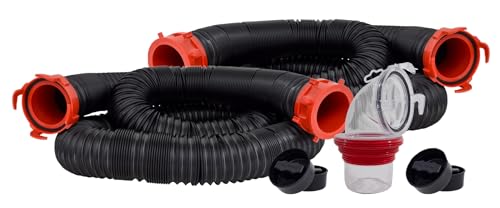
The Dominator hose kit includes 2 collapsible 10-foot hoses with rotating fittings plus a 90 degree sewer adapter and 4 drip caps
Many RV owners also look for sewer hose kits that include helpful accessories such as clear elbow connectors, bayonet fittings, and additional hose sections. These kits allow RVers to extend their hose length when needed and make it easier to monitor tank emptying at the campground sewer connection.
While there are many hoses available, the best RV sewer hose is typically one built with thicker reinforced materials, secure locking fittings, and the ability to compress for easy storage. Investing in a durable hose can prevent leaks, make campsite dumping easier, and help avoid the kind of messy situations that cheaper hoses sometimes create.
Tips to Make Your RV Sewer Hose Last Longer
Even the best RV sewer hose will wear out over time if it is not used and stored properly. Since sewer hoses are extended, compressed, and handled frequently during RV travel, a few simple habits can help extend their lifespan and reduce the chances of leaks or damage.
One of the most helpful things RV owners can do is avoid dragging the hose across rough surfaces whenever possible. Gravel pads, concrete, and sharp debris around campsites can slowly wear down the outer material. Taking a moment to guide the hose into position instead of pulling it across the ground can prevent small abrasions that eventually turn into leaks.
Using a sewer hose support can also make a big difference. These supports lift the hose slightly off the ground and create a gradual slope from the RV outlet to the campground sewer inlet. This improves drainage and reduces stress on the hose walls while emptying the tanks.
After dumping the tanks, it’s also a good idea to rinse the hose thoroughly before storing it. Running a little fresh water through the hose helps clear out any remaining waste and keeps the inside of the hose cleaner between uses.
Proper storage is just as important. Many RV owners compress their sewer hose and store it inside the rear bumper or a dedicated storage container. Making sure the hose is fully compressed and not sharply bent can prevent damage to the accordion folds over time.
Taking a few extra minutes during setup and cleanup can help keep the best RV sewer hose working reliably for many camping trips. With proper care, a good sewer hose can last for years of regular RV travel.
Final Thoughts on Choosing the Best RV Sewer Hose
Choosing the best RV sewer hose may not seem like the most exciting part of setting up your RV gear, but it is one of the most important. A reliable hose helps keep the dumping process clean, simple, and stress-free every time you arrive at a campground or visit a dump station.
As many RV owners learn quickly, cheaper hoses that look sturdy in the store can sometimes fail after only a few uses. Leaks along the folds, weak fittings, or hoses that collapse during dumping can quickly turn a routine task into a messy situation. Investing in a well-built sewer hose with reinforced construction and strong fittings helps avoid those problems.
When comparing options, it helps to look for thicker hose materials, secure bayonet connections, and flexible accordion designs that compress easily for storage. Having the right hose length and helpful accessories like clear elbows and hose supports can also make the dumping process easier and more efficient.
The best RV sewer hose is one that holds up to repeated use, connects securely every time, and stores easily between trips. With the right hose and a little proper care, managing your RV’s waste system becomes a quick and predictable part of campground setup rather than something to worry about.
Taking the time to choose a dependable sewer hose now can make every RV trip a little smoother and a lot cleaner.
These helpful guides walk through the most important parts of RV setup and campground hookups.