
If you’re new to RV camping etiquette, one thing many beginners don’t realize is that campgrounds operate on a set of unwritten rules. These rules aren’t usually posted on a sign when you pull into your campsite, but experienced RVers follow them because they help keep the campground enjoyable for everyone.
RV parks bring a lot of people together in a small space. Families are relaxing outside, kids are riding bikes, and many campers are there to enjoy some peace and quiet. When everyone respects a few basic etiquette rules, the campground stays comfortable and welcoming for everyone around you.
The problem is that many new RV owners simply don’t know these unwritten rules yet. Things like playing loud music late at night, leaving bright lights on all evening, or walking through someone else’s campsite can quickly frustrate neighboring campers. Most of the time these mistakes aren’t intentional — they just come from not knowing how campground culture works.
Learning basic RV camping etiquette is one of the easiest ways to make your camping trips better. It helps you avoid awkward situations with neighbors, keeps campground staff happy, and makes sure everyone around you can enjoy their time outdoors.
In this guide, we’ll walk through the most common RV camping etiquette rules that experienced campers follow. Once you understand them, you’ll feel much more comfortable pulling into any campground and setting up your campsite the right way.
Respect Campground Quiet Hours
Most RV campgrounds have designated quiet hours, usually somewhere around 10 PM to 7 AM. Even if the campground posts these rules at the office or on a map, experienced RVers generally assume that nighttime is meant for relaxing and sleeping.
One thing new campers often underestimate is how far sound travels in a campground. RVs are parked fairly close together, and many people are sitting outside their rigs in the evening. Music that seems quiet at your picnic table can easily carry across several campsites once the campground settles down for the night.
Generators, outdoor speakers, loud conversations, and even repeatedly slamming RV doors can quickly become frustrating for neighbors trying to sleep. Many campers wake up early for fishing, hiking, or getting on the road, so late-night noise can affect more people than you might realize.
Respecting quiet hours doesn’t mean you have to go inside your RV the moment the clock hits ten. Campfires and conversations are still part of the camping experience. The idea is simply to keep noise levels low enough that people in nearby campsites aren’t disturbed.
Experienced RV campers are usually very understanding with beginners, but following quiet hours is one of the easiest ways to show respect for the people sharing the campground with you. It helps keep the environment peaceful and makes the overall camping experience better for everyone.
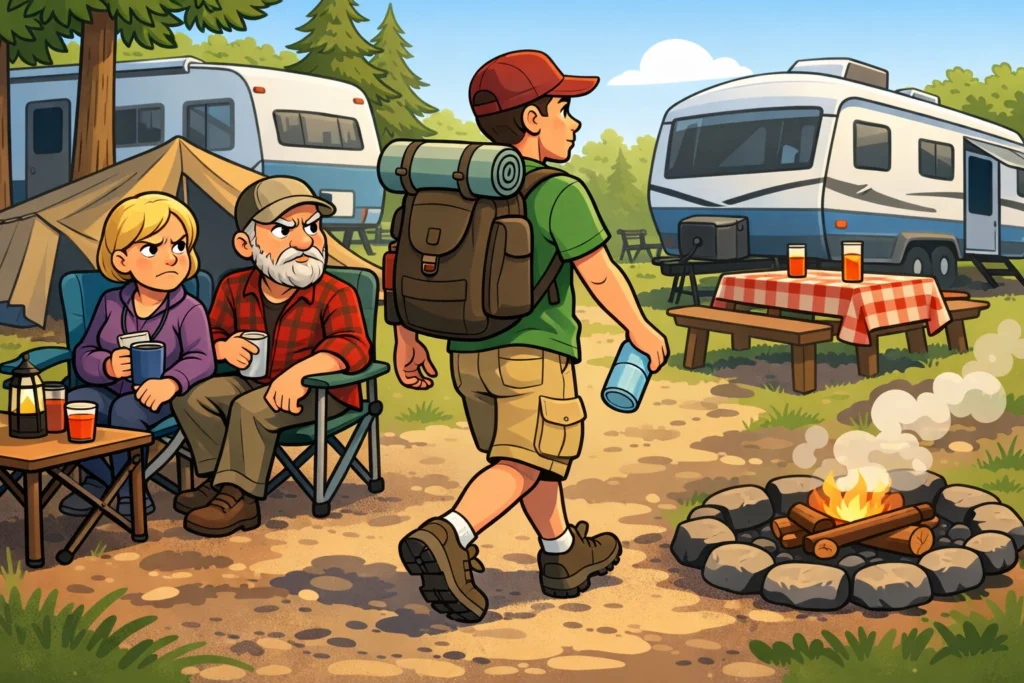
Don’t Walk Through Other Campsites
One of the quickest ways to annoy experienced campers is walking directly through someone else’s campsite. New RVers sometimes do this without realizing it’s considered poor campground etiquette.
A campsite might look like open space when you walk by, but for the people staying there it’s their temporary living area. Campers often have chairs set up, food on the table, pets tied near the RV, or kids playing nearby. When someone cuts through the middle of the site, it can feel like strangers walking through your backyard.
Most campgrounds are designed so people use the roads or walking paths to move around the park. Even if taking the road adds a few extra steps, it’s the respectful way to get where you’re going.
This rule is especially important at night. Walking through someone’s campsite after dark can startle people sitting around a campfire or relaxing outside their RV. It can also cause problems if someone has a dog tied out that you didn’t see.
A good rule of thumb is simple: treat every campsite as someone’s temporary home. If you wouldn’t walk through a stranger’s backyard, you shouldn’t walk through their campsite either.
Keep Exterior Lights Reasonable at Night
Many modern RVs come with several different exterior lights, including porch lights, awning lights, and even LED accent lights mounted under the RV. While these lights can make your campsite look great, leaving them on all night is one of the most common campground etiquette mistakes beginners make.
Campgrounds become very dark once the sun goes down, and that darkness is part of what many campers enjoy about being outdoors. When one campsite has bright lights shining all evening, it can spill directly into neighboring campsites and sometimes even through the windows of nearby RVs.
Awning lights and LED lights under the RV are especially noticeable at night. These lights are often designed to be decorative, but they can easily become too bright when the rest of the campground is trying to wind down for the evening.
Most experienced RV campers turn off their exterior lights once they go inside for the night or when campground quiet hours begin. If you’re sitting outside after dark, a small lantern or a dim light around your seating area is usually more than enough.
Another option many RV owners use is a small motion-sensor light near the RV steps. This provides enough light to safely enter and exit your RV without leaving bright lights on all night that disturb your neighbors.
Being mindful of your lighting helps preserve the relaxed campground atmosphere and allows everyone nearby to enjoy the quiet nighttime setting that makes camping special.
Control Pets and Keep Them on a Leash
Pets are a big part of the RV lifestyle, and many campgrounds welcome them. However, one of the most common campground complaints involves pets that are not properly controlled.
Most campgrounds require dogs to be on a leash whenever they are outside your RV. Even if your dog is very friendly and well trained, other campers and their pets may not be comfortable with a loose dog wandering through the campground.
A dog that runs into another campsite can quickly create problems. Some campers may have small children, food out on the picnic table, or their own pets tied near their RV. Even a friendly dog approaching another campsite can make people uneasy if they don’t know the animal.
Barking can also become an issue in RV parks. A dog that barks constantly while its owners are away or sitting outside can disturb several nearby campsites. Because RVs are parked fairly close together, noise travels quickly through the campground.
Responsible RV campers always keep their pets leashed and under control while outside. They also make sure to clean up after their pets and avoid letting them wander into neighboring campsites.
Being mindful of your pets helps keep the campground comfortable for everyone and ensures that RV parks remain pet-friendly for future campers.
Be Mindful When Running a Generator
Generators can be very useful when camping without electrical hookups, but they are also one of the biggest sources of noise complaints in campgrounds.
Many campgrounds have specific generator hours that limit when they can be used. These rules are usually in place to prevent generators from running early in the morning or late at night when most campers are trying to relax or sleep.
Even during allowed hours, generators can be surprisingly loud. In a quiet campground the sound can easily carry across several campsites, especially if the generator is running continuously.
Most experienced RV campers try to use their generators only when they really need them. For example, running the generator for a short time to recharge batteries or operate appliances is usually reasonable, but leaving it running for long periods can become frustrating for people nearby.
In campgrounds with full electrical hookups, generators usually aren’t necessary at all. Using the campground pedestal power keeps the environment quieter and avoids unnecessary disturbance for neighboring campers.
Being thoughtful about when and how long you run a generator helps keep the campground peaceful and shows respect for the people camping around you.
Respect Your Neighbor’s Campsite Space
When you pull into a campground, each site is designed to give campers their own small area to relax and enjoy their time outside. RVers often set up chairs, cook outside, and spend much of the evening around their campsite, so respecting that space is an important part of campground etiquette.
It’s best to keep your chairs, outdoor rugs, grills, and other gear within the boundaries of your own campsite. Letting your setup spread too close to the next site can make neighbors feel crowded and uncomfortable.
Another thing to be aware of is the campground hookups. Each campsite is designed with its own water connection, sewer inlet, and electrical pedestal. These utilities are intended for the RV parked in that specific site.
Running extension cords or hoses to another campsite’s hookups is generally not acceptable unless campground staff specifically allow it. Each camper is responsible for using the utilities assigned to their own site.
It’s also important to keep your hoses and sewer connections organized so they stay within your campsite area. Stretching hoses across the road or through another campsite can create tripping hazards and interfere with other campers.
A good rule to follow is to treat your campsite like a small temporary yard. Stay within your space, use the utilities assigned to your site, and give your neighbors the same respect you would expect if the situation were reversed.
Keep Campfires Safe and Considerate
Campfires are one of the best parts of camping, and many RV campers enjoy sitting around a fire in the evening. However, it’s important to keep campfires safe and respectful of the people camping nearby.
Most campgrounds provide a designated fire ring at each campsite. Fires should always stay inside this ring and be kept to a reasonable size. Large fires can throw sparks, create excessive smoke, and make nearby campers uncomfortable.
Smoke is one of the biggest complaints in crowded campgrounds. If the wind shifts and your fire begins blowing smoke directly into a neighboring campsite, it’s courteous to reduce the fire or let it burn down. Constant smoke blowing into another RV’s windows or seating area can quickly ruin someone’s evening.
Using dry firewood instead of wet or green wood also helps reduce smoke. Many experienced campers buy firewood near the campground because it burns cleaner and produces far less smoke.
It’s also important to pay attention to campground rules about bringing outside firewood. Many parks and campgrounds do not allow firewood brought from other areas because it can spread invasive insects and tree diseases. Buying firewood locally near the campground helps protect the surrounding forests.
When the evening is over, always make sure your fire is fully extinguished. Pouring water over the coals and stirring the ashes ensures the fire is completely out and prevents any chance of it reigniting later.
Being thoughtful with campfires helps keep the campground safe and comfortable for everyone enjoying the outdoors.
Keep Your Campsite Clean and Dispose of Trash Properly
Keeping your campsite clean is one of the simplest parts of good RV camping etiquette, but it’s also one of the most important. A clean campsite makes the campground more enjoyable for everyone and helps protect the natural environment around you.
Most campgrounds provide dumpsters or designated garbage collection areas. Taking a few minutes to bag your trash and dispose of it properly prevents garbage from piling up around campsites and keeps the park looking well maintained.
Loose trash left outside your RV can quickly attract wildlife. Animals like raccoons, squirrels, birds, and in some areas even bears are very good at finding food scraps. Once animals begin associating campsites with food, it can quickly become a problem for both campers and the campground staff.
Food wrappers, leftover scraps, and even empty drink containers should always be sealed in trash bags and placed in the campground dumpster as soon as possible. Leaving garbage sitting out overnight is one of the fastest ways to attract unwanted wildlife to your campsite.
Keeping your campsite tidy also helps prevent small items from blowing around the campground. Paper plates, napkins, plastic bags, and lightweight packaging can easily be carried by the wind and end up scattered through nearby campsites or natural areas.
Before leaving your campsite, it’s always a good idea to do a quick walk-around to make sure nothing has been left behind. Bottle caps, food wrappers, and small bits of trash can easily get overlooked if you don’t take a moment to check the area.
Many experienced RV campers follow a simple rule when leaving a campsite: leave it cleaner than you found it. Taking a little extra time to clean up helps keep campgrounds beautiful and ensures the next campers arriving at that site have a great experience too.
Be Considerate With Early Morning Activity
Campgrounds tend to be quiet places early in the morning. Many campers are still sleeping, especially families who stayed up around the campfire the night before.
Starting loud activities very early can quickly disturb nearby campsites. Running generators, blasting music, or slamming RV storage compartments before sunrise can wake up several campers around you.
Even simple things like repeatedly opening and closing RV doors or moving gear around outside can carry farther than you might expect in a quiet campground. Because RVs are parked fairly close together, small sounds can easily travel across several campsites.
Most experienced RV campers try to keep noise to a minimum early in the morning until the campground slowly starts waking up. A little patience in the morning helps maintain the relaxed atmosphere that most people are looking for when they camp.
If you’re planning to leave the campground early, it helps to prepare as much as possible the night before. Folding chairs, putting away outdoor gear, and organizing items inside your storage compartments ahead of time allows you to depart more quietly in the morning.
When it’s time to leave, moving slowly while disconnecting your water hose, sewer hose, and electrical cord helps keep noise to a minimum. Taking a few extra minutes to pack up quietly is something neighboring campers will appreciate.
Being mindful of early morning noise helps everyone enjoy a peaceful start to the day and keeps the campground atmosphere relaxed for everyone around you.
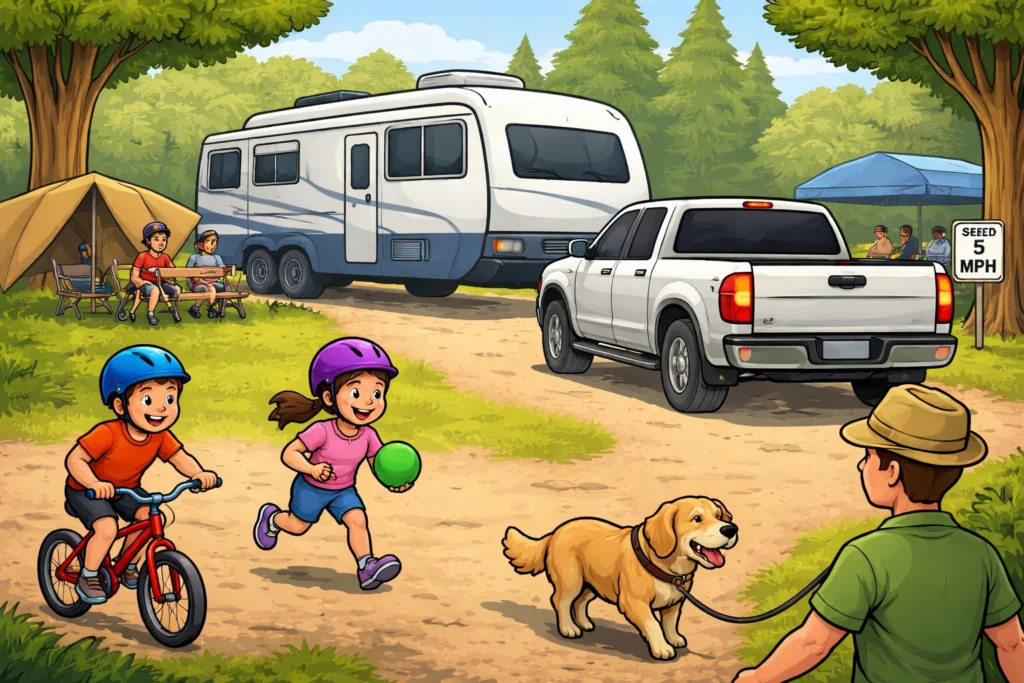
Drive Slowly and Watch for Kids and Pets
Most campgrounds have very low speed limits, often around 5 to 10 miles per hour. These limits may seem slow at first, but they exist for a good reason.
Campgrounds are busy places where people are walking, riding bikes, and moving around between campsites. Children often play near their family’s campsite and may run across campground roads without warning. Driving slowly helps ensure you have time to react if someone suddenly steps into the road.
Pets are another common concern in campgrounds. Many campers walk their dogs along the campground roads, and some pets may be tied near campsites close to the road. Slowing down and paying attention helps keep both pets and people safe.
Another reason to drive slowly is dust and noise. Driving too fast through a campground can kick up dust on gravel roads and create unnecessary noise that disturbs campers relaxing outside.
Experienced RV campers usually move slowly and carefully through the campground, especially when arriving or leaving their campsite. Taking a little extra time to drive cautiously helps keep the campground safe and comfortable for everyone sharing the space.
Many campgrounds post speed limits of 5–10 mph because children, pets, and pedestrians are constantly moving around campsites. Driving slowly helps prevent accidents and keeps the campground safe for everyone. The National Park Service also recommends driving slowly in campgrounds and watching carefully for pedestrians and wildlife.
Final Thoughts on RV Camping Etiquette
RV camping is one of the best ways to travel and enjoy the outdoors, but sharing a campground with other people means a little consideration goes a long way. Simple things like keeping noise down, respecting campsite space, controlling pets, and driving slowly through the campground help create a better experience for everyone.
Most of these campground rules aren’t complicated. In fact, many of them simply come down to common courtesy and being aware of the people camping around you. When everyone follows a few basic etiquette guidelines, campgrounds stay peaceful, safe, and enjoyable places to relax.
It’s also worth remembering that campgrounds often feel like small temporary communities. A simple wave, a friendly hello, or being respectful of your neighbors helps create a welcoming atmosphere for everyone staying there.
Whether you’re new to RV camping or have been traveling for years, following good RV camping etiquette helps make every campground a better place to stay.
Understanding campground etiquette is just one part of setting up a campsite properly. Read our other informative guides.