
RV propane systems are one of the most important parts of a camper, yet many RV owners do not fully understand how they work until something suddenly stops operating. Furnaces stop heating, refrigerators quit cooling, water heaters fail to ignite, or stovetops refuse to light, often leaving beginners confused about where the problem actually starts. In many cases, the issue is connected somewhere within the RV propane system.
Propane powers several major RV appliances and allows campers to stay comfortable even when camping without hookups. Unlike campground electricity, propane gives RV owners the ability to heat the camper, cook meals, produce hot water, and run certain refrigerators almost anywhere they travel. This is one reason propane systems are such a major part of RV camping and off-grid travel.
The challenge for many beginners is that RV propane systems can seem intimidating at first. Tanks, regulators, changeover valves, propane detectors, and appliance igniters all work together behind the scenes, and when one part has a problem, it can affect multiple systems throughout the RV. Many new owners are unsure how propane flows through the camper or what to check when appliances stop working properly.
The good news is that RV propane systems are usually much simpler than they first appear. Once you understand the basic components and how propane moves through the system, troubleshooting becomes much easier and far less stressful. Many common RV propane problems are caused by a handful of simple issues like empty tanks, regulator problems, air in the lines, safety shutoffs, or blocked appliance burners.
In this guide, we’ll explain how RV propane systems work, break down the main components, cover common propane problems RV owners experience, and help you better understand how to safely manage propane while camping.
How an RV Propane System Works
One thing that surprises many new RV owners is how many systems inside the camper depend on propane every single day. The furnace, water heater, stove, oven, and often the refrigerator all rely on propane to operate properly. This becomes especially important while dry camping or traveling because propane allows the RV to function comfortably even when there is no campground electricity available.
The propane system itself is actually fairly simple once you understand the path the fuel takes through the RV. Propane is stored inside the tanks at high pressure in liquid form. As the propane leaves the tank, it changes into vapor and travels through the propane lines toward the appliances that need fuel. Before it reaches those appliances, the propane first passes through the regulator, which lowers the pressure to a safe level the RV systems can handle.
The regulator plays a much bigger role than many RV owners realize. If the regulator starts failing, appliances may struggle to ignite, flames may burn weakly, or the entire propane system may stop working correctly. Many dual tank setups also use an automatic changeover regulator that switches to the second tank once the first tank becomes empty. This helps prevent losing heat or hot water unexpectedly while camping.
From there, propane flows through the RV to appliances like the furnace, refrigerator, stove, water heater, and sometimes generators or outdoor kitchens. What confuses many beginners is that propane appliances still often require 12 volt battery power to operate ignition systems, thermostats, safety sensors, and control boards. This is why an RV furnace or refrigerator may stop working even when the propane tanks are full if the RV battery becomes too weak.
Once you understand how propane moves through the system, troubleshooting becomes much less intimidating. Most RV propane problems usually come down to a few common issues like empty tanks, bad regulators, air trapped in the lines, tripped safety devices, or weak battery power affecting the appliance controls.
Understanding RV Propane Tanks
One of the first things many RV owners notice is the pair of propane tanks mounted on the front of the camper, but surprisingly few beginners understand how those tanks actually work or how quickly propane can disappear while camping. Learning the basics of RV propane tanks can help prevent a lot of frustration, especially during cold weather trips when furnaces and water heaters run constantly.
Most travel trailers and fifth wheels use either 20 pound or 30 pound propane tanks. Twenty pound tanks are the most common and are roughly the same size as the tanks used on backyard gas grills. A full 20 pound tank holds about 4.7 gallons of propane and can be used at propane exchanges like Blue Rhino. Thirty pound tanks are taller and heavier but provide noticeably longer runtime, which many RV owners appreciate during extended camping trips or colder temperatures.
On many travel trailers, the propane tanks are mounted openly on the tongue near the hitch area under a protective cover. Fifth wheels are a little different because the propane tanks are often stored inside a front storage compartment or side storage bay near the front of the camper. This gives the RV a cleaner appearance while also protecting the tanks from weather and road debris.
Motorhomes typically use permanently mounted propane tanks instead of removable cylinders. These tanks are usually mounted underneath the RV along the frame rail or inside a lower exterior storage compartment area. Since the tanks are built into the RV itself, motorhome owners usually refill them directly at propane filling stations rather than removing the tanks.
Traditional steel propane tanks are still the most common because they are affordable and durable. However, fiberglass propane tanks have become increasingly popular with some RV owners. Fiberglass tanks are lighter, resist rust, and allow you to visually see the propane level through the side of the tank, which makes it easier to estimate how much fuel remains. The downside is that fiberglass tanks usually cost significantly more than standard steel tanks.
One thing that catches many beginners off guard is how difficult it can be to accurately tell when a propane tank is getting low. Most basic tank gauges are only rough estimates and are not always perfectly accurate. Some RV owners use aftermarket magnetic gauges, inline propane monitors, or Bluetooth propane sensors to monitor fuel levels more closely.
A simple trick many campers use is pouring warm water down the side of the propane tank. The metal will feel cool near the propane level because the liquid propane inside absorbs heat differently than the empty portion of the tank. It is not exact, but it can give a quick estimate when gauges are unavailable or unreliable.
Filling propane tanks is usually straightforward, but there are a few important things RV owners should know. Propane tanks are only filled to about 80 percent capacity to allow room for expansion as temperatures change. Most refill stations charge by the gallon, while exchange stations simply swap your tank for another prefilled tank. What many RV owners do not realize is that exchange tanks are often only partially filled compared to a full refill, which means you may get less propane than expected.
It is also important to regularly inspect propane tanks for rust, dents, damaged valves, or expired certification dates. Older tanks eventually require recertification before they can legally be refilled. Keeping tanks properly secured and protected from damage while traveling is an important part of RV propane safety.
Once RV owners become familiar with propane tank sizes, fuel usage, gauges, and refill options, managing propane during camping trips becomes much easier and far less stressful.
Common RV Propane Problems
One thing many RV owners discover quickly is that propane problems rarely happen at convenient times. Furnaces stop working during cold nights, refrigerators suddenly quit cooling, or water heaters refuse to ignite right before showers. The good news is that most RV propane problems are usually caused by a handful of very common issues that can often be diagnosed without major repairs.
One of the most common problems is simply running out of propane without realizing it. Many RV tank gauges are only rough estimates, and propane levels can drop surprisingly fast during cold weather when the furnace runs constantly. This is especially common for beginners who underestimate how much propane the furnace and water heater actually consume during a camping trip.
Another simple mistake that catches many RV owners is forgetting to switch propane tanks after one tank becomes empty. On dual tank setups, many RVs use an automatic changeover regulator that begins drawing propane from the second tank once the first tank runs out. However, the empty tank still needs to be manually refilled and the selector valve eventually switched back after replacing the tank. Many RV owners assume the system handles everything automatically forever, only to later discover both tanks are empty because the first tank was never refilled or switched back into service.
Bad propane regulators are another common issue. When regulators begin failing, appliances may struggle to light, flames may appear weak or inconsistent, or the entire propane system may stop working properly. Sometimes the regulator may even freeze up in colder temperatures or fail internally after years of use.
Air trapped inside the propane lines can also create problems, especially after changing propane tanks or letting the system run completely empty. Since propane lines fill with air during tank changes, appliances may take several attempts to ignite before propane fully reaches the burners again. Many RV owners first notice this at the stove because the burners may sputter or click repeatedly before lighting normally.
Another issue that confuses many beginners is the propane safety shutoff built into some tank valves. If the propane tank valve is opened too quickly, the system may think there is a major leak and automatically restrict propane flow. This can make it seem like the propane system is barely working even when the tanks are full. Slowly shutting the tank valve off and reopening it more carefully often solves the problem.
Cold weather can also affect propane performance more than many RV owners expect. Propane pressure naturally drops as temperatures fall, which can reduce appliance performance during very cold camping conditions. Smaller tanks may struggle more in freezing weather because propane vaporizes less efficiently at lower temperatures.
Dirty appliance burners, clogged furnace exhaust vents, faulty igniters, low battery voltage, or damaged propane detectors can also prevent propane appliances from operating correctly. What makes RV propane troubleshooting confusing is that many propane appliances still rely heavily on the RV battery for ignition systems and control boards. Even with full propane tanks, weak batteries can sometimes stop appliances from functioning properly.
Most RV propane problems end up being far less serious than they first appear. Once RV owners understand the most common failure points, troubleshooting propane systems becomes much easier and far less intimidating while camping.
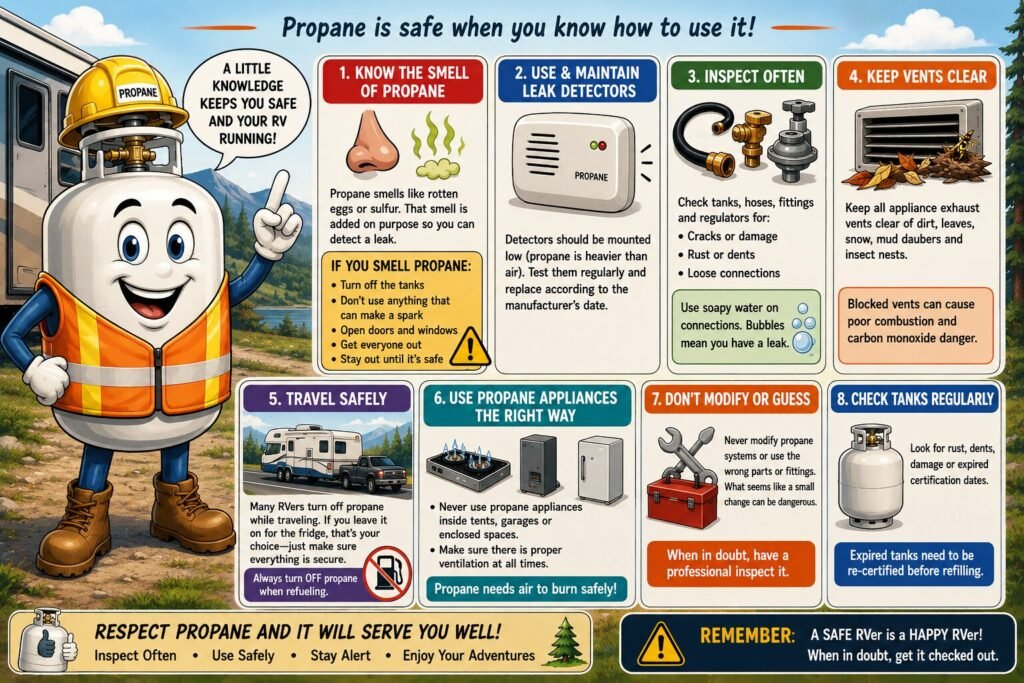
RV Propane Safety Tips
Propane is extremely safe when the RV system is maintained properly, but it is still important for every RV owner to understand basic propane safety. Since propane is used for heating, cooking, refrigeration, and hot water, small problems can quickly become dangerous if leaks or damaged components are ignored.
One of the most important things to understand is what propane smells like during a leak. Propane itself is naturally odorless, so manufacturers add a chemical that creates the strong rotten egg or sulfur smell people associate with propane gas. That smell is intentionally unpleasant because it helps RV owners quickly recognize leaks before propane builds up inside the camper.
If you ever smell strong propane inside or around the RV, it should always be taken seriously. The safest response is turning off the propane supply at the tanks, avoiding anything that could create a spark or flame, opening windows and doors for ventilation, and staying out of the RV until the leak can be identified. Even small sparks from light switches, lighters, cigarettes, or electronics can become dangerous around leaking propane.
Modern RVs use propane leak detectors mounted low inside the camper because propane is heavier than air and settles near the floor. These detectors are one of the most important safety devices in the RV and should be tested regularly. Many RV owners forget that propane detectors have expiration dates and eventually need replacement after several years.
Regularly inspecting propane tanks, hoses, fittings, and regulators is another important part of RV safety. Cracked hoses, damaged fittings, rusted tanks, or loose connections can eventually create leaks. Many RV owners periodically spray propane connections with soapy water to check for bubbles that could indicate leaking gas around fittings or regulators.
It is also important to keep propane appliance exhaust vents clear of dirt, mud daubers, insect nests, leaves, or snow buildup. Blocked furnace or water heater vents can create poor combustion and cause appliances to shut down or operate unsafely.
Many RV owners also debate whether propane should remain on while traveling. Some RVers leave propane running for refrigerators during travel days, while others prefer shutting the system off completely until arriving at the campground. Regardless of personal preference, propane should always be turned off while refueling the tow vehicle or motorhome to reduce fire risk around fuel vapors.
One thing beginners often overlook is that propane systems should never be modified carelessly. Using the wrong fittings, damaged hoses, or homemade connections can create serious safety risks. If propane leaks or major system problems develop, professional inspection is usually the safest option.
Once RV owners learn a few basic propane safety habits, the system becomes far less intimidating. Most RV propane systems operate safely for years with regular inspections, proper maintenance, and simple common sense precautions while camping.
Final Thoughts
A lot of new RV owners are surprised by how much the propane system affects everyday camping. When propane is working properly, most people barely think about it. The furnace heats the camper, the water heater provides hot showers, the stove works normally, and the refrigerator quietly does its job in the background. It is usually only when something stops working that RV owners realize how important the propane system really is.
The good news is that RV propane systems are generally very reliable once you understand the basics. Knowing how to monitor propane levels, recognize common regulator problems, safely refill tanks, and understand how propane appliances operate can make camping much less stressful, especially for beginners.
Many propane issues that seem serious at first often turn out to be simple fixes like switching tanks, bleeding air from the lines, resetting safety valves, or replacing worn regulators. A little knowledge goes a long way toward preventing frustration and helping RV owners feel more comfortable handling minor propane problems on the road.
Like most RV systems, propane becomes much less intimidating once you spend time around it. The more familiar you become with how your RV operates, the easier it gets to troubleshoot problems, stay safe, and enjoy camping without constantly worrying about what might stop working next.
More RV System & Camping Guides
Understanding your RV propane system is easier when you also understand the other systems that work with it, especially electric power, batteries, water, and campground hookups. These guides can help you keep building confidence with the everyday RV systems beginners use most.