
Few things ruin a camping trip faster than waking up to a dead RV battery. One minute everything seems normal, and the next morning your lights are dim, the water pump barely works, and nothing inside the RV has enough power to run properly. For many RV owners, especially beginners, this problem usually shows up at the worst possible time. It might happen during the first cold night of a trip, while boondocking without hookups, or even while parked in storage between trips.
What makes the situation frustrating is that many people swear they didn’t leave anything on. The lights were off, appliances weren’t running, and the RV seemed perfectly fine the night before. That’s where a lot of confusion starts. Most RVs actually use small amounts of battery power all the time, even when everything appears shut down. Things like propane detectors, stereo memory systems, control boards, antenna boosters, and other hidden electrical components can slowly drain a battery overnight without most owners realizing it.
In other cases, the battery itself may already be weak or damaged. RV batteries naturally lose capacity as they age, and many campers unknowingly push batteries past their useful life. A battery that worked fine last season may suddenly struggle to hold a charge this year, especially during colder weather or heavier power usage. Charging issues can also play a role. If the converter is not charging properly while plugged into shore power, or if solar panels are not keeping up with demand, the battery may never fully recover between uses.
One of the biggest mistakes new RV owners make is assuming the battery only powers a few lights. In reality, the RV battery is responsible for much more than most people realize. It helps run water pumps, furnace blowers, slides, safety systems, control panels, and many other essential functions throughout the camper. Even small power drains can add up surprisingly fast over several hours.
The good news is that most overnight RV battery problems can be diagnosed and fixed without needing advanced electrical knowledge. Once you understand the most common causes of RV battery drain, it becomes much easier to track down the issue and prevent it from happening again. In this guide, we’ll break down why RV batteries die overnight, the hidden problems that often cause it, how to troubleshoot the issue step-by-step, and what you can do to keep your RV battery healthy for future trips.
Why RV Batteries Die Overnight
One of the biggest surprises for new RV owners is learning that an RV battery can lose power even when it seems like nothing is running. Unlike a regular vehicle battery that mostly starts the engine, RV batteries constantly supply power to multiple systems throughout the camper. Even while you sleep, small electrical components may continue pulling power in the background. Things like propane detectors, stereo memory, control boards, antenna boosters, and tank monitors often stay active 24 hours a day.
Most RVs also have what’s known as parasitic drain. This refers to small amounts of electricity being used by hidden systems that many owners do not realize are still operating. Individually these components use very little power, but over the course of an entire night they can slowly drain a weak or partially charged battery. Proper charging habits and regular battery maintenance recommendations can help extend battery life and reduce overnight power drain problems.
Battery condition plays a major role as well. An older RV battery may appear fully charged during the day but no longer have the ability to hold that charge overnight. This becomes even more noticeable during cold weather because low temperatures reduce battery performance and overall capacity. A battery that worked fine during summer camping trips may suddenly struggle once temperatures drop into colder temperatures.
Charging problems are another common cause that many RV owners overlook. If your converter is not properly charging the battery while connected to shore power, the battery may never fully recover between trips. Loose battery terminals, corrosion, damaged wiring, or failing solar charging systems can also prevent the battery from charging completely.
In some situations, the issue simply comes down to higher power usage than expected. Furnace blowers are one of the biggest battery drains in many RVs, especially during cold nights. Running lights, fans, inverters, televisions, and charging multiple devices before bed can use far more battery power than most people realize.
The key to solving overnight RV battery problems is understanding that there usually is not just one single cause. In many cases, several small issues combine together and slowly drain the battery until the problem becomes noticeable the next morning.
Common Causes of RV Battery Drain
One of the most common reasons an RV battery dies overnight is simply leaving something on without realizing it. Interior lights, vent fans, bathroom fans, storage compartment lights, and even small accessories can slowly drain battery power throughout the night. LED lights use less power than older bulbs, but multiple lights running for hours can still add up, especially on a smaller battery setup.
Parasitic drain is another major issue that catches many RV owners by surprise. Even when everything appears turned off, several systems inside the RV may still be using electricity. Propane detectors, refrigerator control boards, stereo memory, antenna boosters, tank monitoring systems, and other electronics quietly draw small amounts of power all the time. Individually they seem insignificant, but together they can slowly drain a weak battery overnight.
Cold weather can also make overnight battery problems much worse. RV batteries lose efficiency as temperatures drop, meaning they cannot provide as much usable power as they normally would during warmer conditions. At the same time, cold weather often increases furnace usage, and RV furnace blowers are one of the biggest battery drains in most campers. Many RV owners discover battery problems for the first time during cold-weather camping trips because the battery simply cannot keep up with the additional demand.
A failing or aging battery is another very common cause. Most RV batteries do not last forever, especially if they have been deeply discharged multiple times or poorly maintained over the years. An older battery may charge normally during the day but lose voltage quickly once power is being used overnight. Swollen battery cases, corrosion buildup, slow charging, or difficulty holding voltage are all signs the battery may be nearing the end of its lifespan.
Charging system problems can create similar symptoms. If the converter is not properly charging the battery while plugged into shore power, the battery may never actually reach a full charge before the next trip. Solar charging systems can also fall behind if panels are dirty, shaded, or undersized for your electrical usage. In some cases, loose battery connections or damaged wiring may prevent the battery from charging correctly at all.
Sometimes the problem is not a single major failure but several small drains happening together. A partially weak battery combined with cold weather, furnace usage, and hidden parasitic draw can easily leave an RV battery dead by morning even though everything seemed fine the night before.
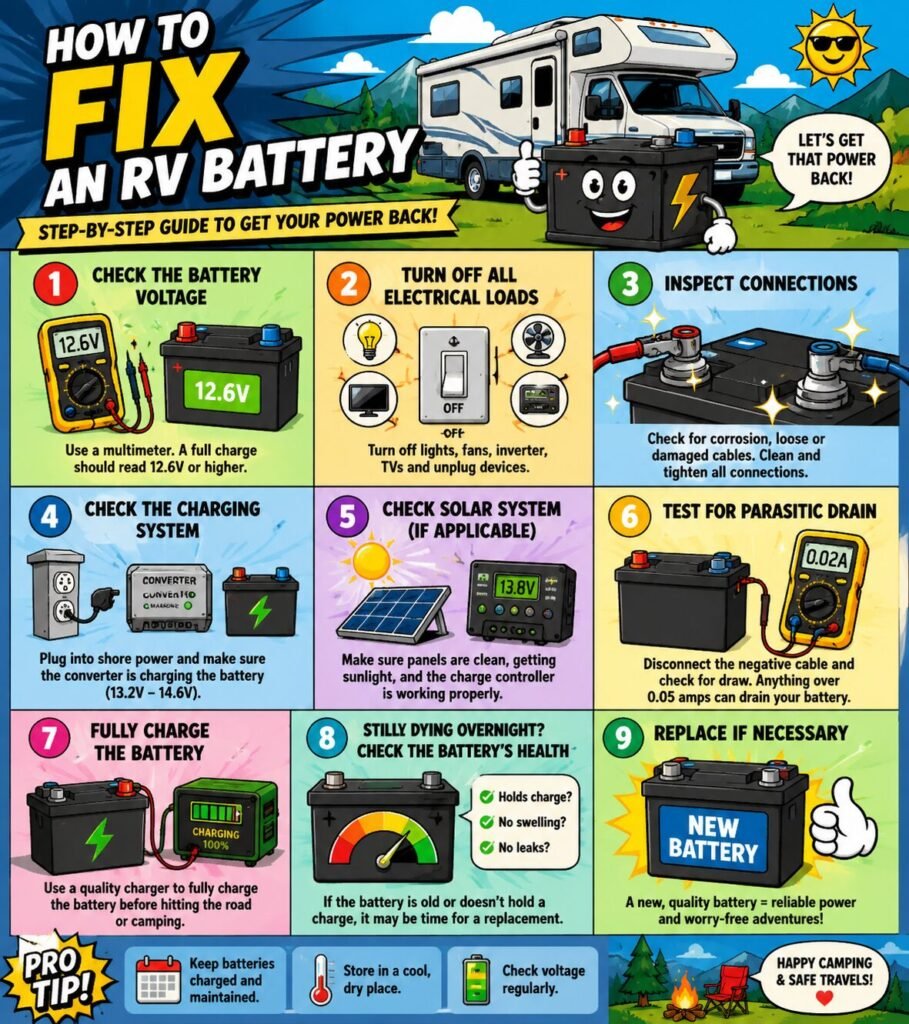
How to Fix an RV Battery That Dies Overnight
The first step in fixing an RV battery problem is checking the battery voltage itself. A fully charged RV battery should normally read around 12.6 to 12.7 volts when resting. If the voltage is already low before bedtime, the battery may not have enough reserve power to make it through the night. Using a simple multimeter can quickly tell you whether the battery is fully charged, partially drained, or possibly failing altogether.
Next, turn off as many electrical items as possible and see if the battery continues losing power overnight. Many RV owners are surprised to discover how many small systems stay active even when the camper appears shut down. Disconnecting unnecessary accessories, turning off lights completely, and limiting inverter use can help narrow down the source of the drain.
If the battery still dies quickly, inspect the battery terminals and cable connections closely. Corrosion buildup around the terminals can interfere with charging and reduce battery performance. Loose or damaged cables may also prevent the battery from charging correctly while plugged into shore power or solar. Cleaning the terminals and tightening all connections is one of the simplest fixes but is often overlooked.
It’s also important to verify that your converter is actually charging the battery. When plugged into shore power, the converter should send charging voltage back to the battery. If the battery voltage does not increase while plugged in, the converter may not be working properly. In some RVs, a blown fuse or tripped breaker can stop the charging system from functioning even though the RV still has power from shore hookup.
For RV owners using solar panels, check that the solar charge controller is functioning correctly and that the panels are producing power during daylight hours. Dirty panels, shaded campsites, poor wiring connections, or undersized solar setups can all reduce charging performance enough to create overnight battery problems.
If you suspect parasitic drain, one of the easiest troubleshooting methods is disconnecting the negative battery cable overnight after fully charging the battery. If the battery holds its charge while disconnected, something inside the RV is likely pulling power when it should not be. This can help narrow the problem down much faster.
Sometimes the solution is simply replacing the battery itself. Older batteries may still appear to charge normally but no longer have enough internal capacity to hold power overnight. If the battery is several years old and continues losing charge despite troubleshooting, replacement may ultimately be the most reliable fix.
How to Prevent Your RV Battery From Dying Overnight
Preventing overnight battery problems usually comes down to building a few simple habits before and during each camping trip. One of the easiest things you can do is fully charge the battery before leaving home instead of assuming it charged properly while sitting in storage. Many RV owners discover too late that their battery was only partially charged before the trip even started.
Keeping an eye on battery voltage can also help prevent unexpected problems. A small battery monitor or voltmeter allows you to quickly see how much power remains before the battery becomes critically low. This is especially helpful while boondocking or camping without hookups because you can catch problems early instead of waking up to a completely dead battery.
Reducing unnecessary power usage overnight can make a major difference as well. Turning off lights, fans, inverters, televisions, and other electronics before bed helps conserve battery power. During colder weather, furnace use often becomes the biggest drain on the battery. Extra blankets or small changes in thermostat settings can sometimes reduce how often the furnace blower cycles throughout the night.
Regular battery maintenance is another important part of preventing battery drain problems. Cleaning battery terminals, checking water levels on lead-acid batteries, inspecting wiring connections, and testing battery voltage periodically can help catch issues before they become serious. Batteries that sit unused for long periods without charging tend to lose capacity much faster over time.
For RV owners who frequently camp off-grid, adding solar panels or upgrading battery capacity can greatly improve overnight performance. Solar systems help recharge the battery during the day, while larger battery banks provide more reserve power overnight. Lithium batteries have also become increasingly popular because they hold voltage better, recharge faster, and generally perform better than traditional lead-acid batteries.
A battery disconnect switch is another feature many RV owners find helpful. Disconnecting the battery while the RV is in storage can reduce parasitic drain from hidden electrical systems that continue using power even when the camper is not being used. This simple step alone can prevent many common dead battery situations between trips.
The biggest key is consistency. Most RV battery problems develop slowly over time rather than appearing all at once. Paying attention to battery performance, charging habits, and power usage can help you avoid waking up to dead batteries and electrical problems during future camping trips.
When It’s Time to Replace Your RV Battery
Sometimes an RV battery problem is not caused by hidden electrical drain or charging issues at all. In many cases, the battery itself is simply worn out and no longer capable of holding a charge overnight. RV batteries gradually lose capacity over time, especially if they have been deeply discharged repeatedly, exposed to extreme temperatures, or left sitting without proper maintenance.
One of the biggest warning signs is a battery that charges normally but loses power very quickly once disconnected from shore power. If your lights dim faster than they used to, the furnace struggles overnight, or the battery voltage drops rapidly after only a few hours of use, the battery may be nearing the end of its lifespan. Swollen battery cases, excessive corrosion, slow charging, or difficulty reaching full voltage are also common signs of battery failure.
Most traditional lead-acid RV batteries last somewhere between three and five years depending on usage and maintenance. RV owners who frequently boondock or deeply discharge their batteries may see shorter battery life. Cold weather, improper storage, and inconsistent charging habits can also shorten battery lifespan significantly.
Replacing an old battery before it completely fails can save a lot of frustration during camping trips. Many RV owners wait until the battery leaves them stranded before replacing it, but weak batteries often show warning signs long before total failure happens. Testing the battery periodically can help determine whether it is still healthy enough for reliable overnight use.
When shopping for a replacement, it’s important to choose a battery that matches your camping style and power needs. Some RV owners stick with traditional deep-cycle lead-acid batteries because they are affordable and widely available. Others upgrade to AGM or lithium batteries for longer life, faster charging, and better off-grid performance. Choosing the right RV battery can make a huge difference in how well your electrical system performs, especially during longer camping trips or overnight stays without hookups.
This is also where upgrading your overall battery setup may be worth considering. Larger battery banks, solar charging systems, and lithium upgrades have become increasingly popular with RV owners who spend a lot of time boondocking or relying heavily on battery power overnight.
Final Thoughts
An RV battery dying overnight is one of the most common problems RV owners run into, especially during the first few camping seasons. The frustrating part is that the cause is not always obvious. Small parasitic drains, weak batteries, charging problems, cold weather, and heavier-than-expected power usage can all work together to slowly drain the battery while you sleep.
The good news is that most overnight battery problems can be fixed once you understand how your RV electrical system works. Simple things like monitoring battery voltage, reducing unnecessary power use, cleaning battery connections, and keeping the battery fully charged can prevent many of the most common issues before they ruin a camping trip.
For RV owners who camp frequently without hookups, investing in a better battery setup can make a major difference in reliability and overall camping comfort. Upgrading battery capacity, improving charging systems, or adding solar power can provide more confidence during overnight stays and off-grid camping trips.
The key is not ignoring the warning signs. Batteries rarely fail without giving some indication that something is wrong. Paying attention to how quickly your battery drains, how well it charges, and how your RV systems perform overnight can help you catch problems early and avoid being stranded with no power when you need it most.
If your RV battery continues dying overnight even after troubleshooting, it may be time to consider upgrading to a more reliable battery setup designed for the way you actually camp and travel.
Related RV Power & Setup Guides