
RV electrical problems are one of the most frustrating parts of RV ownership, especially for beginners who are still learning how campground power, batteries, converters, breakers, and RV electrical systems all work together. One day everything works perfectly, and the next day the lights stop working, outlets suddenly lose power, or the battery is completely dead overnight. These kinds of electrical problems are extremely common in RVs and can happen whether you are camping off-grid or plugged into full hookups at a campground.
Part of the confusion comes from the fact that RV electrical systems are very different from what most people are used to at home. RVs rely on a combination of shore power, batteries, converters, fuses, breakers, and appliances all working together correctly. When one small part of the system fails, it can sometimes make it seem like the entire RV has lost power.
The good news is that many common RV electrical problems are actually simple to diagnose once you understand the basics. Tripped breakers, blown fuses, drained batteries, faulty campground pedestals, loose connections, and bad converters are responsible for a large percentage of RV power issues. In many cases, the problem can be fixed in just a few minutes without needing expensive repairs.
Learning how to troubleshoot basic RV electrical problems can save a lot of frustration, prevent unnecessary service bills, and help you feel much more confident while traveling. Understanding what causes these problems also makes it easier to prevent them before they ruin a camping trip.
In this guide, we’ll break down the most common RV electrical problems, explain why they happen, show you how to troubleshoot them safely, and help you understand when the issue is simple enough to fix yourself and when it may be time to seek professional help.
Why RV Electrical Problems Are So Common
RV electrical problems are common because RV electrical systems are far more complicated than many people realize. Unlike a traditional house that runs from one stable power source, RVs constantly switch between different types of power depending on how and where you are camping. Your RV may use campground shore power one day, battery power the next day, and generators or solar systems in other situations. All of these systems must work together correctly for your RV to function properly.
The constant movement of an RV also creates challenges that normal homes never experience. RVs bounce down highways, sit in extreme heat and cold, deal with moisture, and experience constant vibration while traveling. Over time, this movement can loosen electrical connections, damage outlets, wear down wiring, and create problems with breakers, converters, batteries, and appliances.
Campground power itself is another major cause of RV electrical issues. Not every campground pedestal delivers clean, stable power. Low voltage, overloaded circuits, worn outlets, and improperly wired pedestals can all create serious electrical problems inside an RV. This is one reason many experienced RV owners use surge protectors or electrical management systems to help protect their campers from bad campground power.
Many RV owners also unknowingly overload their electrical systems. Running air conditioners, microwaves, coffee makers, space heaters, hair dryers, and other high-power appliances at the same time can quickly trip breakers or strain the RV’s electrical system. This becomes even more common in older campgrounds where electrical infrastructure may already be struggling to handle modern RV power demands.
Battery problems are another extremely common issue because many RV systems still rely heavily on battery power even while plugged into shore power. Lights, slide-outs, furnaces, water pumps, control boards, and safety systems often continue using battery power behind the scenes. If the battery, converter, or charging system is not working properly, electrical problems can appear very quickly.
The good news is that most RV electrical problems follow predictable patterns. Once you understand the basics of how RV power systems work, many issues become much easier to troubleshoot and fix before they turn into larger and more expensive repairs.
Dead RV Batteries
One of the most common RV electrical problems is a dead battery. Many RV owners are surprised to learn that their battery can drain even while the RV appears to be turned off or plugged into campground power. In some cases, the battery slowly drains overnight. In other situations, the battery may fail completely after sitting in storage for a few weeks.
RV batteries power far more systems than most beginners realize. Interior lights, water pumps, slide-outs, control boards, propane detectors, furnaces, and many safety systems all rely on battery power. Even when plugged into shore power, the battery still plays an important role in keeping many RV systems operating correctly.
A dead RV battery can happen for several reasons. Lights may accidentally get left on, the converter may stop charging properly, or hidden parasitic drains may slowly consume battery power over time. Old or damaged batteries also lose capacity as they age, making them much easier to drain during normal camping use.
Cold weather can make battery problems even worse. RV batteries lose efficiency in low temperatures, while furnaces use large amounts of battery power during cold nights. Many RV owners first notice battery problems during winter camping trips or after storing the RV in colder weather.
The first step when troubleshooting a dead RV battery is checking the battery voltage and connections. Loose or corroded terminals can prevent proper charging and create power problems throughout the RV. It is also important to check whether the converter is charging the battery correctly while plugged into shore power.
If the battery repeatedly dies quickly, struggles to hold a charge, or is several years old, it may simply need replacement. Lead-acid and AGM batteries naturally lose capacity over time, especially if they have been repeatedly discharged too deeply or stored improperly. If your RV battery keeps dying overnight or struggles to hold a charge while camping, learning how hidden battery drains and charging problems work can help prevent many common RV power issues.
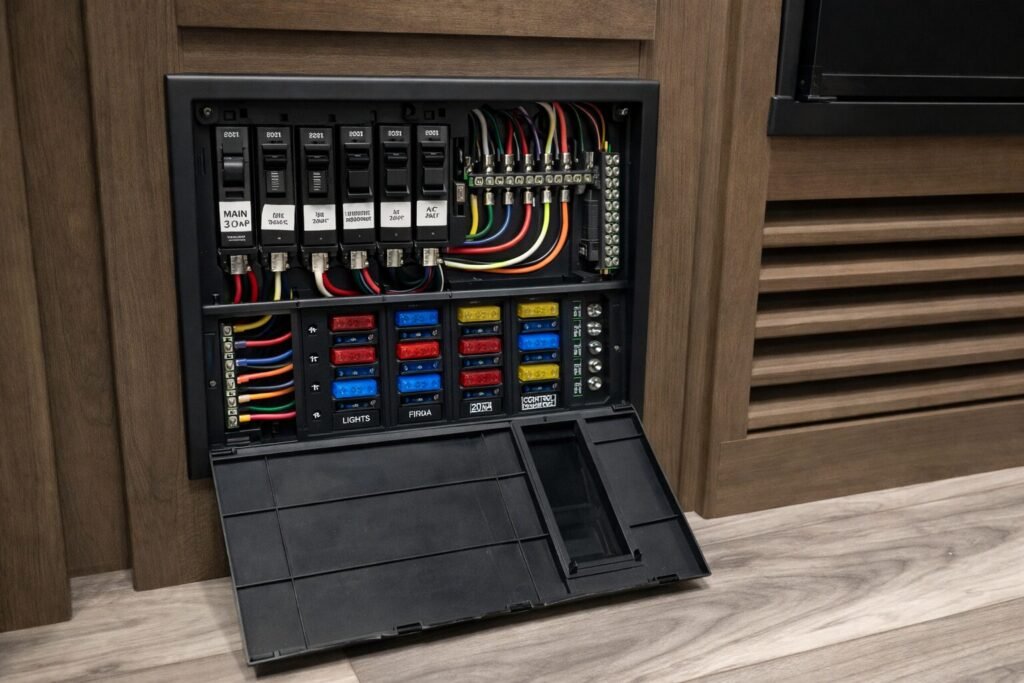
Tripped RV Breakers and Blown Fuses
Another extremely common RV electrical problem is tripped breakers or blown fuses. Many RV owners suddenly lose power to part of the camper and assume something major has failed, when in reality the electrical system may simply be protecting itself from an overload or short circuit.
RV breakers and fuses are safety devices designed to shut power off before wiring or appliances become damaged. Breakers are commonly used on the 120-volt side of the RV electrical system, while fuses usually protect the 12-volt systems that power lights, fans, water pumps, slide-outs, and many control boards.
Overloaded circuits are one of the biggest reasons breakers trip in RVs. Running multiple high-power appliances at the same time can quickly overload a circuit, especially in smaller RVs or older campgrounds with limited electrical capacity. Air conditioners, microwaves, coffee makers, electric heaters, and hair dryers are some of the most common causes of overloaded RV circuits. If your RV breaker keeps tripping repeatedly, learning what appliances commonly overload RV circuits can help you diagnose the problem much faster.
Blown fuses are often caused by shorts, damaged wiring, faulty appliances, or electrical components drawing too much power. Sometimes the issue is as simple as plugging in a damaged accessory or accidentally pinching a wire while loading gear into the RV.
When troubleshooting a tripped breaker, the first step is turning off or unplugging appliances before resetting the breaker. If the breaker trips again immediately, there may be a larger electrical problem that needs further inspection. For blown fuses, always replace the fuse with the correct amperage rating. Installing the wrong fuse can create serious safety risks and potentially damage the RV electrical system.
It is also important to understand that some RV outlets may stop working because of a tripped GFCI outlet. In many RVs, one GFCI outlet protects several other outlets downstream. Resetting the GFCI often restores power to multiple outlets throughout the camper.
Learning where your RV breaker panel and fuse box are located can save a lot of stress during camping trips. Many common RV power problems can be solved quickly once you understand how breakers, fuses, and GFCI outlets protect the electrical system.
Bad Campground Power
Sometimes the RV electrical system is not actually the problem at all. The issue may be coming directly from the campground power pedestal. Many RV owners automatically assume something inside the camper has failed when lights flicker, appliances shut off, or breakers trip repeatedly, but poor campground power is extremely common, especially in older or crowded campgrounds.
Campground electrical systems often deal with heavy demand during busy travel seasons. When multiple RVs run air conditioners, microwaves, electric heaters, and other high-power appliances at the same time, campground voltage can drop lower than it should. Low voltage may not seem serious at first, but it can damage air conditioners, converters, refrigerators, and other expensive RV electronics over time.
Loose outlets, worn pedestal connections, improper wiring, and overloaded campground circuits can also create electrical problems. In some cases, RV owners may notice burning smells, warm plugs, flickering lights, or appliances behaving strangely after plugging into shore power. These warning signs should never be ignored because damaged campground power can quickly lead to expensive repairs.
One of the safest things RV owners can do is inspect the campground pedestal before plugging in. Checking for burned outlets, loose connections, damaged breakers, or obvious signs of wear can help prevent many problems before they start. Many experienced RV owners also use surge protectors or electrical management systems to monitor campground power conditions and automatically shut power off if dangerous voltage problems occur.
If strange electrical problems suddenly begin immediately after connecting to campground power, disconnecting and testing another pedestal can sometimes confirm whether the issue is external rather than inside the RV itself. Understanding that campground power problems are common can save RV owners a lot of unnecessary troubleshooting and frustration while camping.
Losing One Leg of 50 Amp Power
One confusing RV electrical problem that many owners eventually experience is losing one leg of 50 amp campground power. This issue can be especially frustrating because part of the RV may still appear to work normally while other outlets, appliances, or systems suddenly lose power completely.
A 50 amp RV service actually uses two separate 120-volt power legs working together. If one side of the campground pedestal fails, the RV may only receive power on half of the electrical system. This can create strange situations where one air conditioner still works while the other does not, certain outlets lose power, or only part of the RV electrical panel remains active.
Many RV owners initially assume there is a major problem inside the camper because the symptoms can seem random and inconsistent. In reality, the issue is often caused by a faulty campground pedestal, damaged outlet, loose connection, tripped breaker at the pedestal, or worn campground wiring.
This problem becomes more common in older campgrounds or during busy travel seasons when electrical systems are under heavy demand from multiple RVs running air conditioners and other high-power appliances at the same time.
If only part of the RV suddenly loses power while connected to 50 amp service, checking the campground pedestal and testing for power on both legs can help identify the issue quickly. In many cases, moving to another site or switching pedestals solves the problem entirely.
Understanding how 50 amp RV power works can make troubleshooting much easier because losing one leg of power is far more common than many RV owners realize.
RV Outlets Suddenly Stop Working
Few things confuse RV owners faster than outlets suddenly losing power for no obvious reason. One minute everything works normally, and the next minute several outlets inside the RV stop working while other systems still seem fine. In many cases, this problem is much simpler than people expect.
One of the most common causes is a tripped GFCI outlet. RVs often use one GFCI outlet to protect several other outlets downstream throughout the camper. If the GFCI trips, multiple outlets may stop working at the same time even though the main breaker panel still appears normal. Resetting the GFCI outlet is often the first and easiest troubleshooting step.
Overloaded circuits can also cause outlets to stop working. Running multiple appliances like coffee makers, space heaters, air fryers, hair dryers, or microwaves at the same time may trip a breaker or overload the RV electrical system. This is especially common in smaller RVs with limited electrical capacity.
Loose connections, damaged outlets, worn campground pedestals, or faulty extension cords can also create intermittent outlet problems. Sometimes outlets may work briefly before cutting out again, which can make troubleshooting even more frustrating for beginners.
Another issue many RV owners overlook is inverter-controlled outlets. Some RVs route certain outlets through the inverter system while others only work when connected to shore power or generators. If the inverter shuts off, loses battery power, or trips internally, certain outlets may stop working completely while others continue operating normally.
When troubleshooting dead RV outlets, start with the simplest checks first. Reset the GFCI outlet, inspect the breaker panel, unplug high-power appliances, and verify campground power is working correctly. In many situations, the issue can be solved within minutes once you understand how RV outlet systems are designed.
Converter Problems and Charging Issues
The RV converter is one of the most overlooked parts of the RV electrical system, yet it plays a major role in keeping everything working properly. Many RV owners do not even realize the converter exists until electrical problems begin appearing inside the camper.
The converter’s job is to take 120-volt campground power and convert it into 12-volt power that can run RV systems and charge the batteries at the same time. Lights, water pumps, furnaces, vent fans, slide-outs, and many control panels all depend heavily on the converter working correctly while plugged into shore power.
When a converter starts failing, the symptoms can be confusing. Batteries may stop charging properly, interior lights may dim or flicker, appliances may behave strangely, or the RV battery may repeatedly die even while plugged into campground power. In some cases, RV owners may also hear unusual buzzing noises coming from the converter area.
A bad converter can sometimes make it appear that the battery itself is failing when the real issue is simply that the battery is no longer receiving a proper charge. This is one reason many RV owners replace batteries unnecessarily before realizing the converter is actually the source of the problem.
Blown converter fuses, loose wiring connections, overheating, and aging electrical components are some of the most common causes of converter failure. Older RVs are especially prone to charging problems because many older converters do not charge batteries as efficiently as modern smart charging systems.
If your RV battery continues draining while connected to shore power, checking converter output voltage is often an important troubleshooting step. In many cases, converter problems develop slowly over time, creating weak charging performance long before the system fails completely.
Understanding how the converter works can make RV electrical troubleshooting much easier because many common RV power problems are directly connected to charging system issues behind the scenes.
How to Prevent RV Electrical Problems
Many RV electrical problems can actually be prevented with a few simple habits and regular inspections. While some issues happen unexpectedly, a large number of RV power problems develop slowly over time due to poor maintenance, overloaded circuits, damaged campground power, or neglected batteries.
One of the best ways to prevent electrical issues is learning the limits of your RV electrical system. Running too many high-power appliances at the same time is one of the most common causes of tripped breakers and overheated wiring. Air conditioners, electric heaters, microwaves, coffee makers, and hair dryers can quickly overload smaller RV electrical systems if used together.
Regularly checking battery condition is also extremely important. Loose terminals, corrosion, low charge levels, and aging batteries create many avoidable RV power problems. Even RV owners who mostly stay at campgrounds should monitor battery health because many RV systems still rely on battery power behind the scenes.
Inspecting power cords, adapters, and campground connections before plugging in can also help prevent serious electrical damage. Burned outlets, loose pedestal connections, damaged extension cords, or overheated plugs are warning signs that should never be ignored. Catching these issues early can help prevent expensive repairs to RV electronics and appliances.
Using a surge protector or electrical management system adds another layer of protection by helping defend the RV from low voltage, power surges, and faulty campground wiring. Many experienced RV owners consider this one of the most important electrical safety tools they carry.
It also helps to understand where your breaker panel, fuse box, battery disconnect, and GFCI outlets are located before problems happen. Knowing how to quickly reset breakers, replace fuses, or disconnect power can make troubleshooting much less stressful during camping trips.
Routine inspections and basic electrical awareness go a long way toward preventing RV power problems. Most electrical issues start small, and catching them early is usually far easier and cheaper than dealing with major repairs later.
Final Thoughts
RV electrical systems can feel complicated when you first start learning how everything works together. Between campground hookups, batteries, converters, breakers, fuses, and appliances, there are a lot of moving parts working behind the scenes every time you plug in or turn something on inside the camper.
The good news is that most RV electrical problems are usually connected to a few common causes. Dead batteries, overloaded circuits, faulty campground power, tripped breakers, and charging system problems account for many of the issues RV owners experience while traveling. Once you understand the basics of how these systems operate, troubleshooting becomes much easier and far less stressful.
One of the biggest advantages of learning basic RV electrical troubleshooting is gaining confidence while camping. Instead of immediately assuming the worst when power problems happen, you can often narrow down the issue quickly and solve it yourself without expensive repairs or service appointments.
Over time, many RV owners realize that understanding the electrical system is just as important as learning how the water, sewer, and propane systems work. A little knowledge can prevent major frustration, help protect expensive RV electronics, and make camping much more enjoyable overall.
Whether you are staying at full hookup campgrounds, taking weekend trips, or occasionally camping off-grid, understanding common RV electrical problems can help you travel more safely, avoid unnecessary breakdowns, and feel much more prepared when unexpected power issues happen on the road.
More RV Electrical & Camping Guides